
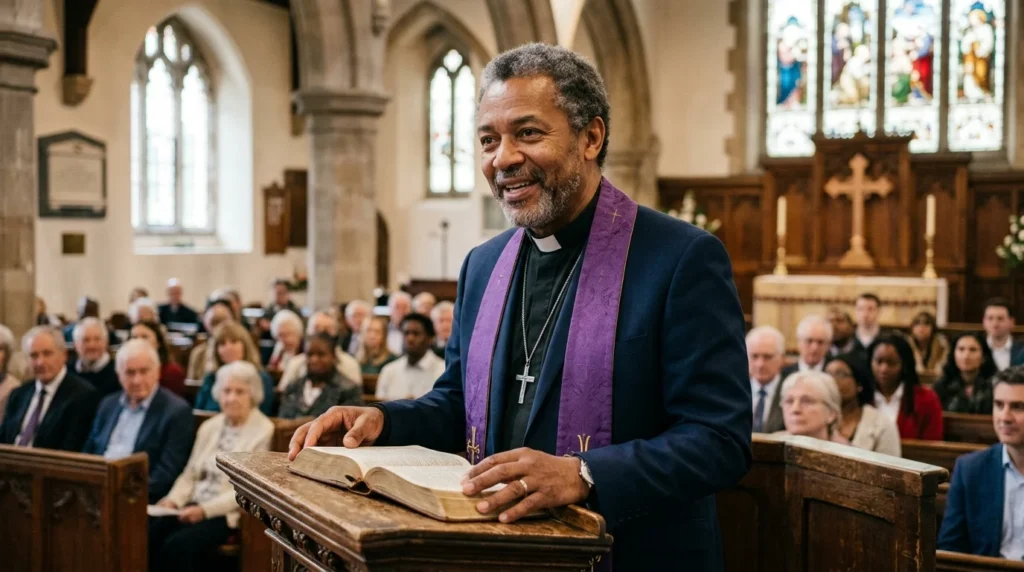
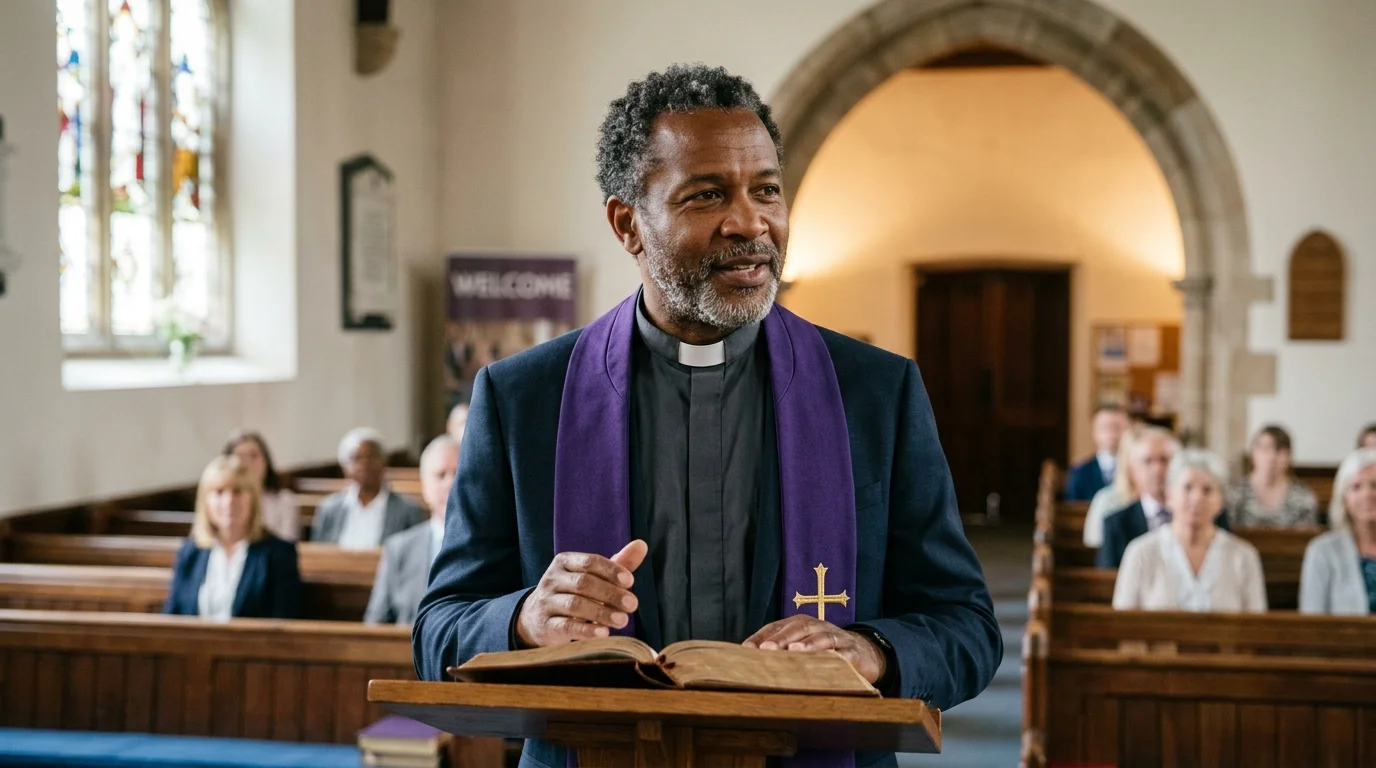
What Is “Reverend”?
Reverend is a title traditionally used for an ordained Christian minister or member of the clergy.
It is commonly abbreviated as Rev. in writing.
Meaning and Usage
The word reverend comes from an older term meaning something like “worthy of reverence” or “worthy of respect.” In modern English, it is primarily used as a religious title.
For example:
“The Reverend Smith will lead the service.”
More formally, you may see:
“The Rev. John Smith will speak at the ceremony.”
The title can be used for clergy members in several Christian denominations, although exact conventions vary between churches.
Grammar Rules
Reverend can function as a title before a person’s name:
- Reverend John Smith
- Rev. John Smith
It can also appear as a noun in informal usage:
“We spoke with the reverend after the service.”
However, when addressing someone directly, Reverend is not always the preferred form. Depending on denomination and personal preference, people may say Pastor Smith, Reverend Smith, or simply Pastor.
Short History
The word reverend comes from the Latin reverendus, meaning “worthy of being revered or respected.” It entered English through French and became associated with Christian clergy.
Over time, it developed into a conventional title for ordained ministers in many Christian traditions.
What Is “Pastor”?
A pastor is a Christian religious leader who has responsibility for guiding and caring for a congregation.
The word comes from Latin pastor, meaning shepherd. The metaphor reflects the traditional Christian idea of a spiritual leader caring for and guiding a community of believers.
Meaning and Usage
A pastor may preach sermons, lead worship services, provide spiritual guidance, teach, visit members of the congregation, and help oversee church activities.
Examples include:
“The pastor gave a sermon on Sunday.”
“She spoke with her pastor about the church’s community program.”
“The pastor welcomed the new members.”
Unlike reverend, which primarily functions as a title, pastor describes a religious role or position.
Grammar Rules
Pastor is a countable noun:
- a pastor
- the pastor
- our pastor
- two pastors
It can also be used before a person’s name as a title in some traditions:
“Pastor James will lead the service.”
The plural form is pastors.
Regional and Denominational Notes
The exact use of pastor varies among Christian denominations and countries. In many Protestant churches, pastors are the primary leaders of local congregations.
In other traditions, the term may be used less frequently or may describe a specific pastoral responsibility rather than the person’s main title.
Therefore, not every Christian minister is necessarily called a pastor.
Key Differences Between Reverend and Pastor
The main distinction in reverend or pastor is that one is primarily a title, while the other usually describes a role.
- Reverend is a title associated with an ordained Christian minister.
- Pastor is a religious leadership role involving the care and guidance of a congregation.
- A pastor may also be addressed as Reverend if they are ordained and their denomination uses that title.
- Not every person referred to as Reverend is necessarily the pastor of a local congregation.
- Usage varies between Christian denominations.
- Rev. is a common abbreviation for Reverend.
- Pastor is not normally abbreviated in the same way.
Reverend or Pastor Comparison Table
| Feature | Reverend | Pastor |
|---|---|---|
| Basic meaning | Title for an ordained Christian minister | Christian religious leader/role |
| Primary function | Title or form of address | Congregational leadership |
| Common abbreviation | Rev. | Usually none |
| Can lead a church? | Possibly | Commonly |
| Can preach? | Depending on role and denomination | Commonly |
| Can be the same person? | Yes | Yes |
| Meaning varies by denomination? | Yes | Yes |
| Main idea | Clergy title | Spiritual leadership role |
The simplest way to remember it is:
Reverend = title
Pastor = role
A person can therefore be both.
Real-Life Conversation Examples
Dialogue 1: Introducing a Church Leader
Emma: Who is speaking at the service today?
Daniel: Pastor Johnson.
Emma: Is he also a Reverend?
Daniel: Yes. He is an ordained minister, so both terms may apply.
🎯 Lesson: One person can be both a pastor and a Reverend.
Dialogue 2: Understanding the Role
Mia: Is every Reverend a pastor?
Sam: Not necessarily. Reverend is a title, while pastor usually describes someone who serves a congregation in a pastoral role.
Mia: That makes sense.
🎯 Lesson: Reverend and pastor overlap but are not exact synonyms.
Dialogue 3: Formal Writing
Alex: How should I write his name on the invitation?
Jordan: If his preferred title is Reverend, you could use “Rev.” before his name.
Alex: And if we’re emphasizing his church role?
Jordan: “Pastor” may be appropriate if that’s how he is normally addressed.
🎯 Lesson: The best title depends on the person’s denomination, role, and preferred form of address.
Dialogue 4: Everyday Conversation
Nora: I need to speak with our pastor.
Liam: Sure. I’ll let Pastor Brown know.
Nora: Thanks.
🎯 Lesson: Pastor is commonly used when referring to the leader responsible for a congregation.
When to Use Reverend vs Pastor
Use “Reverend” When Referring to the Title
Use Reverend or Rev. when the person’s official or customary religious title is being used.
For example:
“The Rev. Michael Brown will officiate the ceremony.”
“We invited Reverend Brown to speak.”
In formal writing, check the person’s preferred title and the conventions of their denomination.
Use “Pastor” When Referring to the Role
Use pastor when you mean the person who provides spiritual leadership and care to a congregation.
For example:
“The pastor delivered the sermon.”
“Our pastor organized the community event.”
Memory Trick
Think:
Reverend = respectful title
Pastor = pastoral role
The word pastor comes from the idea of a shepherd, which makes it easier to associate the term with guiding and caring for a congregation.
Can Someone Be Both a Reverend and a Pastor?
Yes.
A person may be an ordained minister who holds the title Reverend and also serves as the pastor of a local church.
For example:
Rev. Sarah Williams — Pastor of Grace Community Church
In this example, Reverend functions as the title, while pastor describes her position within the church.
However, terminology differs across denominations. Some churches have pastors who are not normally addressed as Reverend, while other churches use Reverend for clergy members who have different responsibilities.
Is Reverend a First Name or a Job?
Reverend is primarily a title, not a person’s first name.
For example:
Rev. David Carter
Here, “Rev.” is the title and “David Carter” is the person’s name.
Pastor, by contrast, is primarily a role, although it can also be placed before a name as a form of address:
Pastor David Carter
The exact convention depends on the church tradition.
US vs UK English Notes
Both Reverend and pastor are used in American and British English, but denominational traditions can influence how frequently each term is used.
In many Protestant communities in the United States, pastor is a common term for the leader of a local congregation.
In British English, minister, vicar, priest, and other titles may be used depending on denomination and church tradition.
For this reason, the difference between reverend or pastor is not simply an American-versus-British spelling issue. It is often more closely connected to Christian denomination, church structure, and local custom.
Common Mistakes to Avoid
Mistake 1: Assuming Reverend and Pastor Always Mean Exactly the Same Thing
They can refer to the same person, but they emphasize different things.
Reverend emphasizes the person’s title.
Pastor emphasizes their pastoral role.
Mistake 2: Calling Every Christian Clergy Member a Pastor
Not every Christian minister serves as the pastor of a local congregation. Titles and responsibilities vary among denominations.
Mistake 3: Assuming Reverend Is a Job Description
Reverend primarily functions as a title. It does not by itself tell you exactly what responsibilities the person has.
Mistake 4: Ignoring Personal Preference
Religious titles can be culturally and denominationally specific. If you’re addressing a particular person, using the title they normally use is the safest approach.
Fun Facts and History
1. Reverend Comes From Latin
Reverend traces back to the Latin word reverendus, connected with the idea of being worthy of respect or reverence.
2. Pastor Means Shepherd
The word pastor comes from Latin and literally relates to a shepherd. The shepherd image has long been used as a metaphor for spiritual leadership and caring for a religious community