
What Is Guanciale?
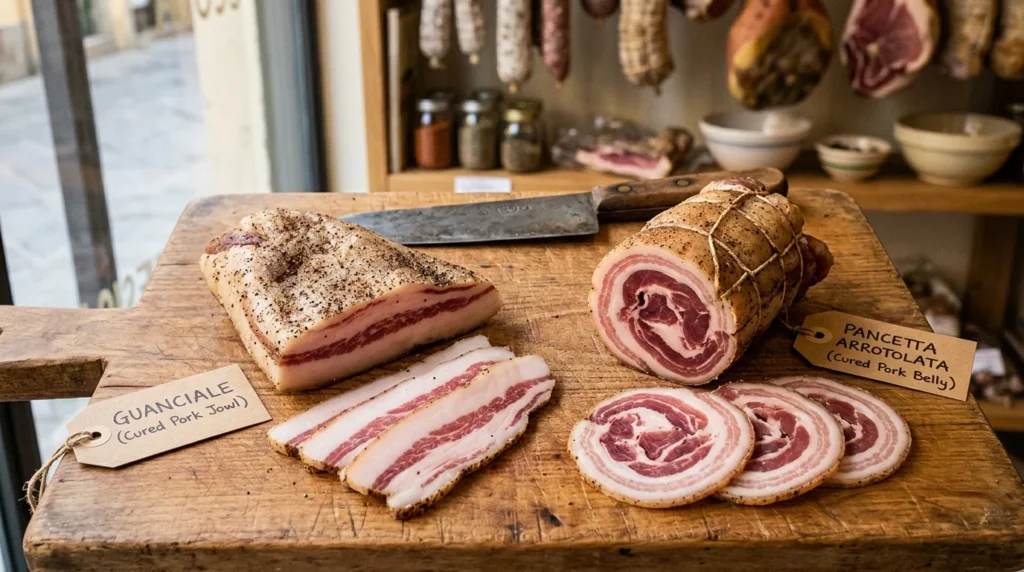
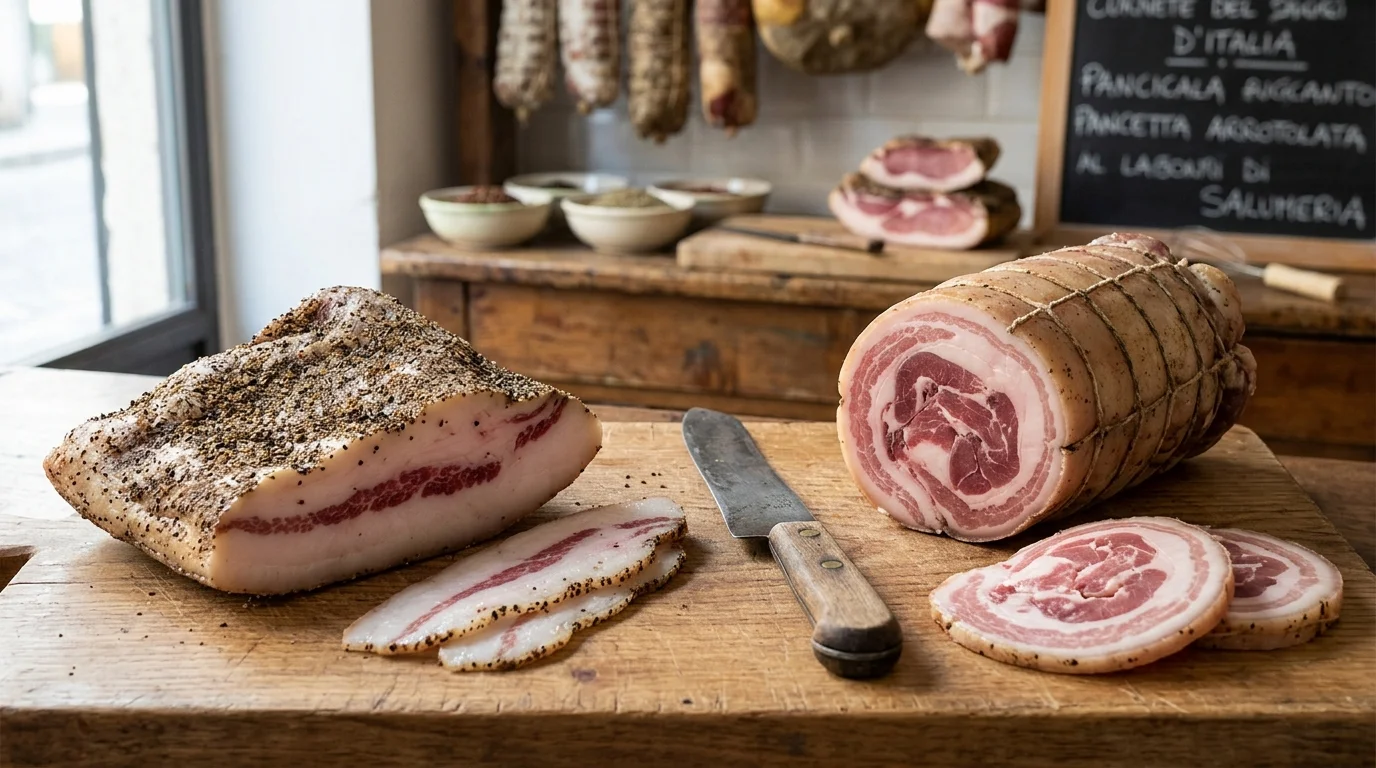
Guanciale is a traditional Italian cured pork product made from the jowl or cheek of the pig.
The name comes from the Italian word guancia, meaning “cheek.”
It is usually cured with salt and other seasonings and then aged. Unlike bacon, traditional guanciale is generally not smoked.
What Does Guanciale Taste Like?
Guanciale is known for its:
- Rich pork flavor
- High fat content
- Deep savory taste
- Soft, silky texture
- Excellent rendering ability
When cooked, much of its fat melts into the pan, creating a flavorful base for sauces.
How Is Guanciale Used?
Guanciale is particularly important in traditional Roman-style Italian cooking.
It is commonly used in:
- Pasta alla carbonara
- Amatriciana
- Pasta alla gricia
- Some soups
- Beans and vegetable dishes
- Other traditional Italian recipes
Example Sentence
Traditional carbonara is often prepared with guanciale rather than bacon.
Short History of Guanciale
Guanciale has deep roots in central Italian cuisine, especially in regions such as Lazio and surrounding areas.
Its use is closely connected to traditional Italian food preservation, where curing helped preserve pork for later use.
What Is Pancetta?
Pancetta is an Italian cured pork product made from pork belly.
Because it comes from the belly, pancetta is similar in cut to bacon, although traditional pancetta is typically cured rather than smoked.
What Does Pancetta Taste Like?
Pancetta usually has:
- A savory pork flavor
- Noticeable fat
- A firm texture before cooking
- A rich taste
- A milder flavor than many smoked bacon products
Depending on the variety, pancetta can be sold rolled or flat.
How Is Pancetta Used?
Pancetta is used in many Italian dishes, including:
- Pasta
- Soups
- Risotto
- Vegetables
- Stuffings
- Sauces
- Salads
It can be diced and cooked to release its flavorful fat.
Example Sentence
The recipe uses diced pancetta to add savory flavor to the sauce.
Short History of Pancetta
Pancetta has a long history in Italian food traditions and developed as a way of preserving pork belly through curing.
Different regions of Italy have their own traditional approaches to preparing and seasoning pancetta.
Guanciale or Pancetta: Key Differences
When comparing guanciale or pancetta, the most important distinction is the cut of pork.
Key Differences
- Guanciale comes from the pig’s jowl or cheek.
- Pancetta comes from the pig’s belly.
- Guanciale generally contains a higher proportion of fat.
- Pancetta often has more visible layers of meat and fat.
- Guanciale produces exceptionally rich rendered fat.
- Pancetta has a firmer, more bacon-like texture.
- Traditional guanciale is generally not smoked.
- Traditional pancetta is also generally not smoked.
- Guanciale is especially associated with classic Roman pasta dishes.
- Pancetta is versatile across many Italian recipes.
Comparison Table
| Feature | Guanciale | Pancetta |
|---|---|---|
| Cut | Pork jowl/cheek | Pork belly |
| Fat content | Usually higher | High |
| Texture | Rich and silky when cooked | Firm and meaty |
| Flavor | Deep, rich pork flavor | Savory, slightly milder |
| Traditionally smoked? | Usually no | Usually no |
| Common use | Carbonara, amatriciana, gricia | Pasta, soups, risotto |
| Origin | Central Italy, especially Lazio | Various Italian regions |
| Best known for | Rich rendered fat | Versatile cured pork |
Real-Life Conversation Examples
Dialogue 1: Carbonara
Emma: “Can I use pancetta for carbonara?”
Liam: “You can, but traditional Roman carbonara is made with guanciale.”
🎯 Lesson: Guanciale is the traditional choice for classic carbonara.
Dialogue 2: Identifying the Cut
Sarah: “Why does guanciale taste different from pancetta?”
Tom: “They come from different parts of the pig.”
🎯 Lesson: The cut is the main reason their texture and flavor differ.
Dialogue 3: Cooking
Mike: “Which one gives the sauce a lot of pork fat?”
Anna: “Guanciale is especially rich in fat and renders beautifully.”
🎯 Lesson: Guanciale is prized for its flavorful rendered fat.
Dialogue 4: Substitution
Jack: “The recipe calls for guanciale, but I only have pancetta.”
Alex: “Pancetta can work as a substitute, although the final flavor and texture won’t be exactly the same.”
🎯 Lesson: Pancetta can substitute for guanciale when necessary, but it isn’t identical.
When to Use Guanciale
Choose guanciale when you want a traditional ingredient for classic Roman pasta recipes.
It is particularly suitable for:
- Carbonara
- Amatriciana
- Gricia
- Recipes where rendered pork fat is important
The rich fat from guanciale can help create a flavorful sauce.
Why Chefs Value Guanciale
Guanciale contains a substantial amount of fat, which melts during cooking.
That rendered fat can carry the flavor of the pork throughout the dish.
For traditional Roman recipes, this is one reason guanciale is preferred.
When to Use Pancetta
Choose pancetta when you want a versatile cured pork ingredient.
It works well in:
- Pasta
- Risotto
- Soups
- Vegetable dishes
- Stuffings
- Sauces
- Appetizers
Pancetta is often easier to find than guanciale, especially outside Italy.
Guanciale or Pancetta for Carbonara
For traditional carbonara, guanciale is generally the preferred ingredient.
Classic carbonara is commonly associated with a combination of:
- Guanciale
- Eggs
- Pecorino Romano
- Black pepper
- Pasta
Pancetta can be used when guanciale isn’t available, but the result may have a somewhat different texture and flavor.
It is also worth noting that traditional carbonara does not require cream.
Guanciale or Pancetta for Amatriciana
Guanciale is traditionally associated with amatriciana, a famous Italian pasta sauce.
The dish is traditionally built around ingredients such as guanciale, tomato, Pecorino Romano, and chili.
Pancetta can provide a similar savory pork component, but it isn’t the traditional ingredient.
Guanciale or Pancetta for Pasta alla Gricia
For pasta alla gricia, guanciale is the traditional choice.
The dish is particularly simple, which means the quality and characteristics of the pork can make a noticeable difference.
Guanciale contributes both flavor and rendered fat to the sauce.
Can You Substitute Pancetta for Guanciale?
Yes.
Pancetta can be used as a practical substitute for guanciale when guanciale isn’t available.
However, expect some differences.
Pancetta may provide:
- A slightly different texture
- Less rendered fat
- A somewhat different pork flavor
For everyday cooking, the substitution can work well.
For a recipe where traditional authenticity matters, guanciale is preferable.
Can You Substitute Guanciale for Pancetta?
Yes, guanciale can also replace pancetta in many recipes.
Because guanciale can be richer and fattier, you may get a more intense pork flavor and more rendered fat.
The substitution can work particularly well in pasta and other dishes where cured pork is being cooked.
Guanciale or Pancetta vs. Bacon
Neither guanciale nor pancetta is exactly the same as bacon.
The biggest distinction is that many traditional versions of bacon are smoked, while traditional Italian guanciale and pancetta are generally cured without smoking.
Bacon can therefore introduce a noticeable smoky flavor that isn’t present in traditional versions of these Italian ingredients.
If you’re trying to reproduce a classic Italian recipe, guanciale or pancetta is generally more appropriate than smoked bacon.
Which One Is More Traditional?
For classic Roman pasta dishes, guanciale is usually the more traditional choice.
Pancetta is still an authentic Italian cured pork product, but it comes from a different part of the pig and is used in a broader range of recipes.
So:
Carbonara → Guanciale
Amatriciana → Guanciale
Gricia → Guanciale
General cooking → Pancetta or guanciale, depending on the recipe
Common Mistakes
Mistake 1: Thinking They’re the Same Cut
They aren’t. Guanciale comes from the cheek, while pancetta comes from the belly.
Mistake 2: Assuming Both Are Smoked
Traditional versions are generally cured without smoking.
Mistake 3: Using Bacon Automatically
Bacon can add a smoky flavor that changes the character of a traditional Italian dish.
Mistake 4: Ignoring Fat Content
Guanciale can release a significant amount of flavorful fat during cooking.
Mistake 5: Treating Substitutions as Identical
Pancetta can replace guanciale in many recipes, but the finished dish may taste different.
A Simple Memory Trick
Remember:
Guanciale → cheek
Pancetta → belly
The Italian word guancia means “cheek,” which makes it easier to remember where guanciale comes from.
Fun Facts or History
Fact 1: Guanciale’s Name Comes From “Cheek”
The name guanciale is related to the Italian word guancia, meaning cheek.
Fact 2: Pancetta Is Related to “Pancia”
The word pancetta is connected to pancia, the Italian word for belly, reflecting the cut used to make it.