
What Is Fat?
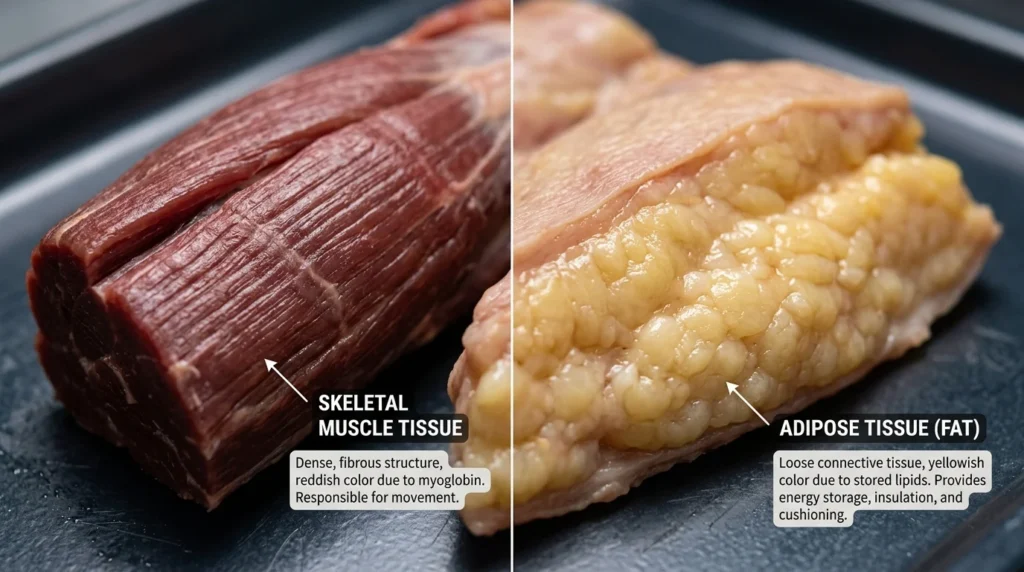
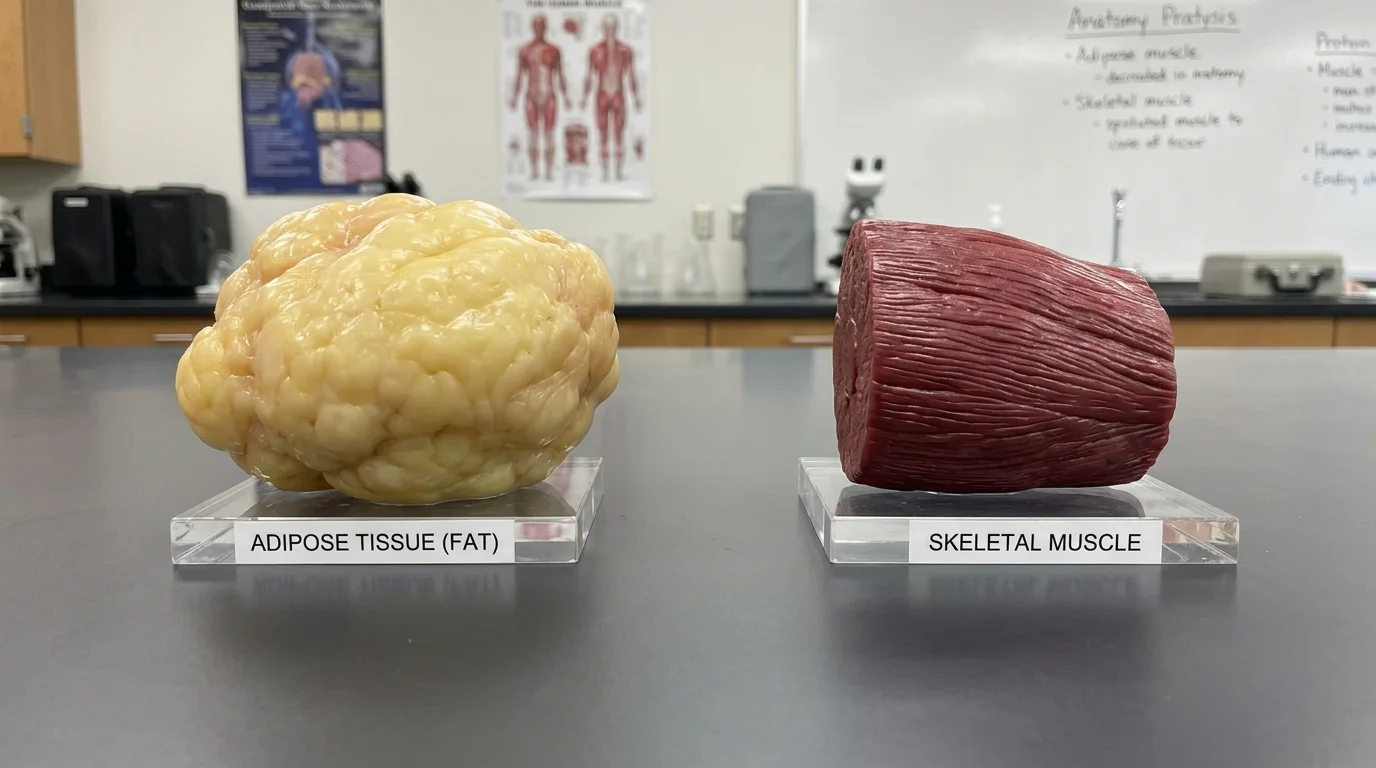
Fat is a type of body tissue that plays several important roles in normal health and development.
Body fat is commonly stored in adipose tissue. While people sometimes think of fat only as stored energy, it has several biological functions.
Main Functions of Body Fat
Fat can help:
- Store energy
- Insulate the body
- Cushion and protect certain organs
- Support hormone-related processes
- Help the body absorb certain fat-soluble vitamins
Having some body fat is therefore normal and necessary.
Different Types of Fat Tissue
The body contains different types of adipose tissue.
White adipose tissue is the main form involved in energy storage.
Brown adipose tissue has a different role and is involved in producing heat.
The amount and distribution of these tissues can vary among individuals.
Fat and Body Weight
Fat contributes to body weight, but body weight alone does not reveal how much of a person’s weight comes from fat, muscle, bone, organs, water, and other tissues.
This is why comparing fat or muscle based only on body weight can be misleading.
What Is Muscle?
Muscle is specialized tissue that allows the body to move and perform many essential functions.
Humans have three major types of muscle:
- Skeletal muscle
- Cardiac muscle
- Smooth muscle
Skeletal Muscle
Skeletal muscle is attached to bones and allows voluntary movement.
Examples include muscles used when:
- Walking
- Running
- Jumping
- Lifting
- Reaching
- Maintaining posture
Cardiac Muscle
Cardiac muscle is found in the heart. It contracts continuously to help pump blood throughout the body.
Smooth Muscle
Smooth muscle is found in organs and structures such as the digestive tract and blood vessels. It performs involuntary functions that help the body operate normally.
Why Muscle Matters
Muscle isn’t simply about appearance. It plays an important role in:
- Movement
- Stability
- Posture
- Physical function
- Supporting joints
- Everyday activities
Fat or Muscle: Key Differences
When comparing fat or muscle, the biggest difference is their structure and biological role.
- Fat is specialized primarily for energy storage and other metabolic functions.
- Muscle is specialized for movement and force production.
- Muscle tissue is generally denser than adipose tissue.
- Fat tissue occupies more space per unit of mass than muscle.
- Both tissues contribute to total body weight.
- Both are normal components of the human body.
- Neither tissue should automatically be viewed as “good” or “bad.”
- The amount and function of each tissue vary naturally between individuals.
- Body composition is more informative than body weight alone when discussing what makes up the body.
Comparison Table
| Feature | Fat | Muscle |
|---|---|---|
| Main tissue type | Adipose tissue | Muscle tissue |
| Major role | Energy storage and insulation | Movement and force |
| Main types | White and brown adipose tissue | Skeletal, cardiac, smooth |
| Stores energy | Yes | Uses energy for activity |
| Helps movement | Indirectly | Directly |
| Provides insulation | Yes | No |
| Supports organs | Yes, in certain locations | Helps support movement and stability |
| Contributes to body weight | Yes | Yes |
| Necessary for normal health | Yes | Yes |
Real-Life Conversation Examples
Dialogue 1: Body Composition
Person 1: “Does body weight tell me how much is fat or muscle?”
Person 2: “No. Body weight includes many components, including water, bone, organs, muscle, and fat.”
🎯 Lesson: Weight alone cannot identify body composition.
Dialogue 2: Muscle Function
Person 1: “Is muscle only important for appearance?”
Person 2: “No. Muscle is essential for movement, posture, and many everyday activities.”
🎯 Lesson: Muscle has important functional roles beyond appearance.
Dialogue 3: Body Fat
Person 1: “Is all body fat harmful?”
Person 2: “No. Some body fat is necessary for normal biological functions.”
🎯 Lesson: Body fat is a normal and important part of the human body.
Dialogue 4: The Scale
Person 1: “My weight changed. Does that mean I gained or lost muscle?”
Person 2: “Not necessarily. Weight can change because of water, food, muscle, fat, and other factors.”
🎯 Lesson: Changes on the scale don’t identify one specific type of tissue.
When to Think About Fat or Muscle
The comparison between fat or muscle is especially relevant when discussing body composition.
Instead of asking only, “How much do I weigh?” broader health questions can include:
- How well can I perform everyday activities?
- Am I getting enough nutritious food?
- Am I sleeping adequately?
- Am I physically active in ways I enjoy?
- Do I have enough energy for daily life?
- Am I following healthy habits consistently?
For teenagers in particular, the body naturally changes during growth and puberty. Height, weight, muscle, fat distribution, and body shape can all change as part of normal development.
There is no single ideal body composition or appearance that applies to every person.
Why Fat Is Important
It is easy to hear negative messages about body fat, but fat has important biological functions.
Energy Storage
Adipose tissue stores energy that the body can use when needed.
Insulation
Fat tissue can help reduce heat loss and contribute to temperature regulation.
Protection
Fat stored around certain organs can provide cushioning and protection.
Biological Signaling
Adipose tissue also participates in hormone and signaling processes that influence metabolism and other body functions.
Therefore, having some body fat is a normal part of human biology.
Why Muscle Is Important
Muscle performs several essential functions.
Movement
Skeletal muscles work with bones and joints to create movement.
Posture
Muscles help stabilize the body and maintain posture.
Everyday Function
Activities such as walking, climbing stairs, carrying school materials, and playing sports all rely on muscles.
Internal Functions
Cardiac and smooth muscles perform involuntary functions that are essential for life.
This is why muscle should be understood as functional tissue, not simply something associated with physical appearance.
Fat or Muscle and Body Weight
One common misconception is that a change in body weight automatically tells you what happened to fat or muscle.
That’s not necessarily true.
Body weight can change because of:
- Water
- Food and digestion
- Growth
- Muscle tissue
- Fat tissue
- Bone
- Other body tissues
For young people, growth and development can also cause natural changes in weight and body composition.
A scale cannot tell you exactly which tissue caused a particular change.
Fat or Muscle: Why Density Matters
Muscle and fat have different densities, which means the same amount of mass can occupy different amounts of space.
This is why statements such as “muscle weighs more than fat” can be misleading.
A more accurate explanation is:
Muscle is denser than fat.
If equal masses of muscle and fat were compared, the muscle would generally occupy less space because it is denser.
However, this does not mean muscle is inherently “better” than fat. They are different tissues with different jobs.
Common Myths
Myth 1: Fat Is Always Bad
False.
Some body fat is essential for normal biological functions.
Myth 2: Muscle Is Only for Athletes
False.
Everyone needs muscles. Muscle tissue helps people walk, maintain posture, breathe, and perform everyday activities.
Myth 3: The Scale Can Tell You Your Body Composition
Not accurately.
A scale measures total body weight, not a complete breakdown of fat, muscle, bone, water, and other tissues.
Myth 4: Everyone Should Have the Same Amount of Fat or Muscle
False.
Body composition naturally varies according to factors such as age, genetics, growth, development, activity, and overall health.
Myth 5: You Can Judge Body Composition by Appearance
Not reliably.
Two people can have similar appearances or body weights while having different proportions of muscle, fat, bone, and water.
Fat or Muscle During Growth
For teenagers, this topic deserves extra care.
During adolescence, the body goes through significant biological changes. Growth can affect:
- Height
- Weight
- Muscle development
- Fat distribution
- Bone development
- Hormones
- Overall body shape
These changes don’t happen at exactly the same time or rate for everyone.
Comparing your body with friends, celebrities, athletes, or images online can create unrealistic expectations because people develop differently.
A healthy body does not need to match a particular appearance.
Fat or Muscle and Exercise
Physical activity supports healthy development and physical function.
Different activities use muscles in different ways. For example:
- Walking supports everyday movement.
- Cycling uses multiple muscle groups.
- Swimming involves coordinated whole-body movement.
- Sports can develop strength, coordination, balance, and endurance.
- Recreational activities can make movement enjoyable.
The goal should be health, function, enjoyment, and development, rather than trying to achieve a particular body shape.
Fat or Muscle and Nutrition
Both muscle and fat are influenced by nutrition, but nutrition should not be reduced to trying to eliminate one type of tissue.
Growing bodies need adequate energy and nutrients to support:
- Growth
- Brain function
- Bone development
- Muscle function
- Hormonal processes
- Everyday activity
A balanced diet that includes a variety of foods is more appropriate than extreme restriction or skipping meals.