
What Is Cotton?
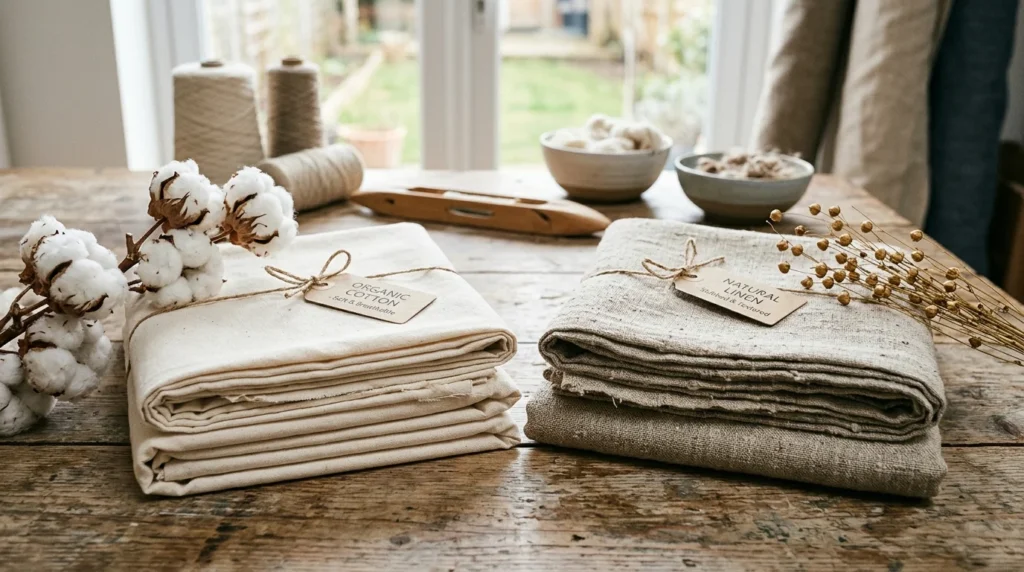
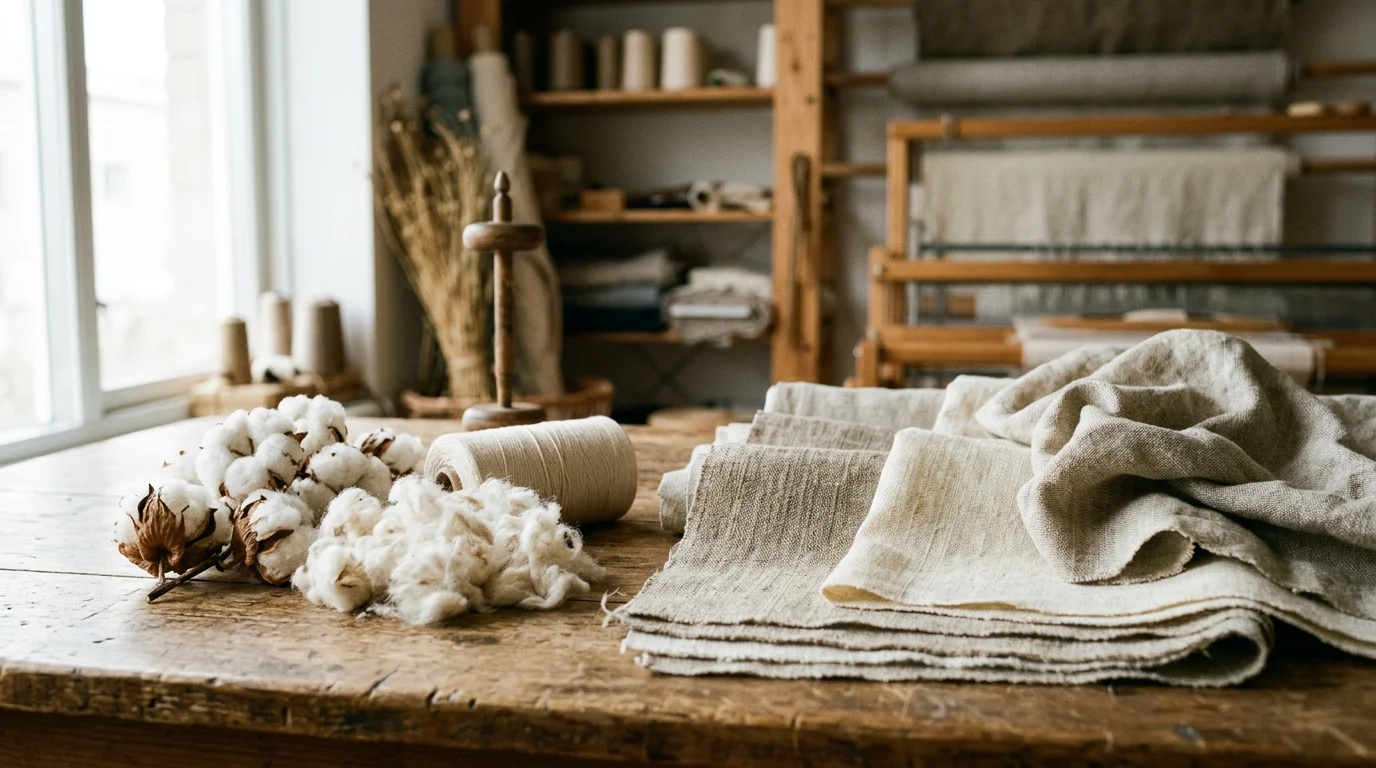
Cotton is a natural fiber obtained from the fluffy fibers surrounding the seeds of cotton plants. It has been used in textiles for thousands of years and remains one of the world’s most widely used natural fibers.
Cotton is popular because it can be spun into many different types of fabric.
Depending on how it is processed, cotton can feel:
- Soft
- Smooth
- Lightweight
- Crisp
- Thick
- Plush
- Stretchy when blended with other fibers
Common Cotton Fabrics
Cotton can be used to make:
- T-shirts
- Shirts
- Jeans
- Bedsheets
- Towels
- Sweatshirts
- Baby clothing
- Curtains
- Canvas
Why Is Cotton Popular?
Cotton is valued for its versatility and relatively easy care.
It can absorb moisture and is generally comfortable against the skin. Cotton is also available in a huge range of colors, weights, and finishes.
Cotton Example
A basic cotton T-shirt is a good example of how versatile the fiber can be. It can be lightweight enough for warm weather while remaining soft and comfortable for everyday use.
The exact performance depends on the fabric weave, weight, finishing, and whether cotton is blended with another fiber.
What Is Linen?
Linen is a natural textile fiber made from the flax plant. It has been used for thousands of years and is particularly well known for its durability, breathability, and distinctive natural texture.
Linen fabric often has a slightly crisp or textured feel, although high-quality linen can become softer with repeated washing and use.
Common Linen Products
Linen is frequently used for:
- Shirts
- Dresses
- Trousers
- Bedding
- Tablecloths
- Curtains
- Napkins
- Kitchen textiles
- Home décor
Why Is Linen Popular?
Linen is especially appreciated in warm-weather clothing because it allows air to circulate effectively and can feel cool against the skin.
It is also known for being strong and durable.
Linen Example
A lightweight linen shirt can be an excellent warm-weather choice because its structure allows airflow while its natural texture creates a relaxed appearance.
Cotton or Linen: Key Differences
The main difference between cotton or linen is how they feel and perform.
- Cotton is generally softer and smoother when new.
- Linen tends to have a crisper, more textured feel.
- Linen is highly breathable and especially popular in warm climates.
- Cotton can also be breathable, but performance varies greatly by fabric construction.
- Linen is generally stronger as a fiber than cotton.
- Cotton is usually easier to find in a wider variety of fabric weights and finishes.
- Linen wrinkles more easily.
- Cotton can be easier to care for depending on the specific fabric.
- Both can absorb moisture.
- Both are natural fibers.
- The quality of the final fabric depends heavily on processing, weave, and finishing.
Comparison Table
| Feature | Cotton | Linen |
|---|---|---|
| Fiber source | Cotton plant | Flax plant |
| Feel | Often soft and smooth | Often crisp and textured |
| Breathability | Good, depending on fabric | Excellent |
| Warm-weather comfort | Good | Excellent |
| Strength | Good | Generally higher |
| Moisture absorption | Good | Good to excellent |
| Wrinkling | Moderate | High |
| Softness | Often very soft | Softens with use |
| Durability | Good | Excellent |
| Care | Often easier | May require more care |
| Appearance | Extremely versatile | Naturally textured |
| Best known for | Versatility and softness | Breathability and durability |
Cotton or Linen for Hot Weather
If you’re comparing cotton or linen specifically for hot weather, linen often has the advantage.
Linen’s structure allows considerable airflow, making it popular for summer shirts, trousers, dresses, and bedding.
Cotton can also be comfortable in warm weather, especially when made into lightweight, breathable fabrics.
However, not all cotton is equally breathable.
A lightweight cotton voile and a heavy cotton canvas will behave very differently.
Best for Hot Weather
Linen: Excellent
Lightweight cotton: Very good
Heavy cotton: Less suitable for extreme heat
For very warm and humid conditions, fabric weight and weave can matter almost as much as the fiber itself.
Cotton or Linen for Softness
If softness is your main priority, cotton often has the advantage.
Many cotton fabrics feel soft and comfortable immediately, especially when they are finely woven or specially finished.
Linen can initially feel somewhat crisp or textured.
However, linen often becomes noticeably softer after repeated washing and use.
Important Difference
Cotton: Often soft right away.
Linen: Often softens over time.
This makes personal preference important when choosing between the two.
Cotton or Linen for Durability
For long-term durability, linen has a strong reputation.
Flax fibers are generally quite strong, and linen fabrics can remain useful for many years when properly cared for.
Cotton is also durable, but durability varies widely according to the type of cotton fabric, fiber length, yarn construction, weave, and finishing.
Best for Durability
Linen often has the edge.
However, a high-quality cotton fabric can also be extremely durable.
The actual fabric construction matters more than the fiber name alone.
Cotton or Linen for Moisture
Both cotton and linen can absorb moisture, which is one reason they are comfortable in warm conditions.
Cotton is widely used for:
- Towels
- Underwear
- T-shirts
- Sheets
because it absorbs moisture effectively.
Linen can also absorb moisture while drying relatively quickly and maintaining a breathable structure.
For hot-weather clothing, this combination of moisture management and airflow can make linen particularly appealing.
Cotton or Linen for Bedding
Both cotton or linen can make excellent bedding.
Cotton Bedding
Cotton sheets are popular because they are:
- Soft
- Versatile
- Available in many weaves
- Easy to find
- Available at many price points
Common cotton bedding types include:
- Percale
- Sateen
- Jersey
- Flannel
Each provides a different feel.
Linen Bedding
Linen bedding is popular for its:
- Breathability
- Natural texture
- Durability
- Warm-weather comfort
- Relaxed appearance
Linen bedding may feel somewhat textured initially, but it tends to soften with use.
Which Is Better?
Choose cotton if you prefer a smoother, softer feel.
Choose linen if you prefer breathability, texture, and a relaxed natural appearance.
Cotton or Linen for Clothing
Both fabrics can be excellent for clothing.
Cotton Clothing
Cotton works well for:
- T-shirts
- Casual shirts
- Jeans
- Underwear
- Sweatshirts
- Everyday clothing
It is especially useful when softness and versatility are priorities.
Linen Clothing
Linen is particularly popular for:
- Summer shirts
- Dresses
- Trousers
- Lightweight jackets
- Resort clothing
- Warm-weather suits
Its breathability makes it especially useful in hot climates.
Simple Rule
Everyday versatility → Cotton
Hot-weather elegance → Linen
This is a simplification, but it’s a useful starting point.
Cotton or Linen for Humid Weather
Humidity can make clothing feel uncomfortable because sweat evaporates less easily.
Linen is often particularly pleasant in humid weather because of its breathable structure and moisture-handling ability.
Cotton can still be comfortable, but thick or densely woven cotton may hold moisture longer.
For humid climates, look for:
- Lightweight fabric
- Open or breathable weave
- Loose-fitting designs
- Natural airflow
- Appropriate layering
The fabric construction matters just as much as the fiber.
Cotton or Linen for Wrinkles
This is one category where cotton generally has an advantage.
Linen wrinkles easily.
That isn’t necessarily a flaw. In fact, linen’s natural wrinkles are part of its relaxed aesthetic.
However, if you prefer a crisp, freshly pressed appearance, linen may require more ironing or steaming.
Cotton can also wrinkle, particularly in lightweight fabrics, but many cotton garments are easier to keep looking smooth.
Quick Comparison
Linen: More wrinkles
Cotton: Generally fewer wrinkles
If you dislike ironing, a low-maintenance cotton blend may be more convenient.
Cotton or Linen for Care
Care instructions depend on the specific fabric and garment.
Cotton Care
Cotton is often relatively easy to wash and maintain.
However, some cotton garments can:
- Shrink
- Fade
- Lose shape
- Wrinkle
High heat can increase shrinkage risk.
Linen Care
Linen may also be machine washable, but care requirements depend on the weave, finishing, and garment construction.
Some linen products benefit from:
- Gentle washing
- Lower temperatures
- Air drying
- Careful ironing or steaming
Always follow the garment’s care label.
Cotton or Linen for Sustainability
Both cotton and linen are plant-based natural fibers, but sustainability cannot be determined simply by asking whether a fiber is “natural.”
Environmental impact can depend on:
- Water use
- Farming practices
- Pesticides
- Energy consumption
- Processing
- Transportation
- Durability
- Garment lifespan
- Recycling or disposal
Linen made from flax can have sustainability advantages in some production systems, while cotton is available in different forms including organic cotton.
It’s better to evaluate the specific product and supply chain rather than assuming one fiber is always more sustainable.
Cotton or Linen: Price
Price varies significantly.
Cotton is available at nearly every price point, from inexpensive basic garments to premium long-staple cotton products.
Linen can sometimes be more expensive because of its production process and the positioning of high-quality linen products.
However, price also depends on:
- Brand
- Fabric quality
- Weight
- Weave
- Finishing
- Country of production
- Garment construction
A cheap linen garment and premium linen garment can feel and perform very differently.
Cotton or Linen for Towels
Cotton generally wins for towels.
Cotton towels are highly absorbent and can be made thick and plush.
Linen towels are also available, especially in kitchen and hand towels, but they tend to have a lighter, more textured feel.
Best Choice
Bath towels → Cotton
Lightweight kitchen towels → Linen can be excellent
Cotton or Linen for Home Décor
Both materials work well in home décor.
Cotton can provide:
- Soft curtains
- Upholstery
- Cushions
- Bedding
- Everyday textiles
Linen can provide:
- Natural-looking curtains
- Tablecloths
- Napkins
- Cushion covers
- Relaxed bedding
Linen’s textured appearance is particularly popular in minimalist, rustic, and natural interior styles.
Cotton or Linen: Real-Life Conversation Examples
Conversation 1: Summer Clothing
Alex: “I need something breathable for a hot summer day.”
Sam: “A lightweight linen shirt could be a great option.”
🎯 Lesson: Linen is especially valued for warm-weather breathability.
Conversation 2: Soft Sheets
Alex: “I want sheets that feel really smooth and soft.”
Sam: “Cotton could be a good place to start.”
🎯 Lesson: Cotton is often preferred when softness is the priority.
Conversation 3: Wrinkles
Alex: “Why does my linen shirt wrinkle so easily?”
Sam: “Wrinkling is a natural characteristic of linen.”
🎯 Lesson: Linen’s wrinkles are normal and often part of its relaxed look.
Conversation 4: Long-Term Use
Alex: “Which fabric is known for lasting a long time?”
Sam: “Linen has a strong reputation for durability when properly cared for.”
🎯 Lesson: Linen is often chosen for its long-lasting strength.
When to Choose Cotton or Linen
Choose Cotton If You Want:
- Softness
- Everyday versatility
- Easy availability
- Many fabric choices
- Comfortable casual clothing
- Plush towels
- A smooth feel
- A wide range of prices
Choose Linen If You Want:
- Excellent breathability
- Warm-weather comfort
- Natural texture
- Strong durability
- Relaxed summer clothing
- Lightweight home textiles
- A naturally wrinkled appearance
- A premium natural-fiber feel
Simple Memory Trick
Think:
Cotton = Soft + Versatile
Linen = Cool + Breathable
This isn’t a complete technical comparison, but it makes the basic difference easy to remember.
Cotton or Linen for Different Seasons
Summer
Linen is usually the standout because of its airflow and lightweight feel.
Spring
Both can work well.
Lightweight cotton is versatile, while linen works well as temperatures rise.
Autumn
Cotton is generally more flexible because it is available in a wider variety of medium and heavy weights.
Winter
Thicker cotton fabrics can be very useful for winter clothing.
Linen is usually better suited to warmer conditions unless layered appropriately.
Common Mistakes
Mistake 1: Assuming All Cotton Is Cool
Heavy or tightly woven cotton can feel warm.
Mistake 2: Assuming Linen Is Always Rough
High-quality linen often becomes softer with washing and use.
Mistake 3: Choosing Based Only on Fiber
Fabric weight, weave, finishing, and construction strongly influence performance.
Mistake 4: Ignoring Care Labels
Two garments made from the same fiber can have completely different care requirements.
Mistake 5: Expecting Wrinkle-Free Linen
Wrinkles are a natural characteristic of linen.
Mistake 6: Assuming More Expensive Means Better
Price is influenced by brand, construction, and production details.
How to Choose Between Cotton and Linen
Before buying cotton or linen, ask yourself five questions:
1. What Is the Climate?
Hot and humid weather may favor linen.
2. What Feel Do You Prefer?
Soft and smooth may point toward cotton.
Textured and crisp may point toward linen.
3. How Much Maintenance Do You Want?
Cotton may be easier for everyday use.
Linen may require more tolerance for wrinkles.
4. How Long Do You Want It to Last?
Quality linen is known for durability, but quality cotton can also last a very long time.
5. What Are You Buying?
A towel, bedsheet, summer shirt, and curtain may benefit from different materials.
Cotton or Linen: Quick Decision Guide
| Your Priority | Better Starting Point |
|---|---|
| Soft T-shirts | Cotton |
| Summer shirts | Linen |
| Plush towels | Cotton |
| Breathable bedding | Linen |
| Smooth sheets | Cotton |
| Warm-weather clothing | Linen |
| Easy everyday care | Cotton |
| Natural texture | Linen |
| Long-lasting natural fabric | Linen |
| Maximum versatility | Cotton |
Cotton or Linen: Final Comparison
| Category | Winner |
|---|---|
| Softness | Cotton |
| Breathability | Linen |
| Warm-weather comfort | Linen |
| Durability | Linen |
| Wrinkle resistance | Cotton |
| Versatility | Cotton |
| Natural texture | Linen |
| Plush towels | Cotton |
| Summer clothing | Linen |
| Smooth bedding | Cotton |
| Relaxed bedding | Linen |
| Everyday availability | Cotton |