
🏛️ Seville or Madrid: What Is the Main Difference?
The biggest difference is the overall character of each city.
Madrid feels like a large, modern European capital. It combines historic architecture with business districts, enormous parks, major museums, shopping streets, theaters, and a lively urban atmosphere. Tourism Madrid describes the city as a major European cultural center with extensive food, art, entertainment, and transportation options.
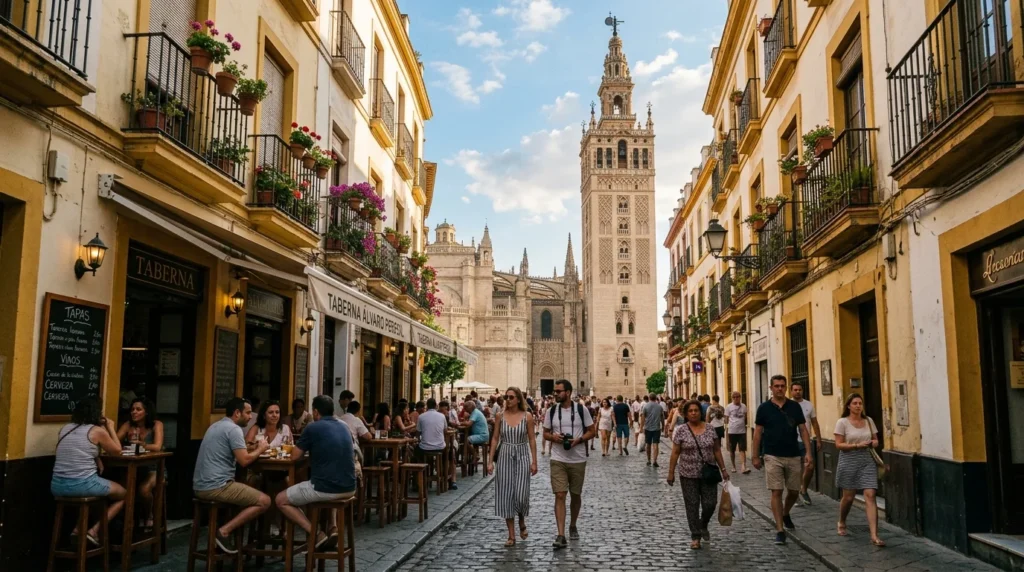
Seville feels more traditionally Andalusian. Its historic center, plazas, gardens, tiled architecture, and flamenco traditions create a strong sense of place. The official Seville tourism site highlights its monuments, museums, neighborhoods, culture, food, celebrations, and outdoor spaces.
So, in simple terms:
Madrid = big-city energy, museums, shopping, and variety.
Seville = historic charm, Andalusian culture, architecture, and atmosphere.
🌆 Seville: What Makes It Special?
Seville is one of Spain’s most distinctive cultural destinations. Its identity is strongly connected to Andalusian architecture, historic streets, gardens, flamenco, and traditional food.
One of its greatest attractions is the area around the Seville Cathedral and Giralda. The official tourism authority notes that the cathedral, Giralda, Royal Alcázar, and Archive of the Indies form a UNESCO World Heritage ensemble dating from 1987. The cathedral was built on the site of a former Almohad mosque, giving the complex a fascinating mixture of Islamic, Gothic, Renaissance, and Baroque influences.
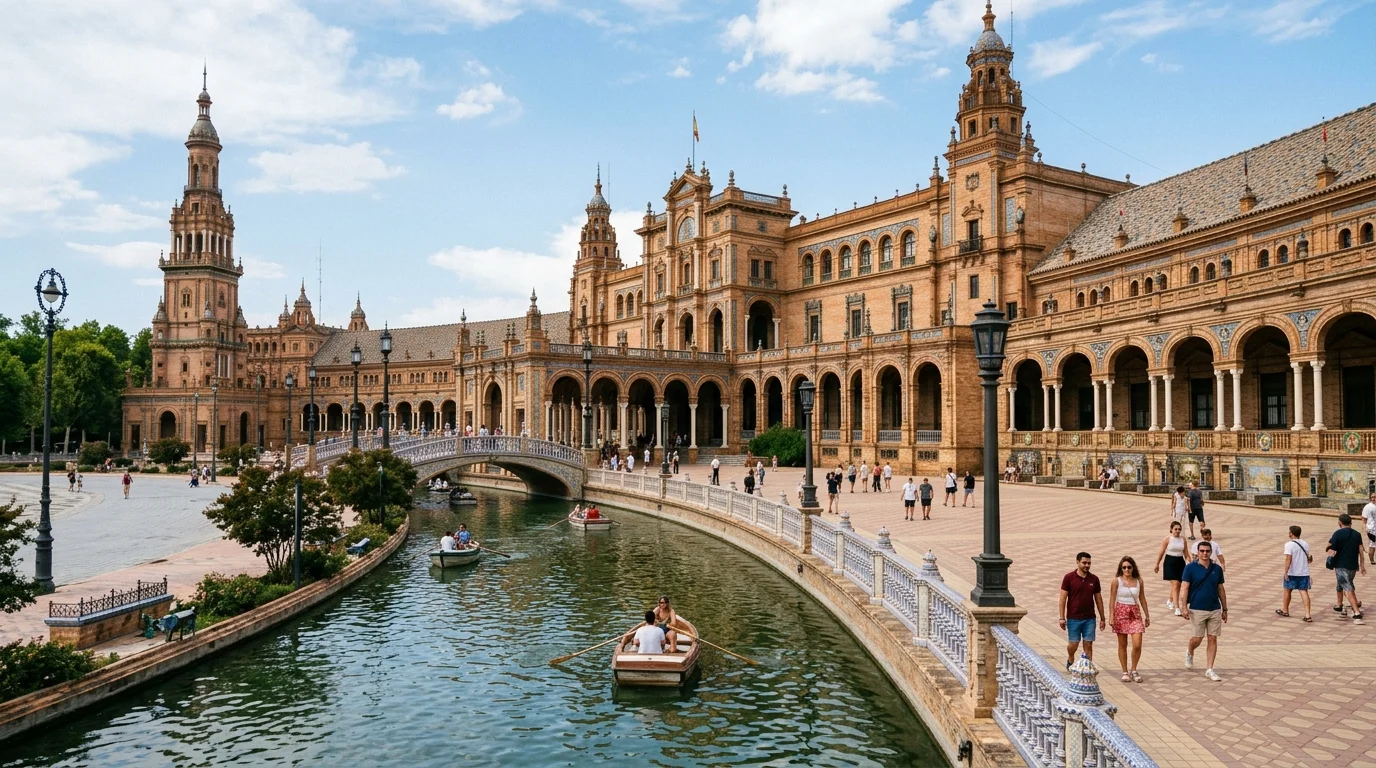
Another unforgettable landmark is Plaza de España. Designed by Aníbal González and constructed between 1914 and 1928 for the 1929 Ibero-American Exposition, the enormous semicircular complex combines architecture, gardens, decorative tilework, and a canal.
Seville is also deeply associated with flamenco. The city’s tourism authority describes flamenco as a central part of Seville’s cultural identity, with performances and cultural spaces throughout the city.
That combination makes Seville particularly appealing to travelers who want a city where history and everyday life feel closely connected.
🏙️ Madrid: What Makes It Special?
Madrid offers a completely different experience.
As Spain’s capital, it provides an enormous selection of art, architecture, shopping, parks, neighborhoods, entertainment, and cultural institutions.
The Prado Museum is one of its biggest attractions. Tourism Madrid notes that the museum contains approximately 8,600 paintings and more than 700 sculptures, including major works by artists such as Velázquez and Goya. It is part of the Paseo del Arte, alongside the Thyssen-Bornemisza and Reina Sofía museums.
The Royal Palace of Madrid is another major landmark. It remains Spain’s official royal residence even though the royal family does not live there permanently. The palace has extensive historical interiors and continues to receive visitors, with visiting information updated by Madrid Tourism in 2026.
Madrid also has El Retiro Park, one of the city’s best-known green spaces. Retiro and the Paseo del Prado together form the UNESCO-listed Landscape of Light, recognized in 2021 for its combination of culture, science, and nature.
For travelers who enjoy having many options every day, Madrid can be extremely rewarding.
⚖️ Seville or Madrid: Key Differences
Here is a quick comparison:
| Feature | Seville | Madrid |
|---|---|---|
| Overall atmosphere | Relaxed and traditional | Energetic and cosmopolitan |
| City size | More compact | Much larger |
| Architecture | Strong Andalusian influence | Diverse historic and modern architecture |
| Major museums | Good selection | Exceptional museum scene |
| Historic atmosphere | Excellent | Excellent |
| Flamenco | Especially prominent | Available, but less central to city identity |
| Parks | Beautiful historic gardens and parks | Huge urban parks |
| Shopping | Charming local streets and boutiques | Much broader choice |
| Nighttime entertainment | Atmospheric and cultural | Large and varied |
| Short trips | Excellent | Excellent |
| First-time Spain experience | Very distinctive | Very comprehensive |
🕌 Seville or Madrid for History and Architecture?
For historic atmosphere, Seville has a slight advantage.
Its compact historic core makes it possible to move between major landmarks relatively easily. The Cathedral and Giralda, Royal Alcázar area, Plaza de España, historic neighborhoods, and traditional streets can create the feeling of walking through several periods of Spanish history in a single day.
The city’s architectural character also reflects centuries of cultural interaction.
Madrid, however, offers a broader range of architectural experiences. The Royal Palace, historic plazas, grand avenues, churches, museums, and neighborhoods show how the Spanish capital developed over time.
Winner for atmosphere: Seville
Winner for variety: Madrid
🎨 Seville or Madrid for Museums and Art?
Madrid wins this category comfortably.
The city’s Paseo del Arte is one of Europe’s most important museum areas. The Prado alone provides enough material for a serious art lover to spend hours exploring. Tourism Madrid also points travelers toward the nearby Thyssen-Bornemisza and Reina Sofía museums.
Seville certainly has museums and cultural institutions, but its biggest appeal is arguably the city itself. The streets, buildings, plazas, churches, gardens, and neighborhood atmosphere are major parts of the sightseeing experience.
Choose Madrid when museums and fine art are high on your list.
Choose Seville when architecture and outdoor exploration matter more.
🌳 Which City Has Better Parks?
Both cities perform well, but they offer different styles of green space.
Seville’s María Luisa Park surrounds Plaza de España and provides a beautiful setting for walking and relaxing. The official tourism site highlights its gardens, fountains, mature trees, and leisure areas.
Madrid’s El Retiro Park is much more deeply integrated into the city’s broader cultural landscape. It forms part of the UNESCO-listed Landscape of Light and contains numerous landmarks and scenic areas.
Seville: romantic gardens and historic scenery.
Madrid: large-scale urban greenery with cultural landmarks.
🍽️ Seville or Madrid for Food?
This one is extremely close because both cities offer excellent Spanish food.
Seville is an excellent destination for trying Andalusian specialties, tapas, traditional dishes, pastries, and local market food. Its compact neighborhoods make food stops easy to combine with sightseeing.
Madrid offers a much broader metropolitan food scene. Tourism Madrid highlights everything from traditional taverns and tapas to modern restaurants and internationally recognized dining. The city’s official tourism information also notes the diversity of its restaurants and food markets.
Madrid is particularly strong for travelers who want maximum culinary variety.
Seville is ideal for travelers who want food experiences closely connected to Andalusian traditions and neighborhood life.
Winner for variety: Madrid
Winner for traditional Andalusian character: Seville
☀️ Seville or Madrid: Which Has Better Weather?
Weather can strongly influence your decision.
Spain generally has a mild climate with noticeable seasonal differences. Official Spain tourism information provides average seasonal temperatures for Madrid and notes the country’s generally favorable year-round travel conditions.
Seville is known for its particularly warm summers, while Madrid can experience hotter summer days as well as colder winter periods because of its inland location and higher elevation.
For many travelers, spring and autumn are especially attractive times for city sightseeing because temperatures are generally more comfortable than during the hottest part of summer.
When comparing Seville and Madrid, always check the forecast shortly before your trip rather than relying only on seasonal averages.
🚇 Seville or Madrid for Public Transportation?
Madrid has the advantage because it operates on a much larger metropolitan scale.
The city’s official tourism site highlights its extensive transportation system, including metro, buses, trains, and taxis, making it practical to move around the city.
Seville is more compact, and many central attractions are conveniently connected by walking routes. Public transport is still useful, especially when staying farther from the historic center.
For a traveler who prefers to explore mostly on foot, Seville can feel easier.
For someone who expects to use public transportation extensively, Madrid offers more options and wider coverage.
🛍️ Which City Is Better for Shopping?
Madrid wins for sheer selection.
The capital offers major shopping streets, department stores, designer stores, independent boutiques, vintage shops, markets, and specialized retail districts.
Seville is better suited to shoppers who enjoy local crafts, traditional designs, ceramics, souvenirs, regional products, and smaller boutiques.
So the choice depends on your goal.
For international brands and maximum choice: Madrid.
For distinctive local finds: Seville.
🌙 Seville or Madrid for Evening Entertainment?
Madrid has one of Spain’s most extensive evening entertainment scenes. Official Madrid tourism information highlights late-night cultural activities, theaters, music, tapas districts, rooftop viewpoints, and nightlife areas around places such as Gran Vía, Malasaña, Chueca, Sol, and the Literary Quarter.
Seville has a more traditional and atmospheric evening experience. You can explore illuminated plazas, historic streets, cultural performances, and flamenco venues.
Madrid is better when you want lots of different evening options.
Seville is especially appealing when you want a slower, more traditional evening atmosphere.
📸 Seville or Madrid for Photography?
Seville may win for travelers who want instantly recognizable historic scenery.
Plaza de España, the Giralda, colorful streets, courtyards, tiled buildings, and gardens provide dramatic photographic settings. The official Seville tourism site specifically recommends Plaza de España early in the morning or around sunset for particularly attractive light.
Madrid offers a broader variety of photographic subjects, including palaces, grand avenues, museums, modern architecture, parks, monuments, and urban neighborhoods.
Choose Seville for: architectural and traditional travel photography.
Choose Madrid for: urban, cultural, architectural, and lifestyle photography.
💰 Seville or Madrid: Which Is More Budget-Friendly?
There is no single answer because the cost of your trip depends heavily on your accommodation, travel dates, attractions, food choices, and transportation.
Madrid is a major capital, so it offers everything from budget accommodation and casual dining to luxury hotels and high-end experiences. Its size means travelers can choose from a very large range of options.
Seville’s smaller scale can make a short visit feel more manageable, particularly because many central attractions are close together.
For either city, the best approach is to compare hotel prices for your exact dates, then estimate attraction tickets, local transportation, meals, and day trips before deciding.
🧳 Which City Is Better for a Weekend?
For a two- or three-day trip, Seville is an excellent choice.
Its major attractions can be grouped efficiently, and its historic center provides a strong sightseeing experience without requiring long journeys between every landmark.
A typical short Seville trip could include:
Day 1: Seville Cathedral, Giralda, historic center, and Royal Alcázar area.
Day 2: Plaza de España, María Luisa Park, neighborhood exploration, and a cultural evening.
Day 3: Food experiences, shopping, museums, and slower exploration.
Madrid also works extremely well for a weekend, especially for travelers who want museums, parks, shopping, and major landmarks.
A Madrid weekend simply benefits from careful planning, because there are so many things to see.
🇪🇸 Which City Is Better for a First Trip to Spain?
This depends on what you want your first trip to represent.
Choose Seville when you imagine Spain as colorful historic neighborhoods, plazas, traditional architecture, gardens, flamenco, and Andalusian culture.
Choose Madrid when you want your first trip to show Spain as a major European capital with museums, royal landmarks, modern neighborhoods, shopping, art, parks, and extensive entertainment.
Neither city is the objectively “correct” first choice.
They simply tell different stories about Spain.
🚄 Can You Visit Seville and Madrid on the Same Trip?
Absolutely.
This is one of the best solutions when you cannot decide between them.
A multi-city itinerary lets you experience the contrasting personalities of both destinations rather than choosing only one.
For example:
3 days Madrid + 3 days Seville
This gives you time to experience Madrid’s major cultural attractions before moving south to explore Seville’s historic center and Andalusian character.
Spain’s national rail network makes intercity travel practical, so the two cities can be combined into one itinerary. Always check the current timetable and journey details when booking because schedules can change.
Combining the two also creates a more complete impression of Spain: Madrid provides the metropolitan experience, while Seville provides a deeper Andalusian experience.
🧭 Seville or Madrid: Which One Should You Choose?
The easiest way to decide is to match the city with your travel personality.
Choose Seville if you love:
Historic architecture and atmospheric streets.
Andalusian culture and traditional neighborhoods.
Flamenco and cultural performances.
Beautiful plazas and gardens.
A more compact sightseeing experience.
Photography and architectural scenery.
Choose Madrid if you love:
Major museums and art collections.
Large-city energy.
Shopping and entertainment.
Royal history and grand architecture.
Large parks and urban neighborhoods.
A wider variety of food and cultural experiences.
⭐ Seville or Madrid: Final Verdict
There is no universal winner in the Seville or Madrid debate because the two destinations excel at different things.
Seville is the better choice for charm, Andalusian culture, historic atmosphere, flamenco, architecture, and a more compact city experience.
Madrid is the better choice for museums, art, shopping, transportation, major-city entertainment, parks, and sheer variety.
For a relaxing cultural getaway, Seville may be the more memorable option. For a packed city break with countless museums, neighborhoods, restaurants, shops, and activities, Madrid is hard to beat.
The best option of all may be to visit both. Experiencing Seville and Madrid together gives you two very different perspectives on Spain—and that contrast is exactly what makes the trip so rewarding.
🎯 Final Quick Pick
Best for traditional Spanish atmosphere: Seville
Best for museums: Madrid
Best for Andalusian culture: Seville
Best for shopping: Madrid
Best for a compact city break: Seville
Best for variety: Madrid
Best for combining into one Spain itinerary: Both