
What Is a Weasel?
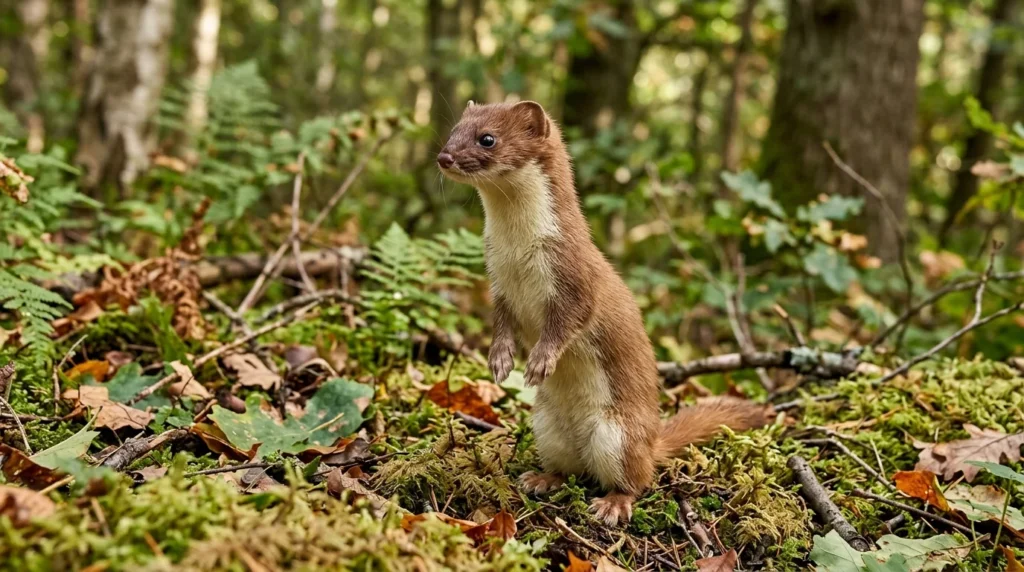
A weasel is a small carnivorous mammal belonging to the genus Mustela. The term can refer to several closely related species, including the least weasel, long-tailed weasel, and stoat in different regions.
Weasels have a distinctive long, narrow body with short legs and a relatively small head.
Common Weasel Characteristics
A weasel may have:
- A long, slender body
- Short legs
- A small head
- Short fur
- A pointed face
- A long tail, depending on species
- Brown, tan, white, or seasonally changing fur
The exact appearance depends on the species.
For example, some weasels can develop white winter coats in colder climates, while others remain brown throughout the year.
Weasel Habitat
Weasels can live in a variety of environments, including:
- Grasslands
- Woodlands
- Farmland
- Meadows
- Mountains
- Shrublands
- Areas around human settlements
Unlike mink, weasels do not depend as strongly on water.
Weasel Diet
Weasels are efficient predators and commonly eat small animals.
Their diet may include:
- Mice
- Voles
- Rats
- Rabbits
- Small birds
- Eggs
- Frogs
- Insects
Because of their narrow bodies, some weasel species can enter small burrows while hunting prey.
What Is a Mink?
A mink is also a member of the mustelid family. Two names commonly encountered are the American mink (Neogale vison) and the European mink, which belongs to a different genus and has a much more restricted geographic range.
When people casually say “mink,” they often mean the American mink in North America.
Mink are generally larger and heavier than many true weasels.
Common Mink Characteristics
A mink typically has:
- A long body
- Short legs
- Dense fur
- A relatively broad head
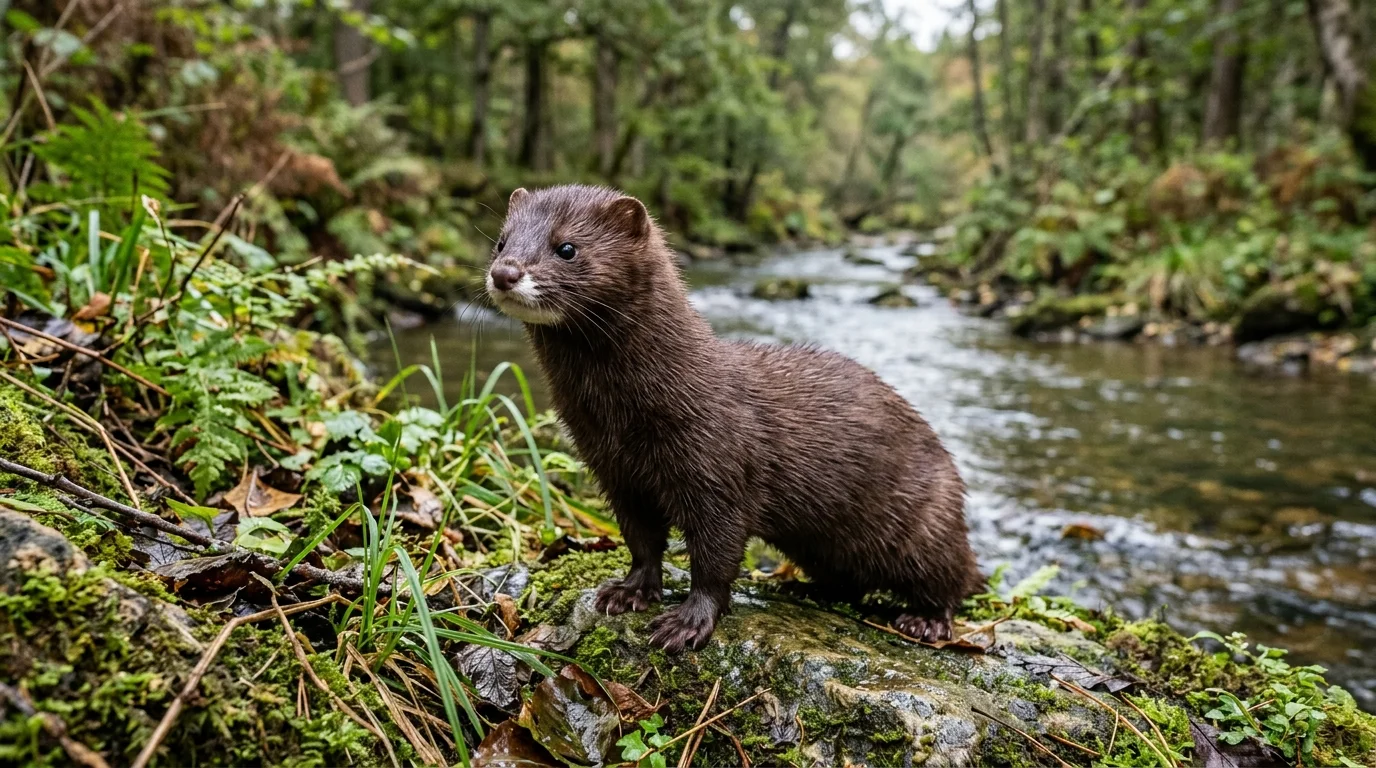
- Dark brown to nearly black fur
- A moderately long tail
- Partially webbed feet that assist swimming
Their dense coat helps them tolerate cool and wet environments.
Mink Habitat
Mink are strongly associated with areas near water.
They commonly occur around:
- Rivers
- Streams
- Lakes
- Wetlands
- Marshes
- Ponds
- Coastal areas
They are excellent swimmers and can hunt both on land and in water.
Mink Diet
Mink have a varied carnivorous diet.
Depending on where they live, they may eat:
- Fish
- Frogs
- Crayfish
- Small mammals
- Birds
- Eggs
- Waterfowl
- Other small animals
Their ability to forage in aquatic environments gives mink access to prey that some terrestrial weasels encounter less often.
Weasel or Mink: Key Differences
The main difference between weasel or mink is their size, habitat, and relationship with water.
- Weasels are generally smaller.
- Mink are generally larger and heavier.
- Weasels are primarily terrestrial predators.
- Mink are strongly associated with aquatic habitats.
- Mink are excellent swimmers.
- Weasels can swim but are generally less specialized for aquatic life.
- Weasels often prey heavily on small rodents.
- Mink commonly include aquatic prey in their diet.
- Some weasel species change coat color seasonally.
- Mink generally retain darker brown or blackish coloration throughout the year.
Comparison Table
| Feature | Weasel | Mink |
|---|---|---|
| Family | Mustelidae | Mustelidae |
| Typical size | Smaller | Larger |
| Body shape | Very slender | Long and more robust |
| Fur | Species-dependent | Dense, usually dark brown |
| Water association | Moderate | Strong |
| Swimming | Capable | Excellent |
| Typical habitat | Fields, woodland, grassland | Rivers, lakes, wetlands, coasts |
| Common prey | Rodents and small animals | Fish, frogs, rodents, birds and more |
| Winter coat | Some species turn white | Usually remains dark |
| Lifestyle | Primarily terrestrial | Semi-aquatic |
Weasel or Mink: Size Difference
One of the easiest ways to distinguish weasel or mink is size.
However, size alone isn’t perfect because there are several weasel species with different body dimensions.
Mink are generally more robust, while many weasels are noticeably smaller and narrower.
A mink may look somewhat like a stretched-out, thick-bodied weasel.
If you see an animal near a stream that looks like a large, dark mustelid, mink becomes a stronger possibility.
If the animal is extremely small and narrow, particularly in a grassy or woodland environment, a weasel may be more likely.
Weasel or Mink: Appearance
Appearance provides several clues.
Weasel
Many weasels have:
- Narrow faces
- Slim bodies
- Short fur
- Brown or tan upperparts
- Pale undersides
Some species develop white coats during winter.
The stoat, for example, can become white in winter except for the dark tip of its tail.
Mink
Mink tend to have:
- Dark brown to nearly black fur
- A relatively broader head
- Dense, glossy-looking fur
- A more substantial body
- A white or cream patch around the chin or throat in many individuals
The combination of dark fur and a more robust body can help distinguish a mink from many weasels.
Weasel or Mink: Habitat
Habitat is one of the strongest clues when identifying weasel or mink.
Weasel Habitat
Weasels are comfortable in many terrestrial environments.
You might encounter one in:
- Fields
- Farms
- Meadows
- Forest edges
- Mountains
- Rocky areas
- Rural landscapes
They often hunt where rodents are abundant.
Mink Habitat
Mink strongly favor areas close to water.
Look around:
- Riverbanks
- Stream edges
- Marshes
- Lakes
- Wetlands
- Ponds
Mink can travel over land, but access to water is an important part of their ecology.
Weasel or Mink: Swimming Ability
If an animal is frequently swimming or traveling along a riverbank, mink becomes a much stronger candidate.
Mink are highly capable swimmers and can pursue aquatic prey.
They may enter water voluntarily and can move through streams and ponds with ease.
Weasels are also capable of swimming, but their lifestyle is generally more terrestrial.
This is one of the easiest behavioral differences to remember:
Weasel = mostly land
Mink = land + strong water association
Weasel or Mink: Diet
Both animals are carnivores, but their diets can reflect their habitats.
Weasel Diet
Weasels often specialize in small terrestrial prey.
Common food includes:
- Mice
- Voles
- Rats
- Small birds
- Eggs
- Rabbits
Their slender bodies allow some species to follow prey into narrow tunnels.
Mink Diet
Mink have a broader opportunity to exploit wetland and aquatic food sources.
They may eat:
- Fish
- Frogs
- Crayfish
- Water birds
- Rodents
- Eggs
- Small mammals
This doesn’t mean every mink eats mostly fish. Their diet varies according to location and available prey.
Weasel or Mink: Behavior
Both weasels and mink are active predators, but their behavior reflects their ecological niches.
Weasel Behavior
Weasels are often:
- Fast-moving
- Curious
- Agile
- Active hunters
- Skilled at entering burrows
They may patrol an area searching for rodents.
Mink Behavior
Mink are also agile predators but are particularly adapted to hunting near water.
They may:
- Swim frequently
- Hunt along shorelines
- Explore riverbanks
- Use dens near water
- Search both land and aquatic environments
Mink can also be active at different times depending on environmental conditions.
Weasel or Mink: Geographic Range
Geography can also provide a clue.
Several weasel species occur across large portions of the Northern Hemisphere, and individual species have different distributions.
The American mink is native to North America and has also been introduced to various other parts of the world, where it has established populations.
The European mink is much rarer and has a very limited range.
Because “weasel” and “mink” each describe animals with different species and ranges, identification should consider your location as well as appearance.
Weasel or Mink: Real-Life Identification Examples
Example 1: Tiny Predator in a Field
Alex: “I saw a very small brown animal running through the grass.”
Sam: “A weasel could be a possibility, especially if it had a very slender body.”
🎯 Lesson: A small, narrow-bodied predator in a terrestrial setting may be a weasel.
Example 2: Dark Animal Near a River
Alex: “I saw a dark brown animal swimming in the river.”
Sam: “Mink would be a strong possibility.”
🎯 Lesson: Swimming and frequent water use strongly suggest mink.
Example 3: White Winter Animal
Alex: “I saw a small white mustelid in the snow.”
Sam: “Some weasel relatives can change to a white winter coat.”
🎯 Lesson: Seasonal white fur can help identify certain weasel species.
Example 4: Animal Hunting Near a Pond
Alex: “The animal keeps moving between the shoreline and the water.”
Sam: “That behavior is consistent with mink.”
🎯 Lesson: A strong connection with water is a useful mink clue.
When to Choose Weasel or Mink for Identification
Use weasel as your likely identification when you observe:
- A very small body
- A highly slender shape
- Primarily terrestrial movement
- Strong rodent-hunting behavior
- Fields or woodland habitats
- Seasonal white fur in suitable species
Consider mink when you observe:
- A larger, more robust body
- Dark brown or almost black fur
- Frequent swimming
- River or pond habitats
- Shoreline hunting
- Aquatic prey behavior
Simple Memory Trick
Remember:
Weasel = small and slender
Mink = larger and water-loving
This isn’t enough to identify every species with certainty, but it’s a useful starting point.
Weasel or Mink: Tracks and Signs
If you don’t see the animal itself, tracks and other signs may provide clues.
Both can leave footprints with several visible toes, but track appearance varies depending on the surface, gait, and species.
Other evidence can include:
- Droppings
- Burrows
- Prey remains
- Trail patterns
- Swimming signs
- Shoreline activity
For reliable wildlife identification, combining several clues is better than depending on one footprint.
Weasel or Mink: Winter Appearance
Winter can make identification interesting.
Certain weasel species, especially those adapted to snowy regions, may develop white winter coats that provide camouflage.
Mink generally maintain darker fur throughout the year.
So if you see a small white mustelid in a snowy landscape, a seasonal-color-changing weasel species may be more likely than a mink.
However, local species and climate still matter.
Are Weasels and Mink Related?
Yes.
Both belong to the family Mustelidae, commonly known as the mustelid family.
This family includes animals such as:
- Weasels
- Mink
- Otters
- Ferrets
- Badgers
- Wolverines
Their shared ancestry explains why they can have similar body shapes and hunting characteristics.
However, belonging to the same family does not mean they are the same animal.
Common Mistakes
Mistake 1: Assuming Every Small Brown Mustelid Is a Weasel
Several mustelid species can look similar.
Mistake 2: Assuming Every Animal Near Water Is a Mink
Other animals can also live around water, so consider body shape, size, and behavior.
Mistake 3: Using Fur Color Alone
Color can vary by species, season, and individual.
Mistake 4: Ignoring Geography
The species present in your region can dramatically narrow down the possibilities.
Mistake 5: Assuming Mink Only Eat Fish
Mink have a varied diet and can hunt terrestrial prey too.
Weasel or Mink: Conservation Considerations
Conservation status varies by species.
“Weasel” isn’t one species, so different weasels can have very different population trends.
Likewise, American mink and European mink have very different conservation situations.
The European mink is considered highly threatened in its native range, while American mink are widespread and have been introduced outside North America.
This is another reason scientific identification matters when discussing wildlife.
Fun Facts or History
Fun Fact 1
Mink belong to the same mustelid family as weasels, otters, ferrets, and badgers.
Fun Fact 2
Some weasel species can become white during winter, while retaining a dark tail tip in the case of the stoat. This seasonal transformation is an excellent example of camouflage