
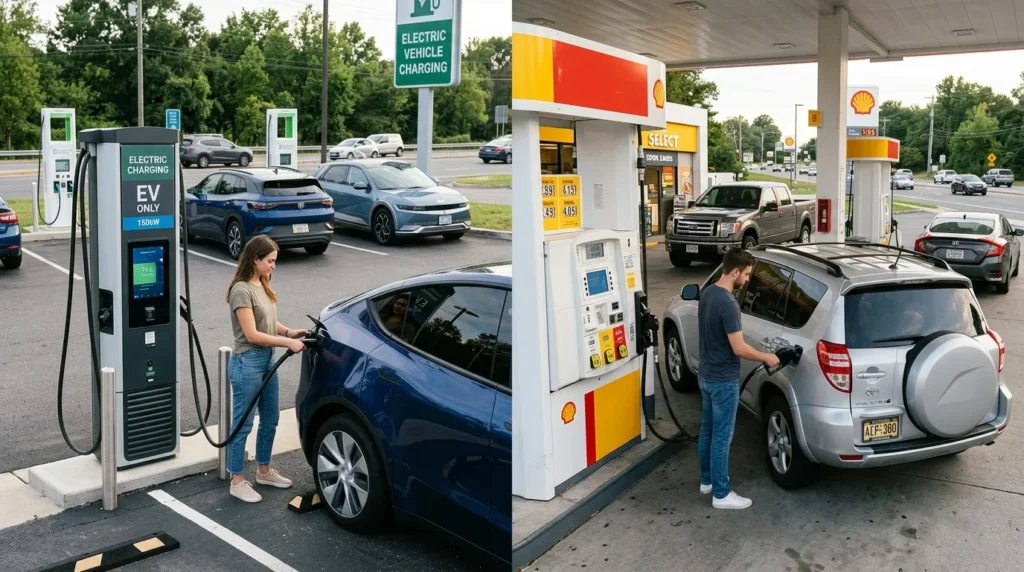

What Does “Electric” Mean?
Electric refers to something powered by electricity.
Electricity can be used to produce heat, create motion, operate electronics, or power appliances and equipment.
Examples include:
- Electric stoves
- Electric water heaters
- Electric furnaces
- Electric vehicles
- Electric dryers
- Electric space heaters
- Electric lawn equipment
An electric system typically receives power through an electrical connection, although some devices can operate from batteries.
How Electric Systems Work
The exact technology depends on the product.
For example, an electric resistance heater converts electrical energy into heat. An electric motor converts electrical energy into mechanical motion.
Other technologies, such as heat pumps, use electricity to move heat rather than simply creating heat directly.
This is why two electric appliances can have very different energy efficiencies.
Advantages of Electric
Electric systems can offer:
- Convenient operation
- Precise controls
- Quiet performance in many applications
- No combustion at the point of use
- Compatibility with renewable electricity
- Wide availability
However, installation may require adequate electrical capacity, and operating costs depend on local electricity prices and equipment efficiency.
What Does “Gas” Mean?
Gas usually refers to a fuel such as natural gas or propane when discussing household appliances, heating, cooking, or equipment.
Gas is burned to release energy.
Common gas-powered products include:
- Gas stoves
- Gas furnaces
- Gas water heaters
- Gas dryers
- Gas fireplaces
- Gas generators
- Gas-powered vehicles
How Gas Systems Work
A gas appliance typically burns fuel to produce heat or power.
For example, a gas furnace burns fuel and transfers the resulting heat into the home’s heating system.
Gas cooking appliances use combustion to produce a flame that heats cookware.
Advantages of Gas
Gas systems can provide:
- Rapid heat
- Strong heating performance
- Familiar cooking characteristics
- High output in many applications
- Operation independent of the home’s electrical supply in some situations
However, gas systems require appropriate ventilation and installation because combustion produces gases that must be safely managed.
Electric or Gas: Key Differences
The most important differences between electric or gas involve energy source, efficiency, installation, operating cost, maintenance, and environmental considerations.
- Electric systems use electricity, while gas systems burn fuel.
- Electric appliances generally do not produce combustion gases at the point of use.
- Gas appliances require appropriate combustion ventilation.
- Electricity can come from renewable sources.
- Gas prices and electricity prices vary by location.
- Some electric technologies, particularly heat pumps, can achieve very high efficiency.
- Gas can provide rapid, high-temperature heat in many applications.
- Electric systems often offer precise digital controls.
- Installation requirements differ significantly.
- The best option depends on the specific appliance or application.
Comparison Table
| Feature | Electric | Gas |
|---|---|---|
| Energy source | Electricity | Natural gas or propane |
| Combustion at point of use | Usually no | Yes |
| Installation | Electrical requirements | Gas line and ventilation may be required |
| Controls | Often precise | Often direct and responsive |
| Maintenance | Often lower | Can require combustion-related maintenance |
| Renewable potential | High, depending on electricity source | Limited compared with renewable electricity |
| Heating performance | Depends on technology | Often rapid and powerful |
| Operating cost | Depends on electricity rates | Depends on fuel rates |
| Best choice | Varies by application | Varies by application |
Electric or Gas for Cooking
Cooking is one of the most common situations where people compare electric or gas.
Electric Cooking
Electric cooking can include traditional coil elements, smooth-top radiant cooktops, and induction.
Electric cooktops can offer:
- Easy cleaning
- Precise settings on many models
- Flat cooking surfaces
- No open flame
- Simple installation where electrical capacity is available
Induction is a particularly efficient electric cooking technology. Instead of heating a traditional element first, induction uses electromagnetic energy to heat compatible cookware directly.
Gas Cooking
Gas cooking uses a flame to heat cookware.
Many cooks appreciate gas because:
- Heat changes can feel immediate.
- The flame is visible.
- High heat is readily available.
- Cookware can be moved on and off the flame easily.
However, gas cooking involves combustion and therefore requires proper ventilation.
Which Is Better?
For cooking, there is no universal winner.
Choose electric or induction if you prioritize easy cleaning, no open flame, and modern control.
Choose gas if you prefer flame-based cooking and direct visual heat control.
Electric or Gas for Home Heating
Home heating is another major area where the comparison matters.
Electric Heating
Electric heating includes several technologies.
Resistance heaters directly convert electricity into heat.
Heat pumps work differently. They transfer heat between locations, which can make them much more energy-efficient than conventional resistance heating under appropriate conditions.
Electric heating can offer:
- No combustion inside the home
- Flexible installation options
- Compatibility with renewable electricity
- Efficient operation with properly selected heat pumps
Gas Heating
Gas furnaces burn fuel to produce heat.
They remain widely used because they can provide powerful heating and are familiar to many homeowners.
However, combustion appliances require proper installation, ventilation, and maintenance.
Best Choice for Heating
The answer depends heavily on your climate, electricity and gas prices, insulation, existing equipment, and local energy system.
For many modern homes, a high-efficiency heat pump can be an important electric alternative to conventional gas heating.
Electric or Gas Water Heaters
Water heating also presents several choices.
Electric Water Heaters
Traditional electric tank water heaters use electrical heating elements.
There are also heat-pump water heaters, which can use substantially less electricity than conventional resistance water heaters under suitable conditions.
Advantages can include:
- No gas connection
- No combustion
- Flexible installation
- Compatibility with renewable electricity
Gas Water Heaters
Gas water heaters use combustion to heat water.
They can provide strong heating performance and may be useful where gas service is already available.
However, installation and ventilation requirements are important considerations.
Electric or Gas Dryers
Both electric and gas clothes dryers are common.
Electric Dryer
An electric dryer uses electricity to power its heating system and motor.
Benefits can include:
- Simple fuel connection
- No gas line required
- Easy installation in homes with appropriate electrical service
Gas Dryer
A gas dryer uses gas for heat and electricity for controls and the motor.
It may offer fast drying performance, but installation generally requires a suitable gas connection and venting arrangement.
Which Is Better?
If a home already has the required gas infrastructure, a gas dryer may be convenient.
If you want to avoid gas connections, an electric dryer may be simpler.
Electric or Gas Vehicles
The electric or gas debate is especially important when discussing cars.
Electric Vehicles
Electric vehicles use batteries and electric motors.
They can offer:
- Quiet operation
- Instant motor response
- No tailpipe emissions
- Potentially lower routine maintenance
- Home charging convenience
Their overall environmental impact depends partly on how the electricity used for charging is generated.
Gas Vehicles
Gasoline-powered vehicles use an internal combustion engine.
They remain popular because of:
- Established fueling infrastructure
- Long driving range in many models
- Fast refueling
- Wide vehicle availability
However, gasoline combustion produces tailpipe emissions.
Which Is Better?
An EV can be attractive if you have convenient charging and want quiet operation and potentially lower routine maintenance.
A gas vehicle may be more convenient if long-distance travel and quick refueling are major priorities.
Cost: Electric or Gas?
Cost is one of the most complicated parts of the electric or gas comparison.
You need to consider both:
Upfront cost + operating cost + maintenance + installation
Electricity Costs
Electricity prices vary considerably by location and utility.
Your bill may also depend on:
- Time of use
- Appliance efficiency
- Usage patterns
- Local utility rates
- Seasonal pricing
Gas Costs
Gas costs also vary by location and fuel type.
A gas appliance may appear cheaper to operate in one region and more expensive in another.
Installation Costs
Don’t overlook installation.
Switching from gas to electric may require electrical upgrades.
Installing gas equipment may require:
- Gas-line work
- Ventilation
- Exhaust arrangements
- Permits
- Professional installation
The cheapest energy source isn’t always the cheapest total system.
Maintenance: Electric or Gas
Maintenance varies by equipment.
Electric Equipment
Many electric systems have relatively simple mechanical designs.
For example, electric motors can have fewer moving parts than internal combustion engines.
However, electric equipment can still require:
- Filter replacement
- Electrical inspections
- Cleaning
- Component replacement
- Professional servicing
Gas Equipment
Gas systems may require additional attention to combustion-related components.
Depending on the equipment, maintenance can involve:
- Burners
- Ignition systems
- Venting
- Heat exchangers
- Fuel connections
Gas appliances should be installed and serviced according to manufacturer and local safety requirements.
Safety: Electric or Gas
Both energy sources can be used safely when equipment is correctly installed and maintained.
Electric Safety
Important considerations include:
- Proper wiring
- Correct circuit capacity
- Grounding
- Protection from water where applicable
- Following manufacturer instructions
Never overload electrical circuits or modify wiring without appropriate expertise.
Gas Safety
Gas systems require additional attention to combustion and fuel connections.
Important considerations include:
- Proper installation
- Adequate ventilation
- Correct venting
- Regular professional inspection where appropriate
- Working carbon-monoxide detection in homes with combustion appliances
If you suspect a gas leak, leave the area and contact the appropriate emergency or gas service according to local guidance.
Environmental Impact: Electric or Gas
Environmental impact depends on the technology and energy source.
Electricity
Electricity can be generated from:
- Solar
- Wind
- Hydropower
- Nuclear
- Natural gas
- Coal
- Other sources
As electricity grids add more low-carbon generation, electric equipment can potentially become cleaner over time.
Gas
Burning natural gas or propane produces carbon dioxide and other combustion emissions.
Gas equipment can be efficient, but it still relies on a fuel that must be extracted, transported, and burned.
Important Distinction
“Electric” does not automatically mean zero-emission.
Likewise, “gas” does not tell you the total environmental impact by itself.
The equipment’s efficiency and the energy source both matter.
Electric or Gas for Off-Grid Use
If you’re considering electric or gas for backup or off-grid applications, the situation changes.
Gasoline, propane, and natural gas can power generators.
Electric systems can use batteries, solar panels, and other energy-storage technologies.
For example, a battery system may provide quiet backup power without combustion while a fuel generator can provide extended operation when fuel is available.
The right choice depends on:
- Required power
- Duration
- Charging options
- Fuel availability
- Noise requirements
- Budget
- Maintenance
Real-Life Conversation Examples
Conversation 1: Kitchen
Alex: “Should I choose an electric or gas stove?”
Sam: “Think about whether you prefer a smooth electric surface or the direct control of a gas flame.”
🎯 Lesson: Cooking preference matters as much as energy cost.
Conversation 2: Heating
Alex: “Is gas always cheaper for heating?”
Sam: “Not necessarily. Energy prices and equipment efficiency vary by location.”
🎯 Lesson: Compare actual local operating costs rather than assuming one fuel is always cheaper.
Conversation 3: Vehicle
Alex: “Should I buy an electric or gas car?”
Sam: “Consider charging access, driving distance, fuel costs, maintenance, and your normal driving routine.”
🎯 Lesson: The best vehicle depends on your daily use.
Conversation 4: Water Heating
Alex: “Is an electric water heater inefficient?”
Sam: “Traditional resistance heaters and heat-pump water heaters are very different technologies.”
🎯 Lesson: Compare the specific technology, not just the energy label.
When to Choose Electric or Gas
Choose electric when you prioritize:
- No combustion at the point of use
- Quiet operation
- Renewable-energy compatibility
- Easy digital controls
- Home charging for an EV
- Avoiding a gas connection
Choose gas when you prioritize:
- Rapid heat
- Existing gas infrastructure
- Certain high-heat applications
- Familiar flame-based cooking
- Fuel-powered backup equipment
However, the best choice depends on the specific application.
Simple Memory Trick
Think:
Electric = flexible and increasingly renewable
Gas = fuel-based and combustion-powered
This simple distinction can help you start your comparison.
Common Mistakes When Choosing Electric or Gas
Mistake 1: Comparing Only Energy Prices
The cheapest fuel per unit of energy doesn’t necessarily produce the lowest total cost.
Mistake 2: Ignoring Efficiency
Two appliances using the same energy source can have very different efficiency levels.
Mistake 3: Forgetting Installation
A new gas connection or electrical upgrade can significantly change the total cost.
Mistake 4: Assuming All Electric Technology Is the Same
An electric resistance heater and a heat pump operate very differently.
Mistake 5: Ignoring Your Lifestyle
An option that looks good on paper may not work well with your daily routine.
Mistake 6: Looking Only at Upfront Price
Consider the expected operating and maintenance costs over the equipment’s useful life.
Electric or Gas: Quick Decision Guide
| Your Priority | Consider |
|---|---|
| No combustion indoors | Electric |
| Renewable electricity | Electric |
| EV ownership | Electric |
| Quiet operation | Electric |
| Traditional flame cooking | Gas |
| Existing gas infrastructure | Gas |
| High-temperature cooking | Gas or induction, depending on preference |
| Home heating | Compare heat pump and gas options |
| Water heating | Compare heat-pump, electric, and gas models |
| Backup power | Compare batteries and fuel generators |
Fun Facts or History
Fun Fact 1: Electricity Can Power Heat Pumps
Not every electric heating system simply “creates” heat. Heat pumps use electricity to move heat from one place to another, which can make them much more efficient than conventional electric resistance heating.
Fun Fact 2: Gas and Electricity Often Work Together
A gas appliance may still use electricity for controls, fans, ignition, displays, or motors. The choice isn’t always completely one energy source versus another.
Final Checklist
Before choosing electric or gas, compare:
- Purchase price
- Installation cost
- Energy rates
- Efficiency
- Maintenance
- Expected lifespan
- Available infrastructure
- Safety requirements
- Environmental impact
- Your everyday needs
A whole-system comparison will usually give you a better answer than simply asking which fuel is cheaper.