
What Is Emo?
Emo is a term associated with a style of music and a broader youth subculture that developed from the hardcore punk scene.
The word is commonly understood as a shortened form of “emotional hardcore.” Early emo music emphasized emotionally expressive lyrics and personal subjects while retaining connections to hardcore and punk.
Over time, the meaning of emo expanded beyond music.
Today, people may use emo to describe:
- A music scene
- A fashion style
- A visual aesthetic
- A form of emotional self-expression
- A broader alternative subculture
Emo Music
Early emo was connected to hardcore punk, while later waves incorporated elements of:
- Alternative rock
- Pop punk
- Post-hardcore
- Indie rock
Different generations of emo sound quite different, so there isn’t one single “emo sound.”
Emo Fashion
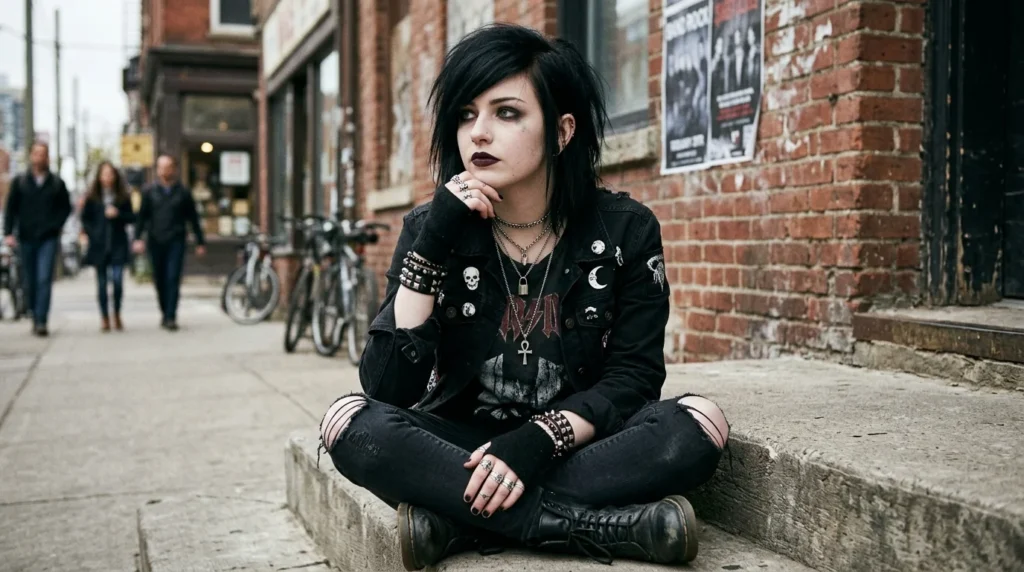
Modern emo fashion can include:
- Dark jeans
- Band T-shirts
- Hoodies
- Layered clothing
- Sneakers
- Dark accessories
- Dyed or heavily styled hair
Some people associate emo with side-swept hairstyles and dark clothing, but these aren’t requirements.
Emo and Emotional Expression
The term emo has often been associated with emotional openness and introspection.
However, being emotional does not automatically make someone emo. A person’s identity and connection to the subculture are more complicated than simply having strong feelings.
What Is Goth?
Goth developed from the post-punk music scene in the late 1970s and early 1980s.
The subculture became associated with bands whose music incorporated darker, atmospheric, dramatic, and sometimes haunting sounds.
Goth eventually developed into a broad cultural style involving:
- Music
- Fashion
- Art
- Literature
- Visual aesthetics
- Personal expression
Goth Music
Goth music can include styles such as:
- Gothic rock
- Darkwave
- Ethereal wave
- Deathrock
- Related post-punk sounds
Goth music often emphasizes atmosphere, mood, dramatic vocals, and distinctive instrumentation.
Goth Fashion
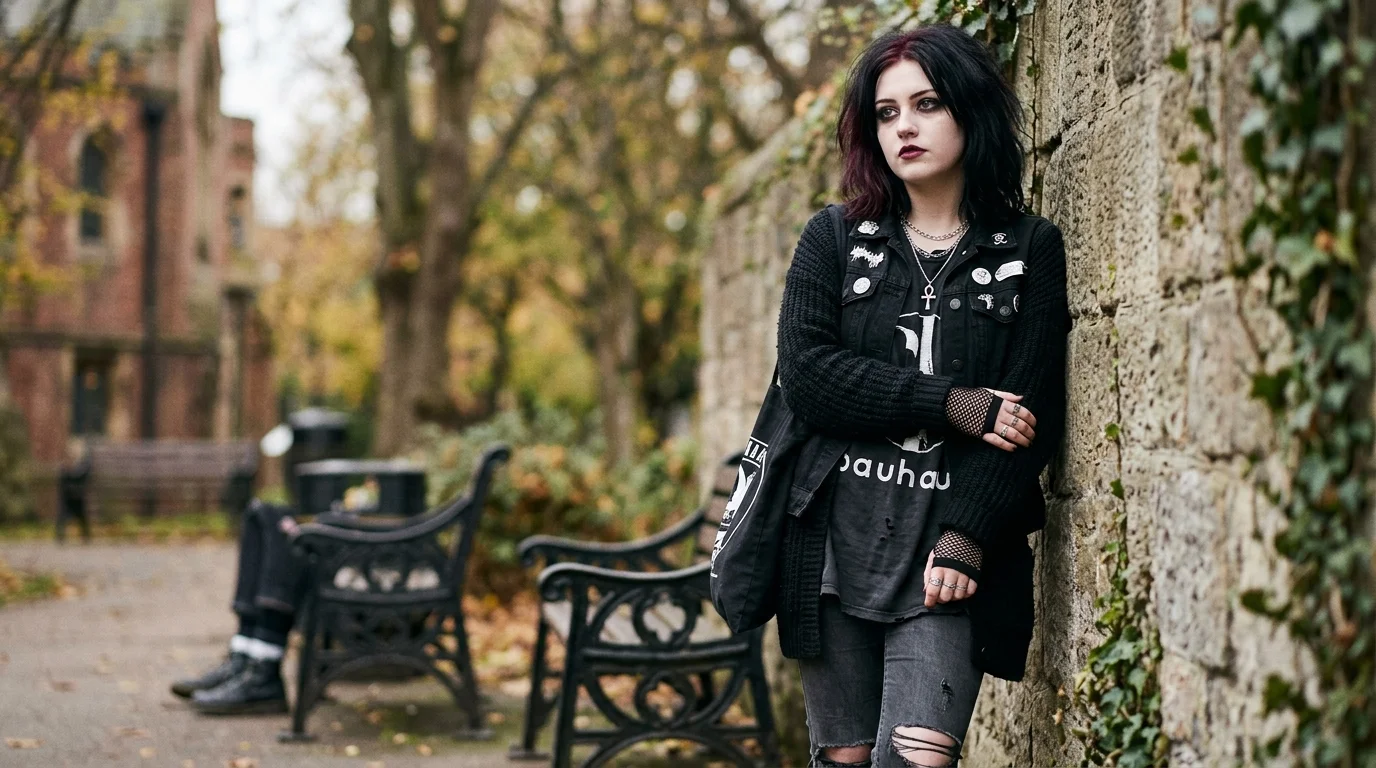
Goth fashion is diverse but commonly includes:
- Black clothing
- Boots
- Dark accessories
- Layered outfits
- Dramatic silhouettes
- Jewelry
- Alternative makeup
Some goth styles are minimalist, while others are highly elaborate.
Goth Is More Than Wearing Black
Wearing black clothes alone doesn’t make someone goth.
The goth subculture has strong connections to music and culture, and fashion is one part of that broader identity.
Emo or Goth: Key Differences
The main difference between emo or goth lies in their origins, music, and cultural development.
- Emo originated from hardcore punk and related alternative music scenes.
- Goth developed from post-punk.
- Emo often emphasizes emotional and personal expression.
- Goth tends to emphasize atmosphere, darkness, mystery, and dramatic aesthetics.
- Emo fashion often incorporates casual punk and alternative clothing.
- Goth fashion can be more dramatic and visually elaborate.
- Emo music frequently connects to punk, post-hardcore, pop punk, and alternative rock.
- Goth music is associated with gothic rock, darkwave, and related styles.
- The two subcultures can overlap.
- Neither identity requires one specific appearance.
Comparison Table
| Feature | Emo | Goth |
|---|---|---|
| Musical roots | Hardcore punk | Post-punk |
| Main development | 1980s onward | Late 1970s–1980s |
| Common music associations | Emo, post-hardcore, pop punk, alternative rock | Gothic rock, darkwave, deathrock |
| Typical aesthetic | Emotional, punk-inspired, alternative | Dark, atmospheric, dramatic |
| Clothing | Casual alternative/punk | Often darker and more dramatic |
| Color palette | Often dark, but varied | Frequently black and dark tones |
| Hair | Often heavily styled | Highly varied |
| Makeup | Optional | Optional, sometimes dramatic |
| Main cultural emphasis | Emotional expression and music | Music, atmosphere, art, and aesthetics |
| Can they overlap? | Yes | Yes |
Emo or Goth Music
Music is one of the most important ways to understand emo or goth culture.
Emo Music
Emo developed through several musical eras.
Early emo was closely connected to hardcore punk. Later forms became more melodic and eventually influenced alternative rock and pop-punk scenes.
Depending on the era, emo music may feature:
- Personal lyrics
- Emotional vocals
- Distorted guitars
- Dynamic song structures
- Melodic choruses
- Punk or post-hardcore influences
Goth Music
Goth music emerged from post-punk and developed its own distinctive atmosphere.
It often uses:
- Atmospheric guitar
- Deep or dramatic vocals
- Bass-heavy arrangements
- Repetitive rhythms
- Moody textures
- Dark or theatrical presentation
The music can range from relatively minimal to highly elaborate.
Emo or Goth Fashion
Fashion is probably the most visible part of the emo or goth comparison.
Emo Fashion
Emo-inspired outfits may include:
- Band shirts
- Skinny or straight-leg jeans
- Hoodies
- Canvas shoes
- Dark accessories
- Layered tops
- Graphic designs
Some people also incorporate colorful details.
Goth Fashion
Goth fashion can include:
- Black dresses
- Black shirts
- Boots
- Long coats
- Jewelry
- Lace
- Mesh
- Dramatic accessories
- Dark makeup
There are also many different goth fashion substyles.
These can range from relatively simple everyday outfits to highly theatrical looks.
Emo or Goth Hair
Hair has played an important role in both subcultures, particularly during certain periods.
Emo Hair
Popular emo-inspired hairstyles have historically included:
- Side-swept fringes
- Layered cuts
- Choppy textures
- Dyed sections
- Dark hair colors
However, there is no mandatory emo haircut.
Goth Hair
Goth hairstyles vary much more widely.
Examples may include:
- Long dark hair
- Short dramatic cuts
- Elaborate styling
- Dyed hair
- Vintage-inspired looks
- Highly creative shapes
Modern goth fashion has no single universal hairstyle.
Emo or Goth Makeup
Neither subculture requires makeup, but makeup can be an important part of some people’s aesthetic.
Emo Makeup
Emo-inspired makeup may emphasize:
- Dark eyeliner
- Defined eyes
- Alternative styling
The overall look is often less theatrical than some goth styles.
Goth Makeup
Goth makeup can range from subtle to dramatic.
It may involve:
- Dark eyeliner
- Strong eye makeup
- Dark lipstick
- Pale or contrasting foundation
- Creative designs
Different goth communities and fashion styles use makeup differently.
Emo or Goth Personality
One common misconception is that emo or goth describes someone’s personality.
That’s not necessarily true.
Being interested in emo or goth culture does not automatically mean someone is sad, angry, mysterious, or antisocial.
Emo Does Not Mean “Always Sad”
Emo is strongly associated with emotional expression, but that doesn’t mean people who enjoy emo music are constantly unhappy.
Goth Does Not Mean “Evil”
Goth aesthetics often use dark imagery, but being goth doesn’t mean someone has harmful beliefs or a negative personality.
Both subcultures can include people with very different personalities.
Emo or Goth: Similarities
Despite their differences, emo or goth cultures share several characteristics.
Both Value Music
Music plays a significant role in both subcultures.
Both Encourage Individuality
People often use fashion and music to express their identities.
Both Have Alternative Roots
Neither developed from mainstream pop culture alone.
Both Have Changed Over Time
Emo and goth have both evolved across different generations.
Both Influence Fashion
Elements associated with these subcultures have appeared in mainstream fashion, social media, and popular culture.
Real-Life Conversation Examples
Conversation 1: Identifying the Style
Alex: “They’re wearing black clothes. Are they goth?”
Sam: “Not necessarily. Clothing alone doesn’t tell you which subculture someone identifies with.”
🎯 Lesson: Don’t determine someone’s identity based only on appearance.
Conversation 2: Music
Alex: “I listen to emotional alternative rock. Does that automatically make me emo?”
Sam: “Not necessarily. Music taste is only one part of a subculture.”
🎯 Lesson: Enjoying a genre doesn’t automatically define your identity.
Conversation 3: Similar Appearance
Alex: “Why do emo and goth styles sometimes look similar?”
Sam: “Both developed within alternative music and fashion scenes, so there’s naturally some overlap.”
🎯 Lesson: Similar aesthetics don’t mean the cultures are identical.
Conversation 4: Clothing
Alex: “Can a goth person wear something other than black?”
Sam: “Of course. Goth fashion is diverse and isn’t limited to one exact outfit.”
🎯 Lesson: Subcultures don’t have strict uniforms.
When to Use Emo or Goth
If you’re trying to describe an aesthetic, consider the overall style rather than one item of clothing.
Emo May Be a Better Description If:
- The style is strongly connected to emo music.
- The outfit has punk or alternative influences.
- The look uses casual band-oriented clothing.
- The aesthetic reflects the emo scene.
- The overall appearance has a youthful alternative-rock influence.
Goth May Be a Better Description If:
- The style is strongly connected to goth music.
- The look has a dark, atmospheric quality.
- The outfit incorporates dramatic or historical influences.
- Black and dark accessories dominate the style.
- The person participates in goth culture.
Important Reminder
People can also enjoy both.
Subcultures aren’t always separate boxes, and individual people may combine elements from different alternative scenes.
Emo or Goth in Different Eras
The meaning of these labels has changed over time.
Early Emo
Early emo emerged from hardcore punk and was primarily a music scene.
1990s Emo
Emo expanded into alternative and indie music circles and developed new sounds.
2000s Emo
The term became much more visible in mainstream youth culture, with recognizable fashion and music associations.
Modern Emo
Today, emo can refer to both historical music and contemporary artists influenced by earlier emo scenes.
Early Goth
Goth emerged from post-punk and became associated with a distinctive musical atmosphere.
Modern Goth
Goth continues to influence music, fashion, art, photography, and alternative culture.
Common Misconceptions
Myth 1: All Emo People Wear Black
False.
Emo fashion can use dark colors, but it isn’t limited to black.
Myth 2: All Goth People Wear Only Black
Black is strongly associated with goth fashion, but individual styles vary considerably.
Myth 3: Emo Means Depressed
Not necessarily.
Emo is a cultural and musical term, not a diagnosis or description of someone’s mental health.
Myth 4: Goth Means Evil
False.
Goth is a music and cultural subculture, not a synonym for evil or dangerous behavior.
Myth 5: Emo and Goth Are the Same
They overlap, but they have different musical origins and cultural histories.
How to Tell Emo and Goth Apart
When you see an alternative style and wonder whether it is emo or goth, look at the whole picture.
Ask:
What music is connected to the style?
What cultural scene does the person identify with?
What fashion influences are visible?
Is the aesthetic more punk/alternative or gothic/atmospheric?
Don’t rely on one feature such as black clothing, eyeliner, or a hairstyle.
A complete style is usually easier to understand through its music, history, fashion, and cultural context.
Emo or Goth: Quick Decision Guide
| If You Prefer… | You May Prefer |
|---|---|
| Emotional alternative rock | Emo |
| Post-hardcore influences | Emo |
| Pop-punk connections | Emo |
| Punk-inspired casual fashion | Emo |
| Gothic rock | Goth |
| Darkwave | Goth |
| Atmospheric music | Goth |
| Dramatic dark fashion | Goth |
| Gothic aesthetics | Goth |
| Both styles | You can enjoy both |