
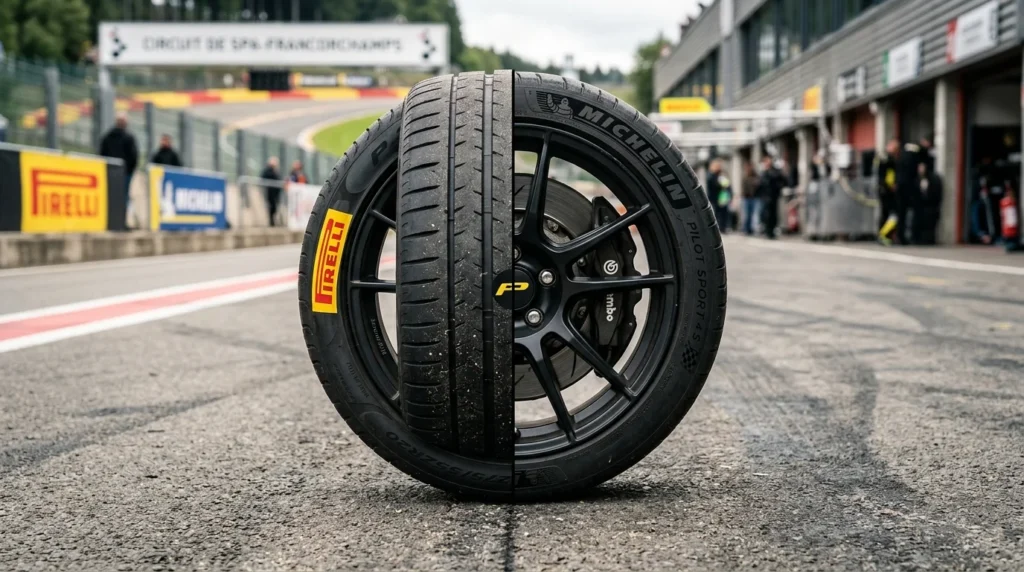
What Is Pirelli?
Pirelli is an Italian tire manufacturer founded in Milan in 1872. Over its long history, the company has become particularly associated with high-performance tires and premium automotive applications.
Pirelli produces tires for passenger cars, SUVs, motorcycles, and other vehicles. Its range includes summer, winter, and all-season products, depending on the market.
What Makes Pirelli Different?
Pirelli has a strong reputation for combining:
- Sporty handling
- Steering response
- High-speed performance
- Premium-vehicle applications
- Motorsport technology
- Performance-focused tire designs
The company is also closely associated with Formula 1. Pirelli has been the sport’s sole tire supplier since 2011 under the current arrangement, helping reinforce its performance-oriented image.
However, Pirelli is not only a sports-car tire company. It produces tires for ordinary passenger vehicles and SUVs as well.
Pirelli Example
Imagine a driver owns a performance-oriented sedan and enjoys winding roads. They may value:
- Steering precision
- Cornering grip
- Braking performance
- Responsive handling
A Pirelli performance tire may be attractive because those characteristics are central to many of the company’s premium products.
This is an important part of the Pirelli or Michelin comparison: Pirelli often appeals strongly to drivers who place a high value on performance and handling.
A Short History Note
Pirelli began as a rubber and rubber-product company in the 19th century before becoming internationally recognized as a major tire manufacturer. Its history in motorsport has also played an important role in the company’s identity.
What Is Michelin?
Michelin is a French tire manufacturer founded in 1889 by brothers Édouard and André Michelin. Today, it is one of the world’s best-known tire companies.
Michelin produces tires for a wide range of vehicles and driving conditions. Its products include options for passenger cars, SUVs, trucks, electric vehicles, performance vehicles, and various seasonal conditions.
What Makes Michelin Different?
Michelin is widely associated with:
- Long tread life
- Comfortable driving
- Strong wet-road performance
- Fuel efficiency
- Everyday usability
- Premium touring tires
- Performance tires
Michelin’s product lineup includes well-known families such as Pilot Sport, Primacy, Defender, CrossClimate, and others, although availability varies by market and vehicle.
Michelin Example
Imagine a driver uses their vehicle for commuting, family trips, and highway travel. They might prioritize:
- Quietness
- Comfortable ride quality
- Long-lasting tread
- Wet-weather confidence
- Efficient fuel use
A Michelin touring or all-season tire could be an attractive option for that type of driving.
This is why Michelin often appeals to drivers who want a combination of performance, comfort, durability, and everyday practicality.
A Short History Note
Michelin became famous not only for tires but also for helping motorists travel more easily. The company developed the Michelin Guide, originally created to encourage automobile travel and help drivers find useful destinations and services.
Pirelli or Michelin: Key Differences
The biggest difference between Pirelli or Michelin is not simply brand quality. Both companies make premium tires across multiple categories.
Instead, the difference often becomes clearer when you compare specific models.
- Pirelli has a strong performance and sporty-driving identity.
- Michelin offers an exceptionally broad range for different driving needs.
- Pirelli can be attractive to drivers prioritizing steering response and sporty handling.
- Michelin often appeals to drivers seeking comfort, longevity, and balanced performance.
- Both brands offer high-performance tires.
- Both brands produce tires for SUVs and everyday passenger cars.
- Neither brand is automatically better for every vehicle.
- A specific tire model can matter more than the logo on the sidewall.
- Correct tire size and vehicle compatibility should always come first.
- Climate and road conditions can dramatically affect which tire is best.
Comparison Table
| Feature | Pirelli | Michelin |
|---|---|---|
| Origin | Italy | France |
| Founded | 1872 | 1889 |
| Brand reputation | Premium, sporty, performance-focused | Premium, balanced, comfort and longevity-focused |
| Performance | Excellent | Excellent |
| Dry grip | Excellent on suitable performance models | Excellent on suitable performance models |
| Wet performance | Strong | Strong |
| Comfort | Varies by model | Often a major strength |
| Tread life | Varies significantly by model | Often a major strength |
| Sporty handling | Major strength | Strong |
| Everyday driving | Very good | Excellent |
| SUVs | Wide range | Wide range |
| Winter/all-season options | Available | Wide selection |
| Best for | Performance-focused drivers | Balanced everyday performance |
The table is only a general brand-level comparison. Individual tire models can behave very differently, so always compare the exact models available for your vehicle.
Pirelli or Michelin for Performance
If performance is your top priority, Pirelli deserves serious consideration.
Pirelli has built a strong reputation around performance vehicles, motorsport, and premium sports cars. Its performance-oriented product families are designed to provide strong handling and road feedback.
However, Michelin is also a major player in the performance category. Its Pilot Sport family, for example, is widely recognized in the performance-tire market.
When comparing Pirelli or Michelin for performance, look at:
- Dry grip
- Wet grip
- Steering response
- Cornering stability
- Braking
- Heat management
- Track versus street use
- Tire size
If you’re driving a sports car aggressively, a performance tire may be appropriate. For normal commuting, however, the most aggressive tire is not necessarily the best choice.
Pirelli or Michelin for Everyday Driving
For ordinary commuting, comfort, tread life, road noise, and wet-weather behavior may matter more than maximum cornering performance.
Michelin often has a strong advantage in this category because of its extensive selection of touring, all-season, and everyday passenger tires.
That doesn’t mean Pirelli is unsuitable for daily driving. Pirelli offers numerous tires designed for normal passenger vehicles.
The key is choosing the correct model, not simply choosing between brands.
For example, a driver who spends most of their time commuting on highways might prioritize:
- Long tread life
- Low road noise
- Comfortable ride
- Wet-road grip
- Fuel efficiency
Those priorities may point toward a touring-focused tire rather than a high-performance tire.
Pirelli or Michelin for Wet Roads
Wet-road performance is one of the most important tire characteristics because tires must maintain traction while dealing with water on the road.
Both Pirelli and Michelin offer tires designed with wet-weather performance in mind.
When comparing models, look for:
- Wet braking performance
- Hydroplaning resistance
- Tread design
- Rubber compound
- Independent test results
- Tire age and condition
Michelin has many tires recognized for balanced wet and dry performance.
Pirelli also produces performance and touring tires with strong wet-weather capabilities.
If you live somewhere with frequent rain, don’t choose solely based on brand reputation. Compare independent tests of the exact tire models you are considering.
Pirelli or Michelin for Dry Roads
On dry pavement, both manufacturers offer tires capable of excellent grip.
Pirelli’s performance identity makes it particularly attractive to drivers who enjoy responsive handling.
Michelin also produces high-performance tires capable of delivering strong dry-road grip and precise handling.
For normal city driving, however, the difference between two premium tires may be less noticeable than the difference between a properly inflated tire and one that is underinflated or worn.
Your driving style matters too.
A spirited driver may appreciate a tire’s steering response and cornering characteristics.
A relaxed commuter may care more about comfort and longevity.
Pirelli or Michelin for Tread Life
Tread life is one of the areas where Michelin often has a strong reputation.
However, it is important not to assume that every Michelin tire lasts longer than every Pirelli tire.
Tread life depends on:
- Tire model
- Compound
- Driving style
- Vehicle weight
- Wheel alignment
- Tire pressure
- Road surface
- Climate
- Maintenance
- Rotation practices
A performance tire may wear faster because it is designed around grip and handling rather than maximum longevity.
Therefore, when comparing Pirelli or Michelin, compare the warranties and expected mileage of the specific models rather than relying on brand-wide assumptions.
Pirelli or Michelin for Comfort
If you prioritize a smooth, quiet ride, Michelin may be especially appealing.
Many Michelin touring products emphasize comfort, low noise, and balanced road manners.
Pirelli also produces comfortable tires, but some of its best-known products are strongly performance-oriented, where sharper handling can sometimes take priority over maximum softness.
The ideal balance depends on your vehicle.
A luxury sedan may benefit from a tire designed around quietness and comfort.
A sports sedan may benefit from a tire designed around responsiveness.
There is no single perfect tire for every car.
Pirelli or Michelin for SUVs
Both brands offer extensive SUV and crossover tire selections.
For an SUV, consider whether you mainly drive:
- City roads
- Highways
- Wet roads
- Snowy roads
- Gravel
- Light off-road surfaces
A highway-focused SUV driver has very different requirements from someone who regularly drives on rough roads.
Michelin offers a broad range of SUV and crossover products across touring, all-season, performance, and other categories.
Pirelli also has a significant SUV lineup, including products designed for premium and performance-oriented vehicles.
When choosing Pirelli or Michelin for an SUV, vehicle weight and tire load requirements are particularly important.
Pirelli or Michelin for Winter Driving
If you live in an area with serious winter weather, choosing a tire specifically designed for those conditions can matter more than choosing between Pirelli and Michelin.
Both manufacturers offer winter-related products in markets where such tires are needed.
Winter tires are designed to maintain performance at lower temperatures and in conditions involving snow and ice.
If you regularly drive through severe winter conditions, consider:
- Dedicated winter tires
- Snow traction
- Ice braking
- Cold-weather flexibility
- Tire size
- Local road conditions
For areas with mild winters, a quality all-season tire may be more appropriate.
Always check the exact tire’s certification and intended use rather than assuming a tire is suitable for severe winter conditions simply because it carries a major brand name.
Pirelli or Michelin for High-Speed Driving
High-speed driving places greater demands on tires, including heat management, stability, and construction.
Pirelli’s motorsport history gives the brand a strong performance identity, while Michelin also manufactures premium high-performance tires.
For high-speed use, drivers should pay close attention to the tire’s:
- Speed rating
- Load rating
- Construction
- Recommended inflation pressure
- Vehicle compatibility
- Intended driving conditions
Never choose a tire simply because it has a sporty appearance.
The tire must match the vehicle manufacturer’s specifications and your actual driving conditions.
Pirelli or Michelin: Real-Life Conversation Examples
Conversation 1: The Daily Commuter
Alex: “I drive to work every day and want tires that are comfortable and long-lasting.”
Sam: “Then compare touring-focused Michelin and Pirelli models rather than performance tires.”
🎯 Lesson: Daily drivers should prioritize comfort, longevity, and wet-weather performance.
Conversation 2: The Sports-Car Driver
Alex: “I care most about sharp steering and cornering.”
Sam: “Look at the performance ranges from both brands and compare the exact models.”
🎯 Lesson: Pirelli and Michelin both offer serious performance tires.
Conversation 3: The SUV Owner
Alex: “I mostly drive my SUV on highways, but sometimes I travel on rough roads.”
Sam: “Choose based on your road conditions and look at SUV-specific tire categories.”
🎯 Lesson: SUV drivers should match the tire to their actual terrain.
Conversation 4: The Rainy-Climate Driver
Alex: “It rains frequently where I live.”
Sam: “Focus on wet braking and hydroplaning resistance rather than choosing a brand alone.”
🎯 Lesson: Exact tire design matters more than brand reputation when wet-weather traction is the priority.
When to Choose Pirelli or Michelin
When deciding between Pirelli or Michelin, start with your driving priorities.
Choose Pirelli If You Prioritize:
- Sporty handling
- Steering response
- Performance driving
- Premium vehicle applications
- High-performance tires
- Motorsport-inspired technology
- A more performance-oriented driving feel
Choose Michelin If You Prioritize:
- Everyday driving
- Comfort
- Long tread life
- Balanced performance
- Touring
- Wet-weather confidence
- Broad product selection
- Highway driving
These are general tendencies, not guarantees. A specific Pirelli touring tire may be more comfortable than a specific Michelin performance tire, for example.
Simple Memory Trick
Think:
Pirelli = Performance
Michelin = Mileage + Balance
This is only a memory aid. Both brands offer products that overlap considerably.
How to Choose the Right Tire
Before purchasing either brand, check your vehicle manufacturer’s recommendations.
1. Check Tire Size
Your vehicle requires a specific tire size. You can usually find the recommended size on the vehicle’s tire information label or in the owner’s documentation.
2. Check Load Rating
The tire must be capable of safely carrying the vehicle’s required load.
3. Check Speed Rating
Make sure the tire’s speed rating is appropriate for your vehicle.
4. Consider Your Climate
Think about rain, heat, snow, ice, and temperature changes where you drive.
5. Consider Your Roads
City streets, highways, rough roads, and occasional gravel can require different priorities.
6. Consider Your Driving Style
A relaxed commuter and a performance enthusiast may need completely different tire characteristics.
7. Compare the Exact Models
This is perhaps the most important step.
Don’t compare Pirelli vs Michelin only at the brand level. Compare the exact tires.
For example:
Pirelli Model A vs Michelin Model B
is much more useful than:
Pirelli vs Michelin
because the actual tread design, compound, construction, warranty, and intended use can differ dramatically.
Common Mistakes to Avoid
Choosing Only by Brand
A famous brand does not guarantee that every model is right for your vehicle.
Buying the Cheapest Tire
A lower purchase price may not provide the best value if the tire has significantly different performance or longevity.
Ignoring Tire Age
Even tires with plenty of tread should be checked for age and condition.
Ignoring Inflation
Incorrect tire pressure can affect handling, fuel economy, comfort, and wear.
Mixing Incompatible Tires
When replacing only some tires, follow your vehicle manufacturer’s recommendations and professional tire-service guidance.
Ignoring Alignment
Poor wheel alignment can cause uneven or premature tire wear.
Fun Facts and History
1. Michelin Helped Popularize Road Travel
The Michelin brothers created the Michelin Guide in 1900. It was originally intended to encourage automobile travel by providing useful information for motorists.
2. Pirelli Has a Long Motorsport Heritage
Pirelli’s involvement in motorsport has been a major part of its brand identity. Its association with Formula 1 has particularly strengthened its reputation for high-performance tire technology.