
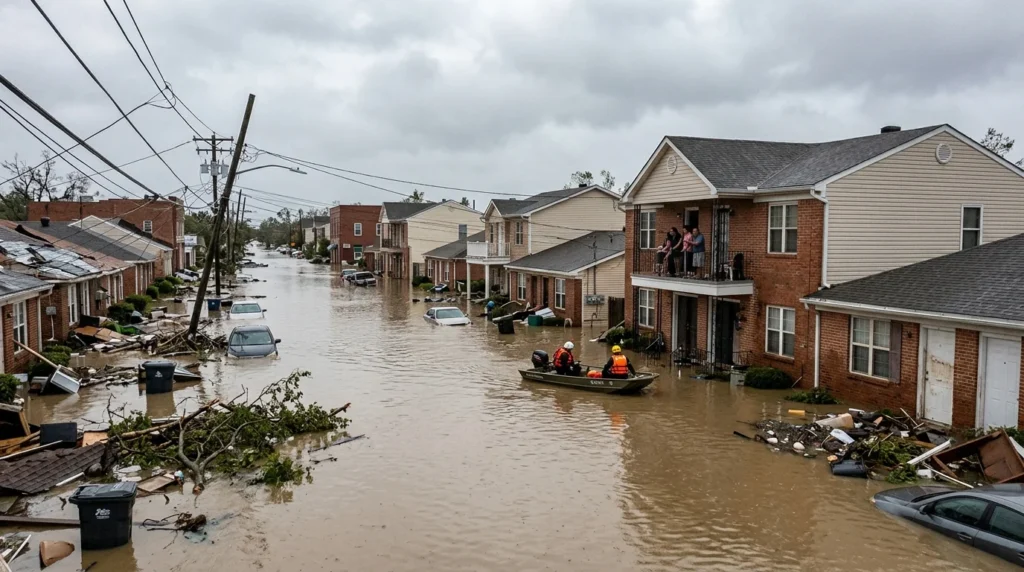

What Is “Severe”?
Severe is an adjective that means very serious, intense, extreme, or harsh.
It focuses primarily on how serious or intense something is.
Common Uses of “Severe”
You might describe something as severe when it involves:
- Severe weather
- Severe damage
- Severe pain
- Severe criticism
- Severe consequences
- Severe restrictions
- Severe shortages
- Severe problems
Example Sentences
“The storm caused severe damage to several buildings.”
“The company faced severe financial difficulties.”
“The region experienced severe weather.”
In each example, severe emphasizes the intensity or seriousness of the situation.
Grammar and Usage
Severe normally appears before a noun or after a linking verb.
Examples:
- severe problem
- severe consequences
- severe shortage
- “The damage was severe.”
The adverb form is severely.
“The building was severely damaged.”
What Is “Pervasive”?
Pervasive means widespread, prevalent, or present throughout a particular place, group, system, or situation.
It focuses on how widely something exists or how deeply it spreads.
Common Uses of “Pervasive”
You might describe something as pervasive when discussing:
- Pervasive influence
- Pervasive problems
- Pervasive technology
- Pervasive corruption
- Pervasive advertising
- Pervasive beliefs
- Pervasive uncertainty
- Pervasive cultural influence
Example Sentences
“Social media has a pervasive influence on modern communication.”
“The problem was pervasive throughout the organization.”
“Digital technology has become pervasive in everyday life.”
In these examples, the important idea is widespread presence, not necessarily extreme intensity.
Grammar and Usage
Pervasive is usually placed before a noun or after a linking verb.
Examples:
- pervasive influence
- pervasive problem
- pervasive culture
- “The issue was pervasive.”
The related noun is pervasiveness.
Severe or Pervasive: Key Differences
When comparing severe or pervasive, remember:
- Severe = extremely serious or intense.
- Pervasive = widespread or present throughout.
- Severe focuses on degree.
- Pervasive focuses on extent or reach.
- Something can be severe but limited to one location.
- Something can be pervasive but relatively mild.
- Something can be both severe and pervasive.
- Severely is the adverb form of severe.
- Pervasively is the adverb form of pervasive.
Comparison Table
| Feature | Severe | Pervasive |
|---|---|---|
| Basic meaning | Very serious or intense | Widespread or widespread throughout |
| Main focus | Degree | Extent |
| Answers | “How serious?” | “How widespread?” |
| Example | Severe damage | Pervasive influence |
| Can describe a problem? | Yes | Yes |
| Can describe weather? | Very common | Less common |
| Can describe influence? | Sometimes | Very common |
| Can be both? | Yes | Yes |
Real-Life Conversation Examples
Dialogue 1: A Local Problem
Person 1: “The storm damaged one building badly.”
Person 2: “Then the damage could be described as severe, but it isn’t necessarily pervasive.”
🎯 Lesson: Severe describes intensity or seriousness.
Dialogue 2: A Widespread Problem
Person 1: “Is this issue affecting only one department?”
Person 2: “No, it’s happening throughout the organization.”
Person 1: “Then the problem is pervasive.”
🎯 Lesson: Pervasive emphasizes widespread presence.
Dialogue 3: Both Words
Person 1: “The problem is affecting nearly every department and causing major disruption.”
Person 2: “You could describe it as both pervasive and severe.”
🎯 Lesson: Something can be widespread and extremely serious at the same time.
Dialogue 4: Choosing the Word
Person 1: “I want to emphasize how serious the situation is.”
Person 2: “Use severe.”
Person 1: “What if I want to emphasize that it exists everywhere?”
Person 2: “Use pervasive.”
🎯 Lesson: Choose severe for intensity and pervasive for reach.
When to Use Severe or Pervasive
Use “Severe” When You Mean “Very Serious”
Use severe when you’re describing the strength, seriousness, or intensity of something.
Examples:
“The area experienced severe flooding.”
“The injury resulted in severe limitations.”
“The company suffered severe losses.”
Use “Pervasive” When You Mean “Widespread”
Use pervasive when something is found throughout a place, organization, culture, or situation.
Examples:
“The internet has a pervasive influence on communication.”
“The issue was pervasive across the organization.”
“A pervasive sense of uncertainty affected the community.”
Easy Memory Trick
Think:
Severe = Serious
Pervasive = Present everywhere
This makes the distinction easy to remember.
Can Something Be Severe but Not Pervasive?
Yes.
Imagine one machine in a factory experiences severe damage, but every other machine works normally.
The damage is severe because it is serious.
It isn’t pervasive because it isn’t widespread.
Can Something Be Pervasive but Not Severe?
Yes.
Imagine a company has a mild habit of using digital messaging throughout every department.
That practice could be described as pervasive because it is widespread, but it isn’t necessarily severe.
This example shows why the two words shouldn’t automatically be treated as synonyms.
Can Something Be Severe and Pervasive?
Absolutely.
For example:
“The organization faced a severe and pervasive problem.”
This means the problem was both serious and widespread.
Using both adjectives can be useful when you need to communicate two separate characteristics.
Severe or Pervasive in Professional Writing
The distinction matters in professional writing because vague word choices can weaken your message.
Compare:
“The company had a severe communication problem.”
This emphasizes the seriousness of the communication problem.
Now compare:
“The company had a pervasive communication problem.”
This emphasizes that the problem was widespread throughout the organization.
Finally:
“The company had a severe and pervasive communication problem.”
This communicates both ideas.
Severe or Pervasive in Legal and Formal Contexts
Both words can appear in formal and legal writing, but they should not automatically be interpreted as having the same meaning.
In formal contexts, severe generally describes the seriousness or degree of an issue.
Pervasive generally describes how widespread or persistent something is.
The precise meaning can depend on the legal rule, policy, regulation, or context in which the words appear. Therefore, if you’re dealing with a specific legal standard, it’s important to consider the exact wording of that standard rather than relying only on ordinary dictionary meanings.
Common Mistakes
Mistake 1: Treating Severe and Pervasive as Synonyms
They overlap in some situations, but their central meanings differ.
Severe = intensity.
Pervasive = extent.
Mistake 2: Using Pervasive to Mean Extremely Bad
Pervasive doesn’t necessarily mean extremely serious.
Something can be widespread without being severe.
Mistake 3: Using Severe to Mean Widespread
Severe doesn’t tell you how many places or people are affected.
It tells you about the degree or seriousness.
Mistake 4: Assuming Both Words Must Appear Together
They don’t.
Use one when it accurately communicates your intended meaning. Use both when you genuinely mean both serious and widespread.
Fun Facts or History
1. “Severe” Has Latin Roots
Severe comes through Latin severus, associated with ideas such as strictness, seriousness, or harshness.
2. “Pervasive” Relates to Spreading Through
Pervasive comes from Latin roots associated with the idea of passing or spreading throughout something.
That origin connects naturally with its modern meaning: widespread presence.