
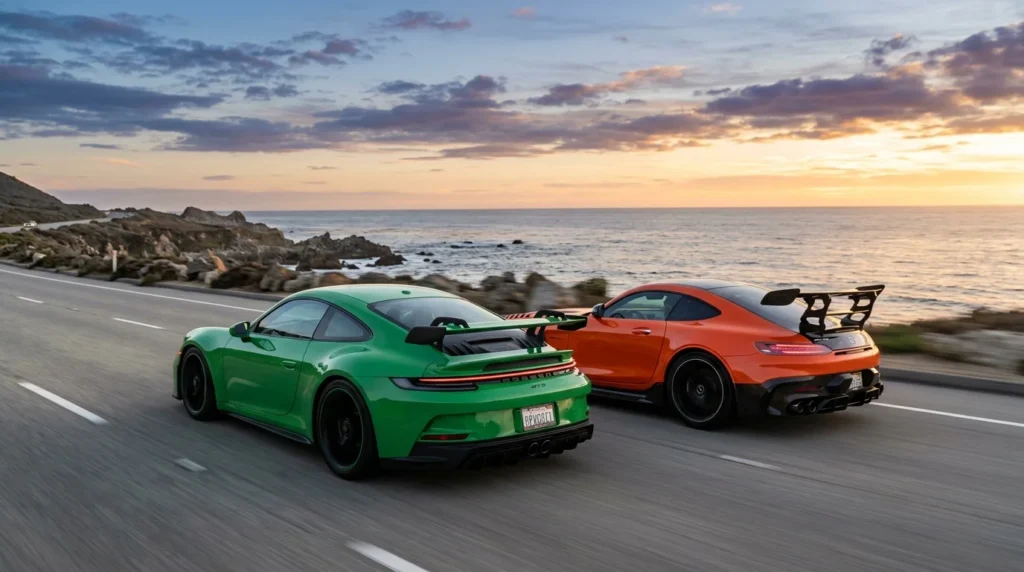
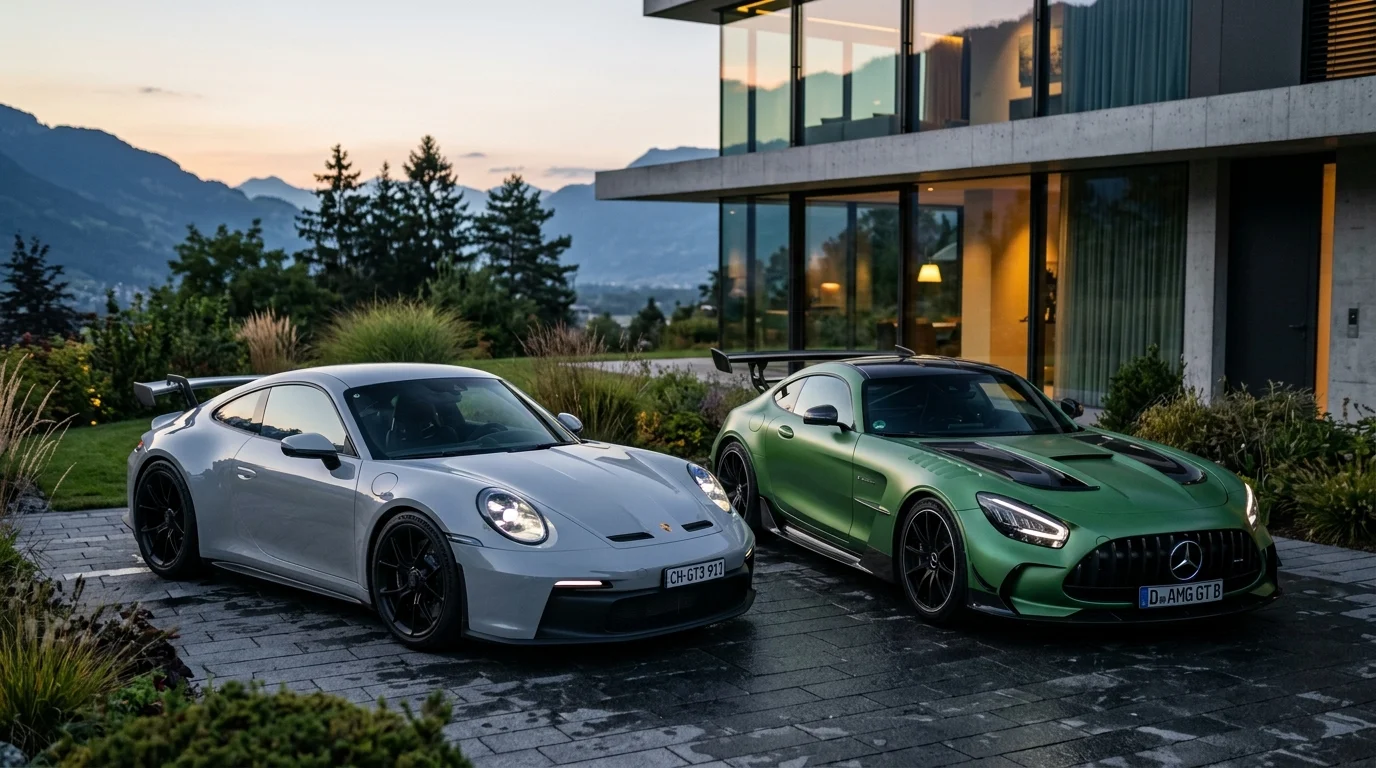
What Is Porsche?
Porsche is a German automotive brand known primarily for high-performance sports cars and premium vehicles.
The company has a long association with performance-oriented engineering and distinctive sports-car design.
Popular Porsche Models
Depending on the market and model year, Porsche’s lineup can include:
- 911
- 718 Cayman
- 718 Boxster
- Panamera
- Macan
- Cayenne
- Taycan
What Makes Porsche Different?
Porsche is particularly known for:
- Sporty handling
- Driver-focused engineering
- Performance
- Distinctive styling
- High-quality interiors
- Strong motorsport heritage
The 911 is perhaps the brand’s most recognizable model and has become one of the world’s best-known sports cars.
Example
“He chose a Porsche because he wanted a performance-focused driving experience.”
What Is Mercedes-Benz?
Mercedes-Benz is a German luxury automaker offering a broad selection of passenger vehicles.
Its lineup generally covers significantly more categories than Porsche.
Popular Mercedes-Benz Models
Depending on the market and model year, Mercedes-Benz may offer:
- A-Class
- C-Class
- E-Class
- S-Class
- GLA
- GLC
- GLE
- GLS
- AMG performance models
- Electric vehicles
What Makes Mercedes-Benz Different?
Mercedes-Benz is particularly known for:
- Luxury
- Comfort
- Interior technology
- Premium materials
- Sedans and SUVs
- High-performance AMG models
- Advanced driver-assistance features
Example
“She chose a Mercedes-Benz because she wanted a comfortable luxury vehicle with advanced technology.”
Porsche or Mercedes: Key Differences
When comparing Porsche or Mercedes, the most important difference is their overall brand philosophy.
- Porsche traditionally emphasizes sporty driving dynamics.
- Mercedes-Benz places a stronger emphasis on luxury and comfort across a broad lineup.
- Porsche has a particularly strong sports-car identity.
- Mercedes-Benz offers a wider variety of vehicle categories.
- Both brands offer high-performance models.
- Mercedes-Benz generally provides more SUV and luxury-sedan choices.
- Porsche SUVs combine practicality with a stronger performance focus.
- Both brands offer electric vehicles.
- Maintenance and ownership costs can be significant for either premium brand.
- The best choice depends heavily on the specific models being compared.
Comparison Table
| Feature | Porsche | Mercedes-Benz |
|---|---|---|
| Brand identity | Performance-focused luxury | Luxury and technology |
| Sports-car heritage | Extremely strong | Strong, especially through AMG |
| Luxury | Excellent | Excellent |
| Handling focus | Very strong | Varies by model |
| SUV selection | Yes | Extensive |
| Sedan selection | Limited | Extensive |
| Performance models | Extensive | Extensive |
| Comfort focus | High | Very high |
| Technology | Advanced | Advanced |
| Best known for | Sports cars and driving dynamics | Luxury, comfort, technology |
Real-Life Conversation Examples
Dialogue 1: Performance
Person 1: “I care most about handling and driving enjoyment. Porsche or Mercedes?”
Person 2: “Porsche may be worth considering because of its strong performance and sports-car heritage.”
🎯 Lesson: Porsche is particularly associated with driver-focused performance.
Dialogue 2: Luxury
Person 1: “I want a comfortable luxury sedan with lots of technology.”
Person 2: “Mercedes-Benz has a broad range of luxury sedans and technology-focused features.”
🎯 Lesson: Mercedes-Benz has a particularly strong luxury-sedan lineup.
Dialogue 3: SUV
Person 1: “I need an SUV but still want something premium.”
Person 2: “Both brands offer SUVs, so compare the specific Porsche and Mercedes models you’re considering.”
🎯 Lesson: Model-to-model comparison is more useful than comparing the brands alone.
Dialogue 4: Sports Car
Person 1: “I want a dedicated sports car.”
Person 2: “Porsche has a particularly strong sports-car lineup.”
🎯 Lesson: Porsche has an especially strong reputation for sports cars.
When to Choose Porsche or Mercedes
Choose Porsche for a Driver-Focused Experience
Porsche may be a better fit if you prioritize:
- Steering feel
- Handling
- Acceleration
- Sports-car character
- Driving engagement
- Performance-oriented engineering
Models such as the 911 are designed with driving enjoyment as a central priority.
Choose Mercedes-Benz for Luxury and Comfort
Mercedes-Benz may be a better fit if you prioritize:
- Comfortable cruising
- Luxury interiors
- Advanced technology
- Premium sedans
- SUVs
- A broad range of vehicle choices
Mercedes also offers performance-oriented AMG vehicles for drivers who want more aggressive performance.
Porsche or Mercedes: Performance
Performance depends heavily on the exact model.
A Porsche 911 and a Mercedes-Benz S-Class, for example, are designed for very different purposes.
Porsche generally places a stronger emphasis on handling and sports-car dynamics.
Mercedes-Benz offers both comfortable luxury vehicles and high-performance AMG models.
Therefore, comparing Porsche or Mercedes at the brand level can only tell you so much.
A better comparison is:
Porsche 911 vs Mercedes-AMG GT
or
Porsche Cayenne vs Mercedes-Benz GLE
The specific models determine the real-world differences.
Porsche or Mercedes: Comfort
Mercedes-Benz has a particularly strong reputation for luxury and comfort.
Its larger sedans and SUVs can emphasize:
- Comfortable seating
- Quiet cabins
- Premium materials
- Technology
- Smooth highway driving
Porsche also produces luxurious interiors, but its vehicles often maintain a stronger connection to sporty driving.
If your priority is relaxed long-distance cruising, Mercedes-Benz may appeal more.
Porsche or Mercedes: Technology
Both manufacturers use advanced technology, although their implementations differ by model and generation.
Modern luxury vehicles can include:
- Large infotainment displays
- Digital instrument systems
- Smartphone integration
- Driver-assistance systems
- Advanced navigation
- Connected services
- Premium audio systems
The exact features depend on the model, trim, market, and model year.
Always check the specifications of the exact vehicle you’re considering.
Porsche or Mercedes: SUVs
Both brands offer premium SUVs.
Porsche SUVs
Porsche offers models such as:
- Macan
- Cayenne
These combine SUV practicality with a stronger performance-oriented identity.
Mercedes-Benz SUVs
Mercedes-Benz offers a broader SUV range, including:
- GLA
- GLB
- GLC
- GLE
- GLS
- G-Class
This gives Mercedes-Benz an advantage in terms of SUV variety.
Porsche or Mercedes: Electric Vehicles
Both brands have entered the electric-vehicle market.
Porsche has developed electric versions and dedicated EV offerings, while Mercedes-Benz has expanded its electric lineup through the EQ family and newer electric models.
Because electric technology is evolving quickly, specifications, range, charging capabilities, and model availability can change significantly between model years.
When comparing electric vehicles, examine the exact model rather than relying on the brand reputation alone.
Porsche or Mercedes: Reliability and Maintenance
Neither Porsche nor Mercedes-Benz should be treated like a low-cost economy brand when considering ownership expenses.
Premium vehicles can involve higher costs for:
- Maintenance
- Specialized repairs
- Replacement parts
- Tires
- Insurance
- Performance components
Actual reliability varies significantly by model, engine, generation, maintenance history, and owner usage.
A well-maintained vehicle can have a very different ownership experience from a neglected one.
Common Mistakes
Mistake 1: Comparing Brands Instead of Models
A Porsche sports car and a Mercedes luxury SUV are built for different purposes.
Compare vehicles in the same category.
Mistake 2: Assuming More Power Means a Better Car
Horsepower is only one part of vehicle performance.
Handling, braking, weight, transmission behavior, comfort, and everyday usability also matter.
Mistake 3: Ignoring Ownership Costs
The purchase price is only one part of the cost of owning a luxury vehicle.
Mistake 4: Buying Only for the Badge
A brand logo shouldn’t be the only reason you choose a car.
Think about how you actually use the vehicle.
Mistake 5: Forgetting Practicality
A two-seat or performance-focused Porsche may not be ideal for a family that needs substantial passenger and cargo space.
A Mercedes SUV or sedan may be more practical for certain lifestyles.
Fun Facts or History
1. Porsche Has Deep Motorsport Connections
Porsche has a long history of involvement in motorsport, which has strongly influenced its performance-oriented brand identity.
2. Mercedes-Benz Has a Long Automotive History
Mercedes-Benz traces its heritage to the earliest development of the modern automobile and has remained one of the world’s best-known luxury automotive brands.