
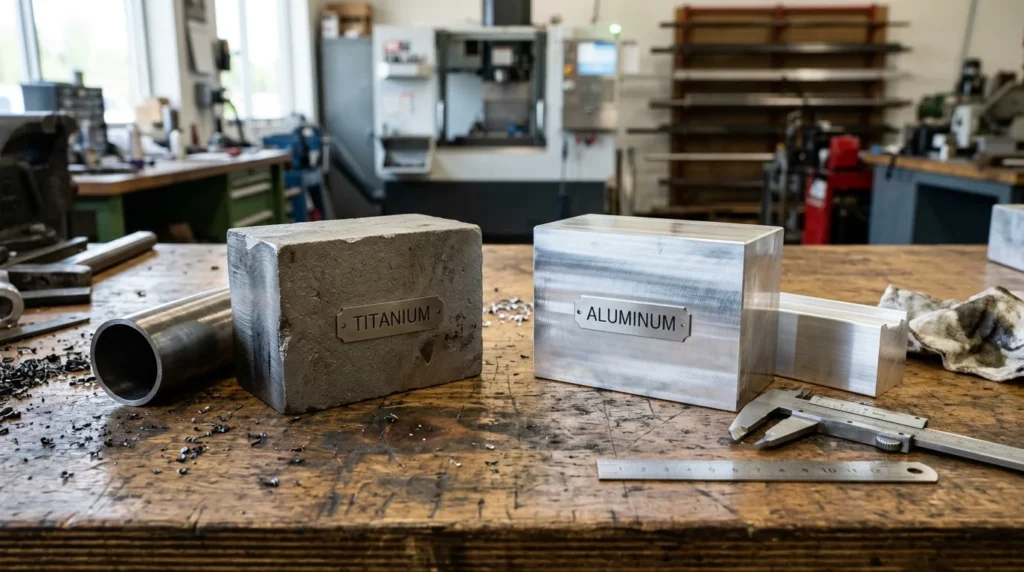
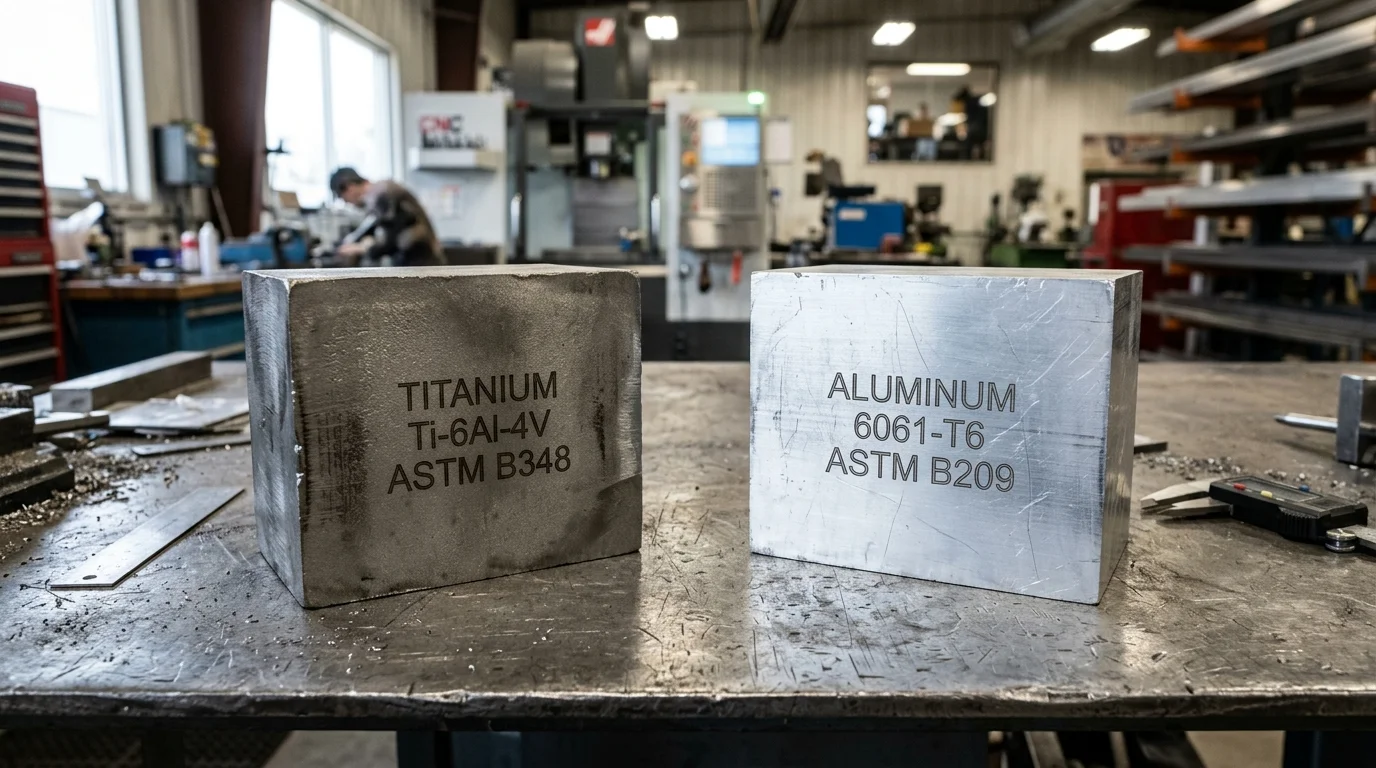
What Is Titanium?
Titanium is a strong, lightweight metal with the chemical symbol Ti and atomic number 22.
It is known for combining relatively low density with excellent strength and outstanding corrosion resistance.
Titanium is often selected when engineers need a material that can remain strong while keeping weight under control.
Key Properties of Titanium
Titanium is known for:
- High strength-to-weight ratio
- Excellent corrosion resistance
- Good performance at elevated temperatures
- Low density compared with many structural metals
- Biocompatibility in many medical applications
- Long service life in demanding environments
Common Uses of Titanium
Titanium is used in:
- Aircraft components
- Aerospace structures
- Medical implants
- Marine equipment
- Chemical processing equipment
- High-performance sporting equipment
- Certain automotive components
Example Sentences
- “The aerospace component is made from titanium.”
- “Titanium offers excellent corrosion resistance.”
- “The implant uses a titanium alloy.”
What Is Aluminum?
Aluminum is a lightweight metal with the chemical symbol Al and atomic number 13.
It is one of the most widely used metals in the world because it combines low density, versatility, corrosion resistance, and relatively low cost.
Aluminum can also be alloyed with other elements to produce materials with different mechanical properties.
Key Properties of Aluminum
Aluminum is known for:
- Very low density
- Good strength-to-weight ratio
- Corrosion resistance
- Excellent machinability
- Good thermal conductivity
- Good electrical conductivity
- Ease of forming and manufacturing
- Relatively low cost
Common Uses of Aluminum
Aluminum is widely used in:
- Aircraft
- Cars
- Bicycles
- Window frames
- Cans
- Electronics
- Construction
- Kitchen products
- Packaging
Example Sentences
- “The frame is made from lightweight aluminum.”
- “Aluminum is widely used in transportation.”
- “The manufacturer selected an aluminum alloy to reduce weight.”
Titanium or Aluminum: Key Differences
When comparing titanium or aluminum, neither material is universally better. Their properties make them suitable for different jobs.
- Titanium is generally stronger than aluminum.
- Aluminum is significantly lighter than titanium.
- Titanium has excellent corrosion resistance.
- Aluminum also has good corrosion resistance because it naturally forms a protective oxide layer.
- Aluminum is generally easier and less expensive to manufacture.
- Titanium is usually more expensive.
- Titanium maintains useful mechanical properties at higher temperatures than many aluminum alloys.
- Aluminum has excellent thermal and electrical conductivity.
- Titanium is often chosen for demanding aerospace, medical, and chemical applications.
- Aluminum is widely used where low weight, affordability, and ease of manufacturing matter.
Comparison Table
| Feature | Titanium | Aluminum |
|---|---|---|
| Chemical symbol | Ti | Al |
| Atomic number | 22 | 13 |
| Density | Higher | Lower |
| Strength | Generally higher | Generally lower |
| Weight | Lightweight | Very lightweight |
| Strength-to-weight ratio | Excellent | Very good |
| Corrosion resistance | Excellent | Very good |
| Heat resistance | Generally better | Generally lower |
| Thermal conductivity | Relatively low | High |
| Electrical conductivity | Relatively low | High |
| Cost | Usually higher | Usually lower |
| Machinability | More difficult | Generally easier |
| Common applications | Aerospace, medical, chemical | Transportation, construction, packaging |
Real-Life Conversation Examples
Dialogue 1: Aerospace
Person 1: “Why would engineers choose titanium instead of aluminum?”
Person 2: “Titanium can provide excellent strength, corrosion resistance, and performance in demanding environments.”
🎯 Lesson: Titanium is often selected when high performance matters more than material cost.
Dialogue 2: Lightweight Products
Person 1: “I need a lightweight metal for a large structure.”
Person 2: “Aluminum may be worth considering because its density is lower and it’s widely used in lightweight structures.”
🎯 Lesson: Aluminum has a major advantage when minimizing material weight is important.
Dialogue 3: Cost
Person 1: “Why don’t manufacturers use titanium for everything?”
Person 2: “Titanium is usually much more expensive and can be more difficult to process.”
🎯 Lesson: Material performance must be balanced against manufacturing cost.
Dialogue 4: Corrosion
Person 1: “Which is better around corrosive environments?”
Person 2: “Both can resist corrosion well, but titanium is especially valued for exceptional corrosion resistance in demanding environments.”
🎯 Lesson: Titanium can be advantageous in harsh chemical or marine applications.
When to Use Titanium or Aluminum
Choose Titanium When Strength and Durability Matter
Titanium can be an excellent choice when a component needs:
- High strength
- Excellent corrosion resistance
- Good high-temperature performance
- Long service life
- Biocompatibility
- A strong strength-to-weight ratio
It is particularly valuable in specialized applications where performance justifies the higher material and manufacturing costs.
Choose Aluminum When Weight and Cost Matter
Aluminum is often a better choice when you need:
- Very low weight
- Easy manufacturing
- Good corrosion resistance
- Good thermal conductivity
- Lower material costs
- High-volume production
This is why aluminum appears in everything from beverage cans to aircraft structures.
Titanium or Aluminum: Weight
Both metals are considered lightweight compared with many other structural metals, but aluminum is lighter.
Typical densities are approximately:
- Aluminum: 2.70 g/cm³
- Titanium: 4.51 g/cm³
That means titanium is significantly denser than aluminum.
However, density isn’t the only factor that matters. Titanium can offer substantially higher strength, so engineers may be able to use less material in some applications.
Titanium or Aluminum: Strength
Titanium generally has the advantage in strength, although the exact comparison depends on the specific alloys being compared.
Pure metals and engineering alloys can have dramatically different properties.
For example, a particular high-strength aluminum alloy may outperform a particular titanium grade in one property or application.
Therefore, engineers should compare the specific grades and design requirements, rather than simply comparing the names of the metals.
Titanium or Aluminum: Corrosion Resistance
Both metals offer good corrosion resistance, but titanium is especially impressive in harsh environments.
Titanium forms a stable protective oxide layer that helps prevent further corrosion.
Aluminum also forms a protective oxide layer, which is one reason aluminum products can perform well outdoors and in many everyday environments.
For extremely aggressive chemical or marine applications, titanium may offer an important advantage.
Titanium or Aluminum: Cost
Aluminum is generally much less expensive than titanium.
This cost difference comes from several factors, including:
- Raw material processing
- Refining
- Manufacturing
- Machining
- Tooling
- Production complexity
Titanium’s excellent performance can justify the cost in specialized applications, but aluminum is often the more economical option for large-scale production.
Titanium or Aluminum: Machining and Manufacturing
Manufacturing considerations are another major difference.
Aluminum is generally easier to cut, shape, drill, and machine.
Titanium can be more challenging to machine because of its material properties and heat-management requirements.
This can increase production time, tooling requirements, and manufacturing costs.
For high-volume products where cost and manufacturing speed matter, aluminum can therefore have a significant advantage.
Titanium or Aluminum in Aerospace
Both metals are important in aerospace.
Titanium
Titanium can be used for components that require:
- High strength
- Corrosion resistance
- Heat resistance
- Long-term durability
Aluminum
Aluminum has historically been extremely important in aircraft construction because it offers:
- Low density
- Good strength
- Easy manufacturing
- Relatively low cost
Modern aircraft can use a combination of aluminum alloys, titanium, composites, and other advanced materials.
Titanium or Aluminum in Everyday Products
For everyday consumer products, aluminum is far more common.
You can find aluminum in:
- Cans
- Laptops
- Bicycles
- Cars
- Cookware
- Building materials
Titanium is more commonly found in specialized or premium applications where its performance characteristics justify the additional cost.
Titanium or Aluminum: Heat and Electricity
Aluminum has much higher thermal and electrical conductivity than titanium.
This makes aluminum particularly useful for:
- Electrical wiring
- Heat exchangers
- Cooking equipment
- Thermal management
Titanium’s lower thermal conductivity can be useful in situations where engineers don’t want heat to travel through the material as easily.
Common Mistakes
Mistake 1: Assuming Titanium Is Always Better
Titanium has impressive properties, but that doesn’t make it the best choice for every project.
If aluminum meets the requirements at a lower cost and weight, it may be the more practical option.
Mistake 2: Comparing Only Pure Metals
Engineering applications usually involve alloys, not simply pure titanium or pure aluminum.
The specific alloy can dramatically change strength, corrosion resistance, machinability, and other properties.
Mistake 3: Looking Only at Weight
Aluminum is lighter, but titanium can provide greater strength.
Engineers consider the complete design rather than choosing solely by density.
Mistake 4: Ignoring Manufacturing Costs
A material’s purchase price is only one part of total cost.
Machining, welding, forming, finishing, tooling, and production time can also matter.
Fun Facts or History
1. Aluminum Is Extremely Common
Aluminum is the most abundant metal in Earth’s crust, although it is not usually found naturally as pure aluminum because it readily combines with other elements.
2. Titanium Is Highly Valued in Medicine
Titanium and certain titanium alloys are widely used in medical applications because of their useful mechanical properties and biocompatibility.