
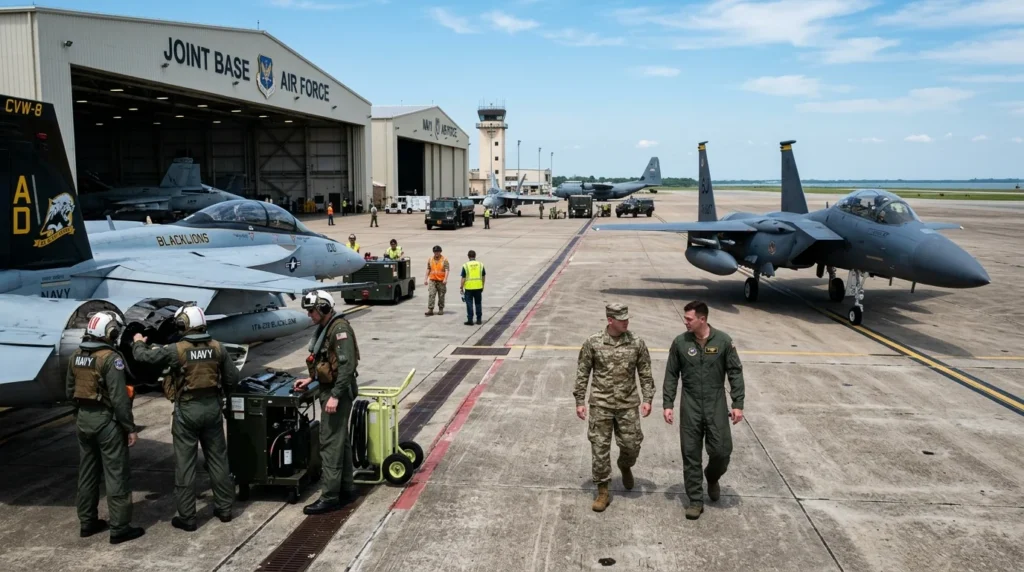
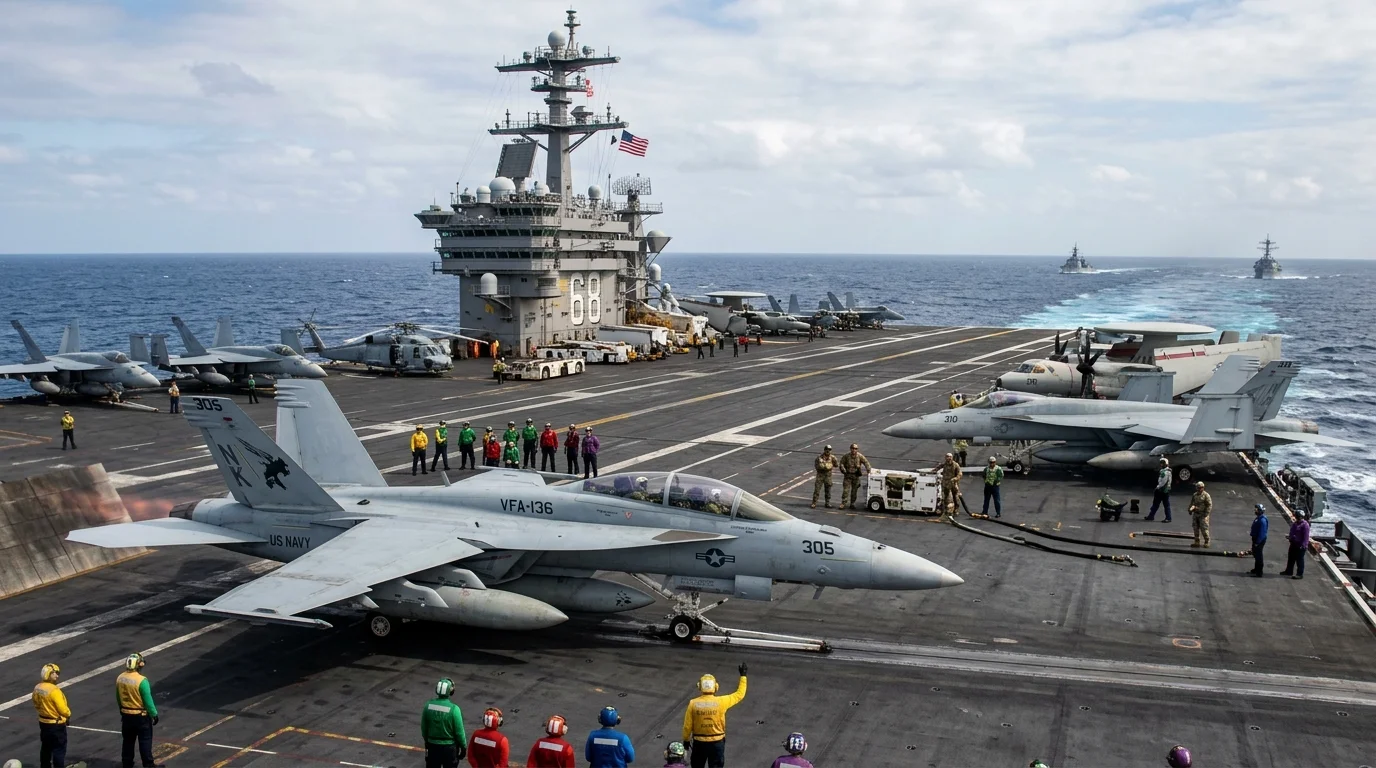
What Is “Navy”?
A navy is a branch of a country’s military that is primarily responsible for operations at sea.
Navies typically operate and maintain vessels such as:
- Warships
- Patrol vessels
- Aircraft carriers
- Submarines
- Support ships
Depending on the country, a navy may also operate aircraft, helicopters, marine forces, or other specialized units.
Meaning and Usage
The word navy generally refers to a country’s maritime military force.
Examples:
“Her brother joined the navy.”
“The navy operates several types of ships.”
“The country expanded its navy.”
The word can refer to the organization as a whole rather than a single person or vehicle.
Grammar Rules
Navy is a countable noun when referring to a particular national military organization:
- the navy
- a navy
- navies
For example:
“The country’s navy protects its maritime interests.”
The plural form is navies.
When referring to a specific national institution, the word is often capitalized as part of its official name, such as United States Navy or Royal Navy.
Short History
Naval forces have existed for thousands of years. Ancient civilizations developed organized fleets for transportation, trade protection, warfare, and control of waterways.
Over time, naval technology evolved from wooden sailing vessels to steam-powered ships, submarines, aircraft carriers, and highly advanced modern vessels.
What Is “Air Force”?
An air force is a branch of a country’s military primarily responsible for military operations in the air and for operating military aircraft and related systems.
Air forces may operate:
- Fighter aircraft
- Transport aircraft
- Helicopters
- Reconnaissance aircraft
- Unmanned aircraft
- Air-defense systems
- Other aviation-related equipment
The exact structure varies by country.
Meaning and Usage
The term air force refers to a nation’s military organization responsible primarily for air operations.
Examples:
“He joined the air force after finishing school.”
“The air force operates transport aircraft.”
“The country’s air force conducted training exercises.”
Grammar Rules
Air force is a compound noun.
It can be used as:
- the air force
- an air force
- air forces
When referring to an official organization, capitalization depends on the organization’s formal name and the style being followed.
For example:
“The United States Air Force is a military service.”
Short History
Modern air forces developed mainly during the twentieth century as military aviation became increasingly important.
Some countries initially placed military aircraft under army or naval organizations before establishing separate air forces. Over time, independent air forces became common around the world.
Key Differences Between Navy and Air Force
The biggest difference between navy or air force is their traditional operating environment and primary military responsibilities.
- A navy is primarily associated with maritime operations.
- An air force is primarily associated with air operations.
- Navies commonly operate ships and submarines.
- Air forces commonly operate military aircraft.
- Naval forces can also include aviation units.
- Air forces can work closely with naval and land forces.
- Both are military branches designed to support national defense.
- Their exact responsibilities differ by country.
Navy or Air Force Comparison Table
| Feature | Navy | Air Force |
|---|---|---|
| Primary environment | Sea and maritime areas | Air and airspace |
| Main equipment | Ships, submarines, maritime vessels | Aircraft and aviation systems |
| Main focus | Maritime operations | Air operations |
| Common personnel | Sailors and naval personnel | Air force personnel/airmen, depending on country |
| Can operate aircraft? | Yes, in many countries | Yes |
| Can work with other branches? | Yes | Yes |
| Organization | Naval military branch | Air military branch |
| Main association | Sea power | Air power |
The easiest way to remember the difference is:
Navy = sea
Air force = air
Real-Life Conversation Examples
Dialogue 1: Choosing a Branch
Mia: What branch did your brother join?
Sam: The navy.
Mia: So he works with the country’s maritime forces?
Sam: Yes, that’s the branch he chose.
🎯 Lesson: The navy is primarily associated with military operations at sea.
Dialogue 2: Talking About Aircraft
Alex: Which branch operates military aircraft?
Jordan: The air force is primarily responsible for air operations, although some navies also operate aircraft.
🎯 Lesson: The air force focuses primarily on air operations, while naval aviation can also be part of a navy.
Dialogue 3: Understanding Modern Military Operations
Nora: Does the navy work completely separately from the air force?
Ben: Not necessarily. Different military branches often work together during operations and training.
🎯 Lesson: Although their primary roles differ, military branches can operate jointly.
Dialogue 4: Using the Terms Correctly
Teacher: What is the difference between a navy and an air force?
Student: A navy is mainly responsible for maritime operations, while an air force primarily focuses on military operations in the air.
Teacher: Correct.
🎯 Lesson: The basic distinction is sea-based military operations versus air-based military operations.
When to Use Navy vs Air Force
Use “Navy” When Talking About Maritime Forces
Use navy when discussing a country’s maritime military branch.
Examples:
“The navy operates submarines.”
“She decided to join the navy.”
“The navy conducted a maritime exercise.”
The key association is sea.
Use “Air Force” When Talking About Air Operations
Use air force when referring to a country’s military aviation branch.
Examples:
“He joined the air force.”
“The air force operates fighter aircraft.”
“The country’s air force conducted an air exercise.”
The key association is air.
Memory Trick
The simplest memory trick is:
Navy → naval → sea
Air force → air → sky
If your sentence is mainly about ships, submarines, or maritime operations, “navy” is probably the right term.
If it is mainly about military aircraft or air operations, “air force” is probably the right term.
Navy Aviation vs Air Force Aviation
This is where the distinction can become more complicated.
A navy can have its own aircraft. These may support maritime operations, operate from ships, or perform other missions depending on the country.
An air force, meanwhile, is primarily organized around military aviation and air operations.
Therefore, simply seeing an aircraft does not always mean the air force is responsible.
For example, a naval organization may operate helicopters or fixed-wing aircraft. The important question is not only what equipment is being used, but which military branch operates it and what role it serves.
Are Navy and Air Force the Same?
No.
The navy and air force are distinct military branches in countries that maintain both organizations.
However, they can share responsibilities and cooperate closely.
Modern defense operations can involve maritime, land, and air capabilities at the same time. Because of this, the boundaries between branches are not always as simple as saying “ships belong to the navy and planes belong to the air force.”
Those are useful basic rules, but real military organizations are more complex.
US vs UK English Notes
The terms navy and air force are widely understood in both American and British English.
However, official names differ.
For example, the United States uses United States Navy and United States Air Force, while the United Kingdom uses the Royal Navy and Royal Air Force.
The basic meanings remain similar, but organizational structures and responsibilities can differ between countries.
Therefore, when discussing a specific military organization, it is best to use its official name.
Common Mistakes to Avoid
Mistake 1: Saying the Navy Only Uses Ships
Navies can operate aircraft, helicopters, submarines, and other systems in addition to surface vessels.
Mistake 2: Assuming Every Military Aircraft Belongs to the Air Force
Navies and other military branches can also operate aircraft.
Mistake 3: Treating Navy and Air Force as Synonyms
They are different branches with different primary responsibilities.
Mistake 4: Assuming Every Country Has the Same Structure
Military organization varies from country to country. Some countries combine certain responsibilities, while others maintain separate services.
Fun Facts and History
1. Military Aviation Was Once Closely Connected to Naval and Land Forces
Before independent air forces became common, military aircraft were often operated by armies or navies. The development of dedicated air forces came later as aviation became more important to military planning.
2. Navies Can Have Their Own Air Forces Within the Branch
Many navies operate aviation units. These may include helicopters and other aircraft designed to support maritime missions.
This is why the simple rule “navy = ships, air force = planes” is useful but not completely comprehensive.
Frequently Asked Questions
Is the navy the same as the air force?
No. The navy is primarily responsible for maritime military operations, while the air force primarily conducts military air operations.
Does the navy have aircraft?
In many countries, yes. Naval aviation can include helicopters and other aircraft used for maritime missions.
Does the air force use ships?
The air force is primarily an aviation-focused branch, so ships are not its defining equipment or role.
Which branch is responsible for the sea?
The navy is generally the military branch primarily responsible for maritime operations.
Which branch is responsible for military aircraft?
The air force is primarily responsible for military air operations in countries that have a separate air force, although other branches may also operate aircraft.
Is “airforce” one word?
In standard English, the usual spelling is air force, as two words.
Correct:
air force
Not normally:
airforce