
What Is “Innie”?
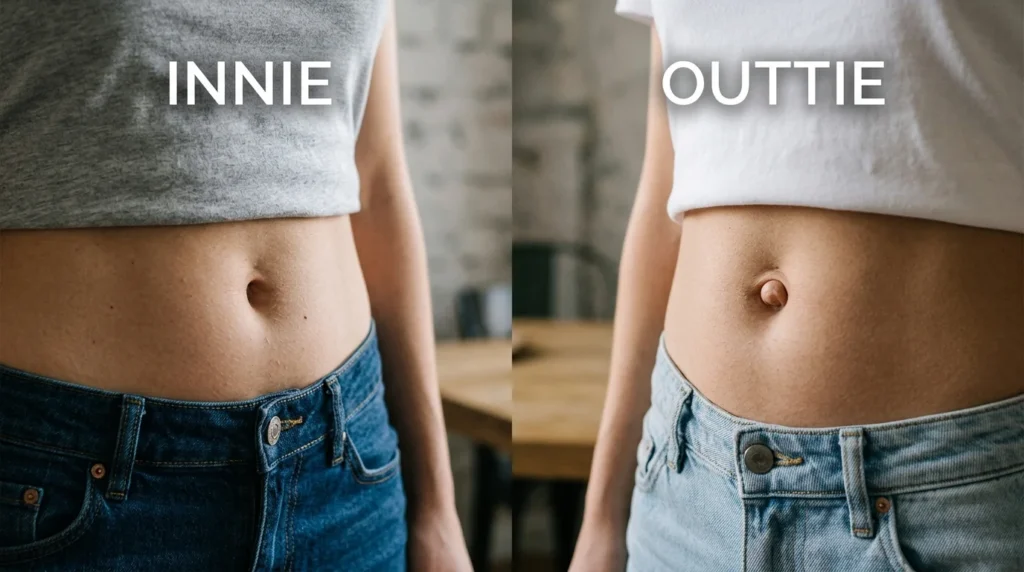
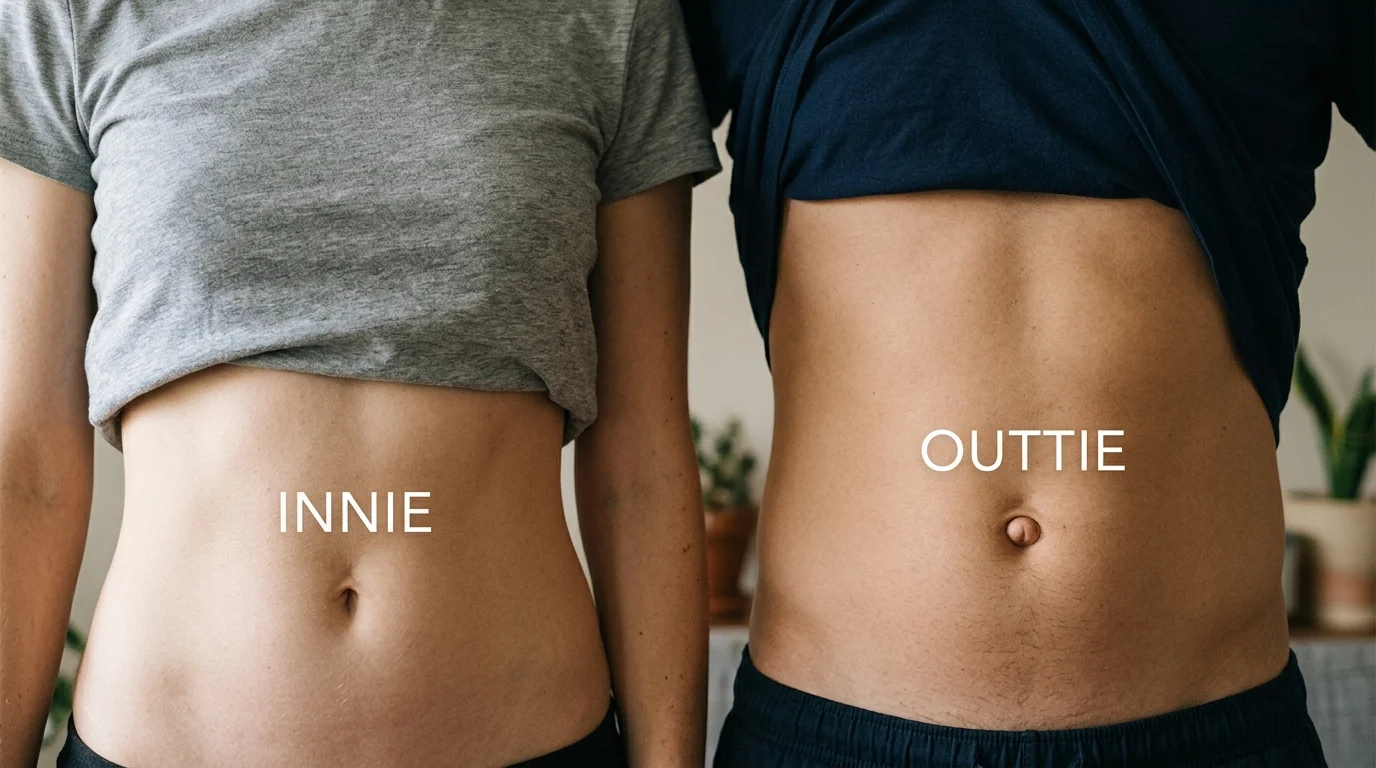
An innie is an informal word for a belly button that appears to go inward toward the abdomen.
The term comes from the word in, reflecting the inward appearance of the navel.
Meaning and Usage
An innie belly button typically has a small indentation or depression rather than projecting outward.
For example:
- “I have an innie.”
- “Her belly button is an innie.”
- “Most of my family members have innies.”
- “Is your belly button an innie or an outtie?”
The word is primarily used in casual English rather than formal medical writing.
In professional or medical contexts, a healthcare provider would normally use terms such as umbilicus, navel, or descriptions of the umbilical area rather than “innie.”
Grammar Rules
Innie is an informal countable noun.
You can use it in sentences such as:
- an innie
- the innie
- my innie
- an innie belly button
It can also function informally as a modifier:
“She has an innie belly button.”
The plural is generally innies.
Usage Note
The word innie became popular as a simple, conversational way to describe a common anatomical variation. It is especially common in casual speech among English speakers.
The term does not describe a medical condition by itself. It simply refers to the direction in which the belly button appears to point.
What Is “Outtie”?
An outtie is an informal term for a belly button that protrudes outward from the abdomen rather than forming an inward indentation.
The word is derived from out, making it an easy counterpart to innie.
Meaning and Usage
Common examples include:
- “I have an outtie.”
- “His belly button is an outtie.”
- “My baby has an outtie.”
- “Is yours an innie or an outtie?”
Like innie, the term is casual rather than medical.
Grammar and Spelling
Outtie is also a countable informal noun.
Examples include:
- an outtie
- the outtie
- my outtie
- an outtie belly button
The plural is outties.
The spelling outie without the second “t” can sometimes be encountered, but outtie is the spelling commonly used as the counterpart to innie.
Regional Notes
Outtie is primarily a casual English expression and does not represent a formal anatomical classification.
It can be understood by English speakers in different regions, particularly in North American English, although exact usage and spelling can vary in informal contexts.
If you are writing for a medical or professional audience, protruding navel or another precise anatomical description would be more appropriate.
Key Differences Between Innie and Outtie
The difference between an innie or outtie is mainly about the visible shape of the belly button.
- An innie curves or sinks inward.
- An outtie protrudes outward.
- Both are natural variations in belly button appearance.
- Neither term is a formal medical diagnosis.
- Innie relates to “in.”
- Outtie relates to “out.”
- Both are informal expressions.
- A person’s belly button shape does not determine their overall health or worth.
Innie or Outtie Comparison Table
| Feature | Innie | Outtie |
|---|---|---|
| Basic meaning | Belly button that curves inward | Belly button that protrudes outward |
| Direction | Inward | Outward |
| Formal medical term | Umbilicus/navel | Umbilicus/navel |
| Style | Informal | Informal |
| Related word | In | Out |
| Common phrase | “I have an innie.” | “I have an outtie.” |
| Is it automatically a medical problem? | No | No |
| Standard formal anatomy term? | No | No |
The easiest way to remember innie or outtie is:
Innie = in.
Outtie = out.
Real-Life Conversation Examples
Dialogue 1: A Casual Question
Mia: Is your belly button an innie or an outtie?
Sara: It’s an innie.
Mia: Mine is too!
🎯 Lesson: Innie is the casual term for an inward-pointing belly button.
Dialogue 2: Understanding the Difference
Alex: What does “outtie” mean?
Ben: It means the belly button sticks outward instead of going inward.
Alex: Oh, so it’s the opposite of an innie?
Ben: Exactly.
🎯 Lesson: Outtie describes a belly button that protrudes outward.
Dialogue 3: Using Formal Language
Doctor: You mentioned your navel looks different from other people’s.
Patient: I have what people call an outtie.
Doctor: That’s a casual term for a protruding navel.
🎯 Lesson: Innie and outtie are informal terms; healthcare professionals may use more precise anatomical language.
Dialogue 4: Spelling Confusion
Nora: Is it spelled “outie” or “outtie”?
Ella: You’ll see both forms in informal writing, but outtie is commonly used as the matching form of “innie.”
🎯 Lesson: Outtie is a common spelling, while informal spelling can vary.
When to Use Innie vs Outtie
The practical rule is very simple.
Use “Innie”
Use innie when referring casually to a belly button that appears to go inward.
Example:
“I have an innie.”
“Her belly button is an innie.”
Use “Outtie”
Use outtie when referring casually to a belly button that appears to project outward.
Example:
“He has an outtie.”
“The baby has an outtie.”
A Simple Memory Trick
Look at the first part of each word:
INnie → INward
OUTtie → OUTward
This makes the distinction easy to remember.
Are Innie and Outtie Medical Terms?
Not really. Innie and outtie are informal everyday expressions rather than standard medical classifications.
The anatomical structure is called the umbilicus, commonly known as the navel or belly button.
Healthcare professionals generally describe the appearance more precisely when necessary.
For ordinary conversation, however, innie and outtie are easy-to-understand terms.
Why Do Belly Buttons Have Different Shapes?
Belly button shape can naturally vary from person to person.
The umbilical cord connects a developing baby to the placenta during pregnancy. After birth, the cord is no longer needed and the remaining tissue heals, leaving the navel.
The final appearance can differ depending on individual anatomy and how the area heals.
Importantly, the visible shape is not simply determined by whether someone “cut” the umbilical cord in a particular way. Common explanations that claim the method of cutting the cord directly determines whether someone has an innie or outtie are oversimplifications.
An innie or outtie can simply be a normal difference in anatomy.
Are Innies More Common Than Outties?
In casual discussions, people often say that innies are more common than outties. However, the exact proportions can vary depending on how researchers define and classify belly button shapes.
The important point is that both shapes can be normal.
There is no need to treat one appearance as inherently better than the other.
When Should You Pay Attention to a Belly Button Change?
The terms innie and outtie themselves are not medical warnings.
However, a new or sudden change in the belly button, especially if accompanied by pain, swelling, redness, discharge, or another concerning symptom, can deserve medical attention.
For example, a previously inward navel that suddenly becomes noticeably swollen or painful should not simply be dismissed as a change from “innie” to “outtie.”
If a belly button changes unexpectedly or causes discomfort, a qualified healthcare professional can determine whether anything needs attention.
Common Mistakes to Avoid
Mistake 1: Thinking One Shape Is “Correct”
There is no universally correct belly button shape. Innie and outtie describe appearance, not a ranking.
Mistake 2: Treating the Terms as Medical Diagnoses
They are casual descriptions rather than formal medical diagnoses.
Mistake 3: Confusing “Outtie” With a Disease
An outward belly button can be a normal anatomical variation. A protruding navel that develops suddenly or is associated with symptoms is a different situation and may need professional evaluation.
Mistake 4: Assuming the Words Are Formal Anatomy
In medical writing, umbilicus or navel is more appropriate than “innie” or “outtie.”
Fun Facts and History
1. The Terms Are Built Around Direction
The words are easy to understand because they use familiar directional ideas:
in + -ie = innie
out + -tie = outtie
Their playful construction makes them particularly common in casual conversations.
2. The Belly Button Is a Scar
The navel is essentially a scar left after the umbilical cord separates and the area heals after birth. Its final appearance varies naturally from person to person.