
What Is “Fridge”?
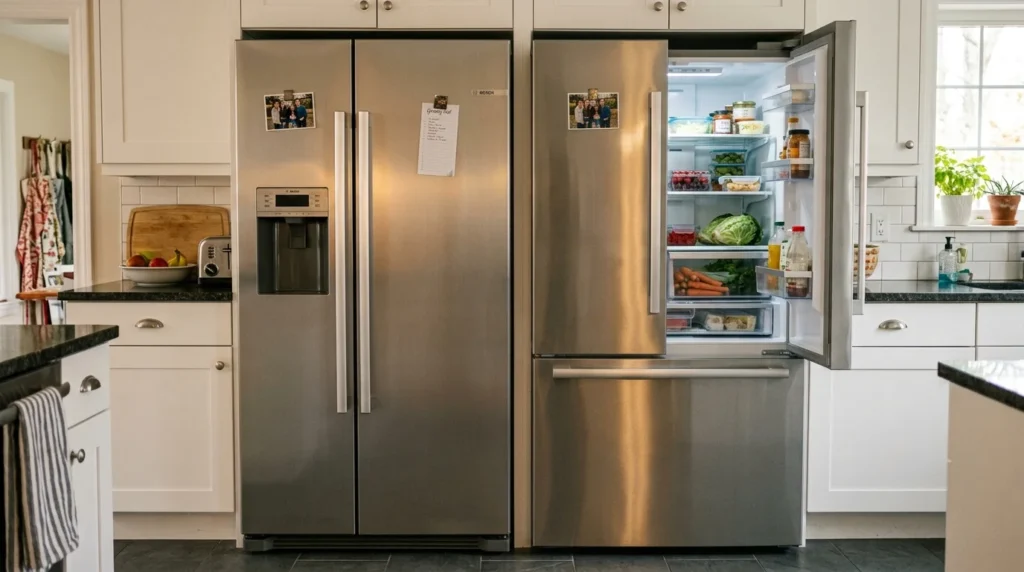
A fridge is the common shortened form of refrigerator. It is a kitchen appliance designed to keep food and drinks cold without freezing most of them.
The temperature inside a typical refrigerator is generally kept above the freezing point of water. This cold environment slows the growth of many microorganisms and helps food stay fresh for longer than it would at room temperature.
Meaning and Usage
The word fridge is an informal but extremely common noun in everyday English. It refers to the refrigerator compartment or, depending on context, the entire refrigerator appliance.
For example:
- “Please put the milk in the fridge.”
- “There are some leftovers in the fridge.”
- “I need to clean out the fridge.”
- “The fridge is almost empty.”
The word usually refers to food-storage space that is cold but not frozen.
Grammar Rules
Fridge is a countable noun. You can say:
- a fridge
- the fridge
- two fridges
- my fridge
You can also use related expressions such as fridge door, fridge shelf, and fridge temperature.
The plural form is fridges, not “fridgees.”
A Short History of the Word
“Fridge” developed as a shortened form of refrigerator. Although “refrigerator” remains the formal term, “fridge” became a convenient everyday alternative, particularly in British English and other varieties of English.
Interestingly, the spelling fridge does not simply follow the spelling of “refrigerator.” The “d” helps preserve the pronunciation of the shortened word.
Fridge in Everyday Life
A fridge is ideal for foods that should remain chilled but should not normally be frozen, including:
- Milk
- Fresh vegetables
- Cheese
- Yogurt
- Cooked leftovers
- Fresh fruit
- Sauces
- Eggs, depending on local food-storage practices
When discussing fridge vs freezer, remember that the fridge is primarily the chilled-storage area.
What Is “Freezer”?
A freezer is an appliance or compartment designed to keep food at temperatures low enough to freeze it.
Unlike a fridge, a freezer is intended to turn water in food into ice and maintain food in a frozen state. This makes it useful for storing food for considerably longer periods.
Meaning and Usage
The noun freezer comes from the verb freeze. It describes a place or appliance where things are kept frozen.
Common examples include:
- “Put the ice cream in the freezer.”
- “The meat is in the freezer.”
- “I forgot to take the chicken out of the freezer.”
- “Our freezer is full.”
The freezer is therefore associated with frozen storage, while the fridge is associated with chilled storage.
Grammar and Spelling
Freezer is a countable noun:
- a freezer
- the freezer
- two freezers
- our freezer
The plural is freezers.
The word is formed from freeze + -er, where the suffix indicates something that performs or is associated with an action. In this case, a freezer is a device used for freezing or keeping things frozen.
Regional Notes
The word freezer is widely understood in American, British, Canadian, Australian, and other forms of English.
The main regional difference is often not the word itself but the type of appliance being described. In many homes, the refrigerator and freezer are combined into one unit, while other households use a separate standalone freezer.
This can sometimes make conversations about fridge vs freezer confusing because one appliance may physically contain both sections.
What Goes in a Freezer?
Typical freezer items include:
- Frozen vegetables
- Ice cream
- Frozen meals
- Meat intended for longer storage
- Frozen fruit
- Ice
- Bread for longer-term storage
- Certain prepared foods
The key idea is simple: the freezer keeps things frozen.
Key Differences Between Fridge and Freezer
Although a fridge and freezer are both designed for food preservation, their purposes are different.
Main Differences
- Fridge means a refrigerator or chilled storage compartment.
- Freezer means a frozen-storage appliance or compartment.
- A fridge keeps food cold without normally freezing it.
- A freezer keeps food frozen.
- Fridges are commonly used for foods intended for relatively short-term storage.
- Freezers are commonly used for longer-term frozen storage.
- A refrigerator may contain a freezer compartment.
- A standalone freezer does not necessarily include a normal refrigerator compartment.
- Fridge is a shortened form of refrigerator.
- Freezer is related to the verb freeze.
Fridge vs Freezer Comparison Table
| Feature | Fridge | Freezer |
|---|---|---|
| Basic meaning | Refrigerator or chilled compartment | Frozen-storage appliance or compartment |
| Main purpose | Keeps food cold | Keeps food frozen |
| Temperature | Above the freezing point in normal operation | At or below typical freezing temperatures |
| Food condition | Chilled | Frozen |
| Common foods | Milk, vegetables, yogurt, leftovers | Ice cream, frozen meals, meat, frozen vegetables |
| Storage purpose | Shorter-term fresh storage | Longer-term frozen storage |
| Can be part of a combination appliance? | Yes | Yes |
| Common phrase | “Put it in the fridge.” | “Put it in the freezer.” |
| Formal related term | Refrigerator | Freezing appliance/freezer |
| Everyday use | Very common | Very common |
The simplest distinction in fridge vs freezer is this: the fridge chills; the freezer freezes.
Real-Life Conversation Examples
Dialogue 1: The Milk
Sam: Where should I put the milk?
Alex: In the freezer.
Sam: The freezer? I thought you said the fridge!
Alex: Yes, sorry! Put it in the fridge. I meant the cold compartment, not the frozen one.
🎯 Lesson: Milk normally belongs in the fridge, not the freezer.
Dialogue 2: Ice Cream
Mia: Where’s the ice cream?
Leo: It’s in the fridge.
Mia: It should be in the freezer.
Leo: Oh, right. That’s why it isn’t frozen!
🎯 Lesson: Ice cream generally belongs in the freezer because it needs to stay frozen.
Dialogue 3: Leftovers
Nora: Should I put these leftovers in the fridge or freezer?
Adam: If you’re eating them soon, put them in the fridge. If you’re storing them for longer, freezing may be appropriate.
Nora: Got it. So the choice depends on how I plan to store them.
🎯 Lesson: The fridge is commonly used for short-term chilled storage, while the freezer is useful for frozen storage.
Dialogue 4: Combination Appliance
Ali: Is your freezer separate from your fridge?
Ben: No. They’re both part of the same appliance.
Ali: So you have a refrigerator with a freezer section?
Ben: Exactly.
🎯 Lesson: A single appliance can contain both a fridge and freezer compartment.
When to Use Fridge vs Freezer
Choosing between these words is easier when you focus on what happens to the food.
Use “Fridge” When Something Is Chilled
Use fridge when you are talking about normal refrigerated storage.
For example:
“The cheese is in the fridge.”
“Can you put the vegetables in the fridge?”
“There is some juice in the fridge.”
A useful memory trick is:
Fridge = fresh and chilled.
Use “Freezer” When Something Is Frozen
Use freezer when the food needs to remain frozen.
For example:
“The frozen peas are in the freezer.”
“Put the ice cream back in the freezer.”
“The meat has been stored in the freezer.”
Memory trick:
Freezer = frozen.
Both words are connected to cold temperatures, but only one specifically indicates frozen storage.
Fridge vs Refrigerator: Are They the Same?
This is an important point because fridge is not actually a completely different appliance from a refrigerator.
In everyday English, fridge is simply a shortened form of refrigerator.
For example:
- “The refrigerator is broken.”
- “The fridge is broken.”
These sentences generally communicate the same basic idea.
Refrigerator sounds more formal, while fridge is more conversational.
If you are writing a technical document, product specification, or formal report, refrigerator may be the better choice. In casual conversation, fridge is perfectly natural.
Is a Freezer the Same as a Refrigerator?
No. A freezer and a refrigerator have different primary functions.
A refrigerator keeps food cold, while a freezer keeps food frozen.
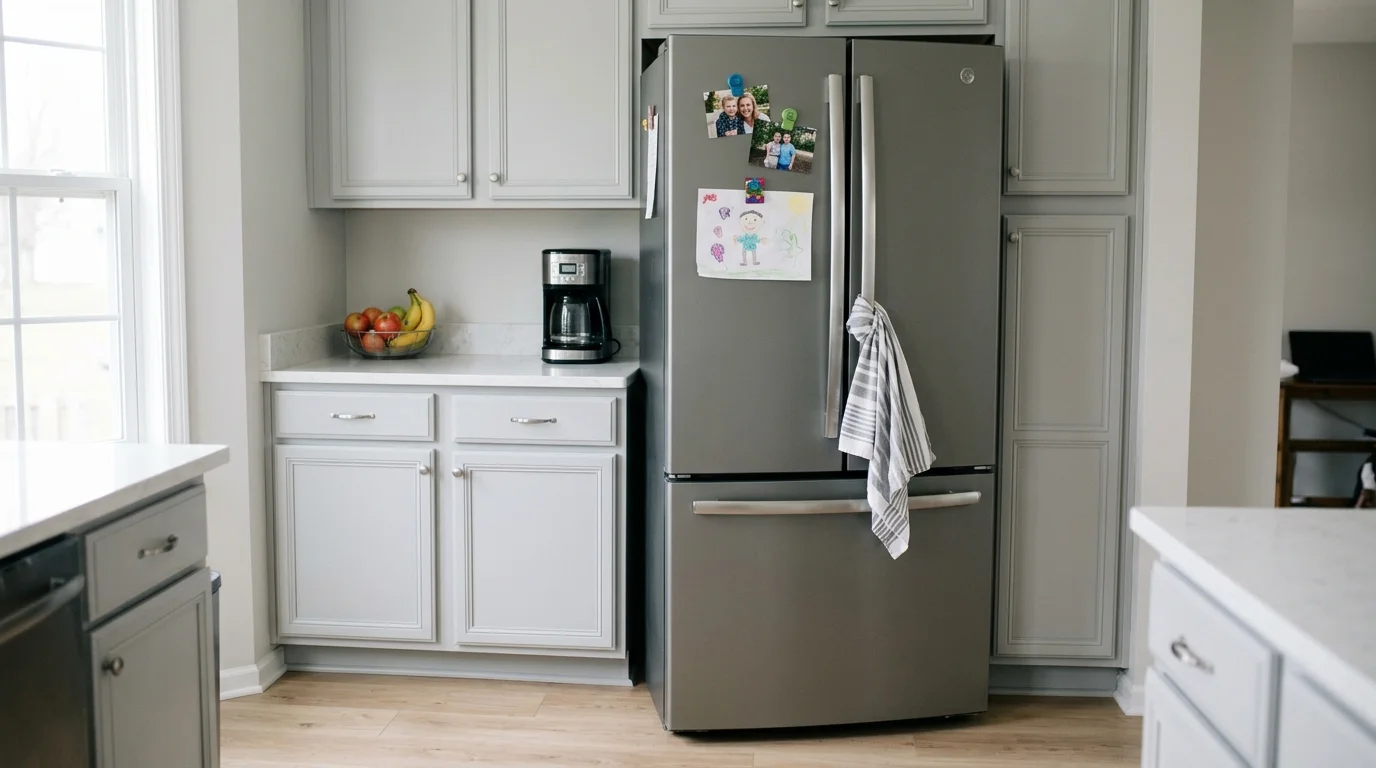
However, modern kitchen appliances often combine both functions. A single refrigerator may have a refrigerated main compartment and a separate freezer compartment.
That is why someone might say, “Put it in the refrigerator,” even though the appliance also contains a freezer.
The exact meaning depends on the compartment being discussed.
US vs UK English Notes
Both fridge and freezer are widely understood in American and British English.
The word refrigerator is common in American English, while fridge is also extremely common in everyday American speech.
British English uses fridge very naturally as well.
There is no major US-versus-UK spelling difference that changes the basic meaning of fridge vs freezer.
One useful distinction is that fridge is informal compared with refrigerator, but it is not slang that only one country understands.
Examples
American English:
“The drinks are in the fridge.”
British English:
“The drinks are in the fridge.”
The wording is essentially the same.
Common Mistakes to Avoid
Mistake 1: Treating Fridge and Freezer as Synonyms
They are related appliances, but they do not mean the same thing.
❌ “Put the ice cream in the fridge” when you mean frozen storage.
✅ “Put the ice cream in the freezer.”
Mistake 2: Assuming Every Refrigerator Is Only a Fridge
Many refrigerators contain a separate freezer compartment. Context matters.
Mistake 3: Thinking “Fridge” Is Incorrect English
It is not. Fridge is a standard, widely used shortened form of refrigerator.
Mistake 4: Using “Freezer” for Any Cold Storage
A freezer specifically refers to frozen storage. Something can be very cold without being stored in a freezer.
Fun Facts and History
Here are two interesting facts about fridge vs freezer terminology.
1. “Fridge” Is Short for “Refrigerator”
The everyday word fridge developed as a shortened form of refrigerator. It became especially useful because “refrigerator” is a relatively long word for ordinary conversation.
2. Refrigeration Changed Food Storage
Modern mechanical refrigeration transformed how people stored food. Instead of relying primarily on ice, cellars, salting, drying, or other preservation methods, households could use controlled cold temperatures to preserve perishable foods.
Freezing later became an important part of modern food preservation, giving households another way to store food for longer periods.
A Quick Memory Trick
Still unsure whether to say fridge or freezer?
Use this simple rule:
Fridge → chilled
Freezer → frozen
Think of the word freezer as containing the word freeze.
If something should stay frozen, choose freezer.
If something simply needs to stay cold, choose fridge.
For example:
- Milk → fridge
- Yogurt → fridge
- Fresh vegetables → fridge
- Ice cream → freezer
- Frozen peas → freezer
- Ice → freezer
This simple association makes the difference much easier to remember.
Frequently Asked Questions
Is a fridge the same as a freezer?
No. A fridge normally keeps food chilled, while a freezer keeps food frozen. However, both compartments can be built into the same kitchen appliance.
Is “fridge” short for refrigerator?
Yes. Fridge is the common shortened form of refrigerator and is widely used in everyday English.
Which is colder, a fridge or freezer?
A freezer is designed to operate at much lower temperatures than a normal refrigerator compartment because it needs to keep food frozen.
Can a fridge have a freezer?
Yes. Many modern refrigerators have a separate freezer compartment, either above, below, or beside the refrigerator section.
Should I say fridge or refrigerator?
Both are correct. Fridge is more casual and conversational, while refrigerator is the full, more formal term.