
What Is “Pompom”?
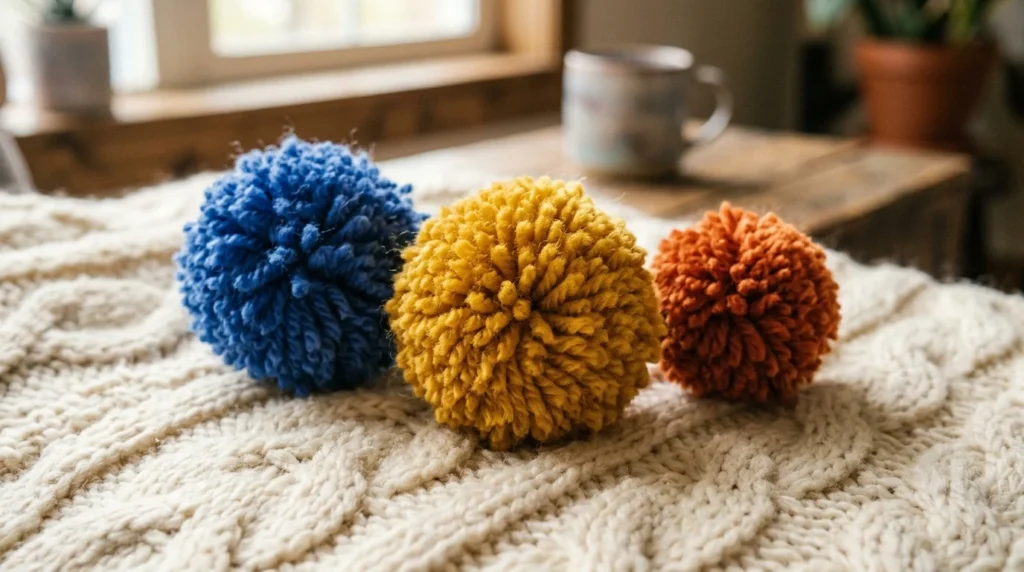
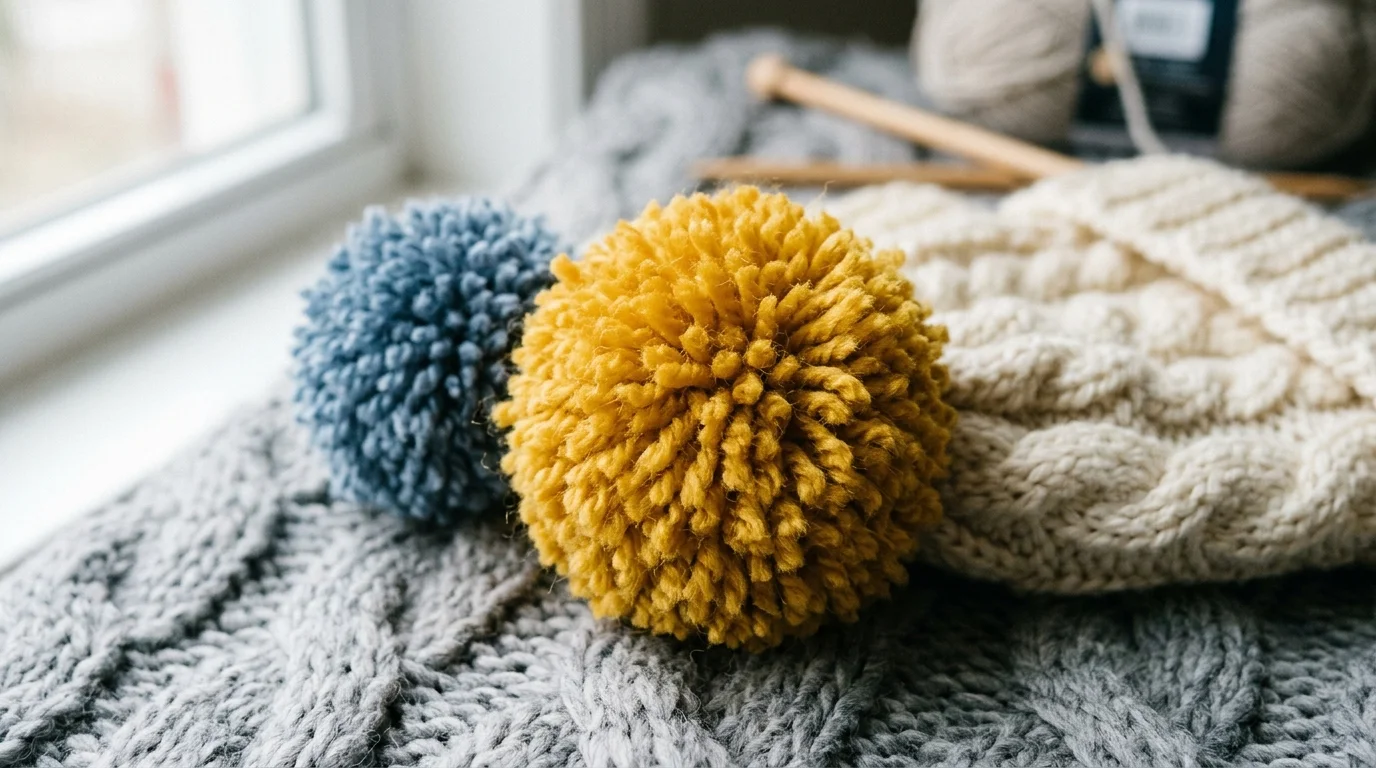
A pompom is a small decorative ball or tuft made from materials such as yarn, wool, thread, fabric, or feathers. It is often attached to clothing, accessories, costumes, craft projects, or decorative items.
The spelling pompom is especially familiar in modern English. You may see it frequently in articles about knitting, crochet, crafts, fashion, children’s activities, and winter clothing.
Meaning of Pompom
A pompom usually has a soft, rounded, fluffy appearance. It can be made in almost any color and size.
For example:
- “The winter hat has a large pompom on top.”
- “She made several colorful pompoms for the craft project.”
- “The scarf has small pompoms along the edges.”
- “He attached a blue pompom to his costume.”
The word can describe both handmade decorations and commercially produced accessories.
Grammar and Plural Form
Pompom is a countable noun.
The singular form is:
pompom
The plural form is:
pompoms
For example:
“A red pompom was attached to the hat.”
And:
“The children made ten colorful pompoms.”
When used as a modifier, you may also see combinations such as pompom hat, pompom trim, or pompom decoration.
Where Is “Pompom” Used?
The word is common in modern informal and commercial English. Online stores, craft websites, fashion descriptions, and DIY tutorials often use pompom because it is easy for readers to recognize.
If you search for instructions on making yarn decorations, you are likely to encounter the spelling pompom.
Short History of Pompom
The history of pompom is connected with the older word pompon. English has borrowed and adapted words from other languages for centuries, and this term developed different forms over time.
The modern one-word spelling pompom became established in English, while pompon continued to exist alongside it.
That is why you can find both forms in dictionaries and published writing.
What Is “Pompon”?
A pompon is also a small decorative tuft or ball made from materials such as wool, yarn, thread, fabric, or feathers. In ordinary English usage, its meaning overlaps heavily with pompom.
The spelling pompon is older and has a particularly strong connection to French. It continues to appear in English, especially in traditional, historical, fashion, and formal contexts.
Meaning of Pompon
A pompon can be used as a decorative element on clothing, hats, costumes, cords, uniforms, and other objects.
Examples include:
- “The cap was decorated with a woolen pompon.”
- “The costume featured several colorful pompons.”
- “A small pompon was attached to the end of the cord.”
- “The designer added a decorative pompon to the garment.”
In these examples, replacing pompon with pompom would generally not change the basic meaning.
Grammar and Plural Form
Like pompom, pompon is a countable noun.
Singular:
pompon
Plural:
pompons
Example:
“The yellow pompon was sewn onto the hat.”
Plural example:
“The costumes were decorated with colorful pompons.”
Regional and Historical Usage
The form pompon has a long history and is closely associated with French. English retained this spelling while also developing the more familiar pompom form.
Because of its history, pompon may sound slightly more traditional or formal to some English speakers. It can appear in discussions of historical clothing, military uniforms, traditional headwear, and older decorative styles.
However, this does not mean that pompon is exclusively historical. It remains an established word.
Pompom or Pompon: Key Differences
The most important fact about pompom or pompon is that they are usually variant spellings with the same basic meaning.
Main Differences
- Pompom is a widely recognized modern English spelling.
- Pompon is an older form with strong French connections.
- Both words can refer to a small decorative ball or tuft.
- The plural of pompom is pompoms.
- The plural of pompon is pompons.
- The difference is primarily spelling and usage preference, not meaning.
- Pompom is especially common in crafts, DIY content, and everyday writing.
- Pompon may be preferred in traditional, historical, or French-influenced contexts.
- Neither spelling should automatically be considered incorrect.
Comparison Table
| Feature | Pompom | Pompon |
|---|---|---|
| Meaning | Small decorative ball or tuft | Small decorative ball or tuft |
| Part of speech | Noun | Noun |
| Singular | Pompom | Pompon |
| Plural | Pompoms | Pompons |
| Basic pronunciation | Similar | Similar |
| Historical connection | Developed as an English variant | Strong French connection |
| Modern usage | Very familiar | Established but less common in some contexts |
| Craft writing | Very common | Also possible |
| Fashion writing | Common | Common |
| Meaning difference | Usually none | Usually none |
Real-Life Conversation Examples
Dialogue 1: A Winter Hat
Emma: “I love the pompom on your hat.”
Noah: “I thought it was spelled pompon.”
Emma: “That spelling is used too.”
🎯 Lesson: Pompom and pompon can describe the same decorative ball.
Dialogue 2: A Craft Project
Teacher: “Today we’re going to make colorful pompoms.”
Student: “Can I write ‘pompons’ instead?”
Teacher: “Yes, if that’s the spelling your dictionary or style guide uses.”
🎯 Lesson: Both forms can be correct depending on the preferred spelling.
Dialogue 3: Fashion Design
Designer: “Add a small pompon to the end of the scarf.”
Assistant: “Would pompom work?”
Designer: “Yes. They’re generally referring to the same decoration.”
🎯 Lesson: The difference is usually stylistic rather than a difference in the object.
Dialogue 4: Reading an Older Book
Ava: “This book says ‘pompon,’ but I usually see ‘pompom.’”
Ben: “Pompon is an older form that is still used.”
🎯 Lesson: Historical texts may prefer pompon.
When to Use Pompom or Pompon
Choosing between pompom or pompon depends mostly on your writing context.
Use “Pompom” for Everyday Modern English
Pompom is a natural choice when you’re writing about:
- DIY crafts
- Knitting
- Crochet
- Children’s crafts
- Winter hats
- Scarves
- Fashion accessories
- Decorations
- Online product descriptions
- Casual blog posts
For example:
“Follow these simple steps to make a fluffy yarn pompom.”
For a general online audience, pompom is likely to feel familiar and straightforward.
Use “Pompon” in Traditional or Historical Contexts
Pompon may be a better choice when:
- You are discussing historical clothing.
- You are describing traditional uniforms.
- You are referring to French terminology.
- Your source consistently uses pompon.
- Your publication’s style guide prefers the traditional form.
For example:
“The historical uniform included a decorative pompon.”
A Simple Memory Trick
Here’s an easy way to remember pompom or pompon:
Pompom = familiar modern English form
Pompon = traditional form with French history
This is a memory aid rather than a strict grammatical rule. Both forms can be used in English.
Is Pompom or Pompon More Common?
In many modern English contexts, pompom is the spelling people are most likely to recognize, particularly when discussing crafts, children’s activities, clothing, and accessories.
However, pompon remains a legitimate spelling and has not disappeared from English. You may encounter it in dictionaries, historical descriptions, fashion writing, and texts influenced by French terminology.
The popularity of each form can also vary according to country, industry, publication, and audience.
For SEO writing, the most important thing is to choose one spelling naturally and use it consistently. You do not need to force both forms into every paragraph.
Are Pompom and Pompon the Same Thing?
In most everyday situations, yes.
A pompom and a pompon can both refer to a small, fluffy decorative ball or tuft.
For example, imagine a knitted hat with a soft ball attached to the top. You could describe it as having a pompom or a pompon, depending on the spelling preference you follow.
The physical object has not changed.
What changes is the written form of the word.
This makes pompom or pompon different from word pairs where two similar-looking words have completely different meanings. Here, the distinction is much more about spelling and linguistic history.
US vs UK English: Is There a Difference?
It would be misleading to describe pompom vs pompon as a simple American-versus-British spelling difference.
Unlike pairs such as color/colour or center/centre, these two forms are not divided neatly between American and British English.
Both pompom and pompon can be found in English-language sources from different regions.
Therefore, if you’re writing for readers in the United States, United Kingdom, Canada, Australia, or another English-speaking region, you should consider the dictionary or editorial style guide used by your publication.
Consistency matters more than trying to invent a regional rule that does not really exist.
Common Mistakes to Avoid
Mistake 1: Thinking “Pompon” Is Always Wrong
It isn’t. Pompon is an established form with a long history.
Mistake 2: Assuming the Two Words Describe Different Objects
In most ordinary contexts, they describe essentially the same type of decoration.
Mistake 3: Switching Between Them Randomly
If you’re writing an article or product description, choose one spelling and stick with it unless you are specifically discussing the spelling difference.
Mistake 4: Calling It a US vs UK Rule
There is no simple rule saying that Americans must use pompom and British speakers must use pompon, or vice versa.
Fun Facts and History
1. Pompon Has French Roots
The word pompon has a strong connection to French, where it has long been used for a decorative tuft or ornamental ball.
English adopted the term and developed related forms, including pompom.
2. Pompoms Are More Than Hat Decorations
Although many people immediately think of the fluffy ball on top of a winter hat, pompoms have been used in fashion, costumes, uniforms, crafts, decorations, and performance accessories.
Their simple design makes them useful for both practical decoration and creative projects.
Which One Should You Use?
If you are writing ordinary modern English and simply need a clear, familiar spelling, pompom is a good choice.
If your context is historical, traditional, French-influenced, or based on a source that uses pompon, then pompon is perfectly appropriate.
A useful rule is:
Choose the spelling that matches your audience and style guide, then use it consistently.
If you’re writing a craft tutorial, pompom will usually feel natural:
“How to Make a Yarn Pompom”
If you’re discussing historical fashion, you might encounter:
“Decorative Pompon on a Traditional Cap”
Both can communicate the same basic idea.
Pompom or Pompon: Quick Answer
If you’re looking for the shortest possible answer, here it is:
Pompom and pompon are generally variant spellings for the same type of decorative tuft or ball.
Pompom is a familiar modern English form, while pompon is an older form with French connections.
So, if you write “pompom”, you’re not making a mistake. If you write “pompon”, you’re not necessarily making a mistake either.
The right choice depends on context, audience, and style preference.