
What Is “Poinsettia”?
Poinsettia is the standard English spelling of the plant’s name.
The botanical name is Euphorbia pulcherrima, and the plant is native to Mexico and Central America.
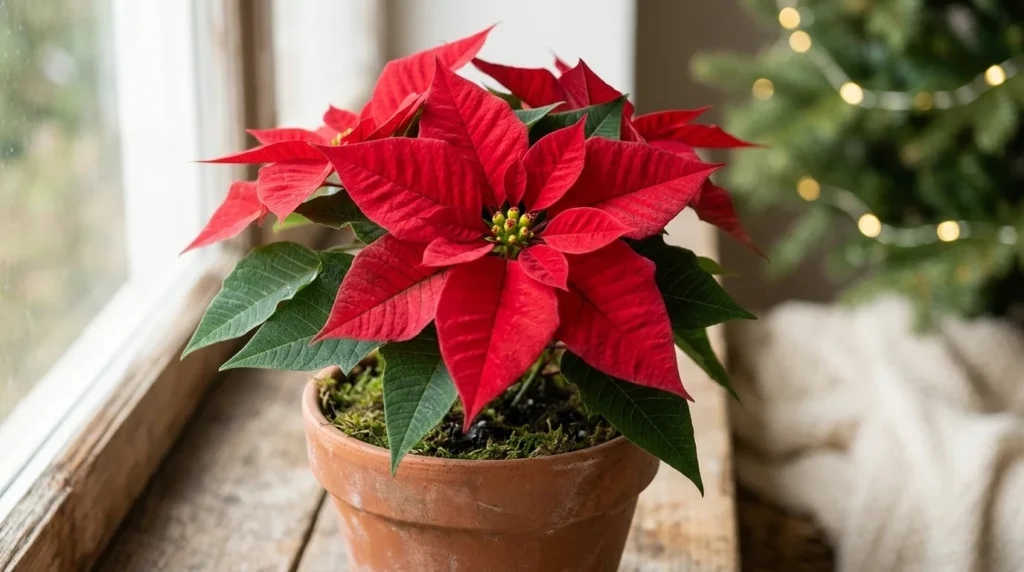
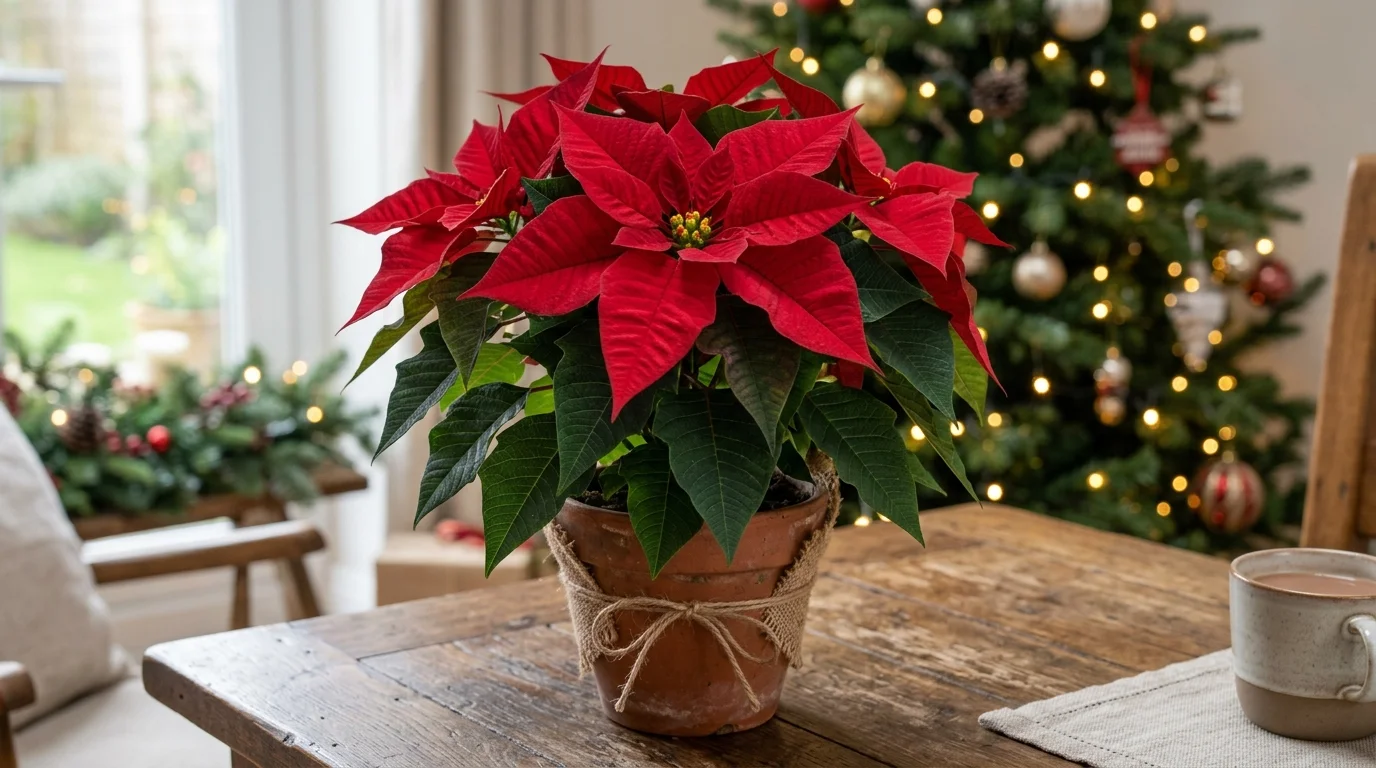
The colorful parts that people often call flowers are actually modified leaves called bracts. The plant’s small true flowers are located in the center.
Example Sentences
We bought a red poinsettia for Christmas.
The poinsettia looks beautiful near the window.
She gave her mother a poinsettia during the holidays.
What Is “Poinsetta”?
Poinsetta is generally an incorrect spelling of poinsettia.
If you’re referring to the Christmas plant, write:
❌ Poinsetta
✅ Poinsettia
The easiest way to avoid the mistake is to remember that the correct spelling contains “settia” at the end.
Poinsettia or Poinsetta: Key Difference
There is no major difference in meaning because poinsetta isn’t the standard spelling of a separate plant. The comparison is mainly about correct versus incorrect spelling.
| Spelling | Correct? | Meaning |
|---|---|---|
| Poinsettia | ✅ Yes | The Christmas-associated plant |
| Poinsetta | ❌ No | Common misspelling |
How to Spell Poinsettia
Break the word into parts:
POIN + SET + TIA
Full spelling:
P-O-I-N-S-E-T-T-I-A
The tricky part is the ending:
-settia
not:
-setta
Easy Memory Trick
Remember:
Poin + settia = poinsettia
The word contains “settia” with two t’s.
Why Is Poinsettia Commonly Misspelled?
The spelling can be difficult because the pronunciation doesn’t make every letter obvious.
People may write:
- Poinsetta
- Poinsetia
- Poinsettia
Of these, poinsettia is the standard spelling.
Typing quickly can also cause people to leave out one of the letters.
Poinsettia in American and British English
The spelling poinsettia is used in both American and British English.
There isn’t a standard American-versus-British spelling difference here.
So whether you’re writing for readers in the United States, United Kingdom, Canada, Australia, or elsewhere, use:
Poinsettia
What Does Poinsettia Mean?
The plant’s name honors Joel Roberts Poinsett, an American diplomat and botanist who helped introduce the plant to the United States in the 19th century.
The plant subsequently became strongly associated with Christmas and winter holiday decorations.
Poinsettia and Christmas
Poinsettias are especially popular during the Christmas season.
They are commonly used as:
- Holiday decorations
- Gifts
- Table decorations
- Indoor plants
- Seasonal displays
Although red is the best-known color, poinsettias can also have white, pink, cream, and other color variations.
Common Mistakes
Mistake 1: Writing “Poinsetta”
❌ Poinsetta
✅ Poinsettia
Mistake 2: Leaving Out a “T”
The correct spelling contains two t’s near the end:
poinsettia
Mistake 3: Writing “Poinsetia”
This spelling is also incorrect.
Mistake 4: Assuming the Pronunciation Gives You the Exact Spelling
English spelling and pronunciation don’t always match perfectly, so memorizing the written form is helpful.
Real-Life Examples
Example 1
The poinsettia is often associated with Christmas.
Example 2
She decorated the house with several poinsettias.
Example 3
The red poinsettia makes a beautiful holiday decoration.
Fun Facts About Poinsettias
Fact 1: The Colorful Parts Are Bracts
The bright red parts aren’t technically the plant’s flowers. They are modified leaves called bracts.
Fact 2: Poinsettias Come From Mexico
The plant is native to Mexico and parts of Central America.
Fact 3: The Name Honors Joel Poinsett
The English common name comes from Joel Roberts Poinsett, who was associated with the plant’s introduction to the United States.