
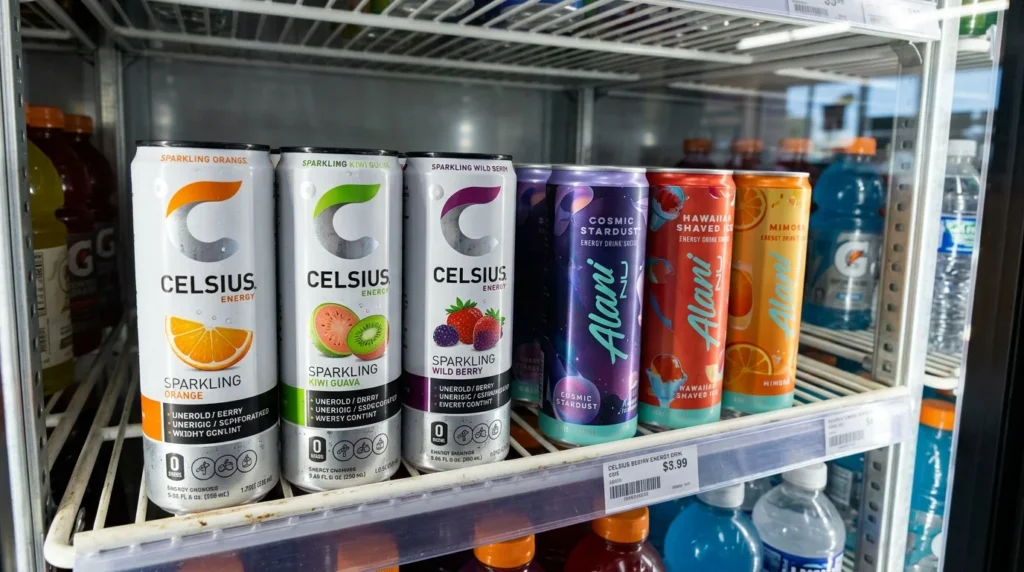
If you’re searching for Celsius or Alani, you’re probably trying to understand how these two popular energy-drink brands differ. Both brands are known for colorful cans, bold flavors, and products marketed toward active lifestyles. However, their product ranges, branding, ingredients, flavors, and nutritional profiles can vary by specific product.
Although they look/sound similar, they serve completely different purposes. In reality, Celsius and Alani are competing brands, rather than two different types of beverages.
Because formulations can change and different products within each brand can contain different ingredients, it is important to compare the exact cans or products, rather than assuming every Celsius and Alani drink is identical.
For SEO purposes, the focus keyword in this article is “Celsius or Alani”, while related terms are used naturally to explain the comparison.
What Is Celsius?
Celsius is a beverage brand known primarily for energy drinks and fitness-oriented beverages.
The brand offers several product lines, and formulations can differ between products. Some Celsius energy drinks contain caffeine from sources such as green tea and are marketed around an active lifestyle.
Celsius Product Range
Depending on the market and product line, Celsius offers products such as:
- Celsius energy drinks
- Celsius Vibe
- Celsius Essentials
- Celsius powder or powdered drink products
Specific ingredients, caffeine levels, calories, and serving sizes can vary by product.
Celsius Branding
Celsius commonly emphasizes themes such as:
- Fitness
- Active lifestyles
- Energy
- Exercise
- Modern nutrition
- Fruit-inspired flavors
Its packaging is usually easy to recognize because of its distinctive branding and bright flavor designs.
Short History of Celsius
Celsius developed as a functional beverage brand and became increasingly visible in the energy-drink market. Its popularity grew alongside the broader interest in fitness-focused beverages and alternative energy drinks.
What Is Alani?
Alani Nu, commonly called Alani, is a lifestyle and wellness brand that offers beverages, supplements, and other products.
Its energy drinks are one of its most recognizable product categories.
Alani Energy Drinks
Alani energy drinks are available in a variety of flavors and are known for colorful packaging and sweet, fruit-forward flavor profiles.
Depending on the product, consumers may find:
- Energy drinks
- Ready-to-drink beverages
- Powdered drink mixes
- Other wellness products
The exact nutritional information varies by product.
Alani Branding
Alani often focuses on:
- Fitness
- Wellness
- Lifestyle
- Flavor variety
- Social-media-friendly branding
- Convenient products
Its visual identity is particularly recognizable among younger consumers.
Short History of Alani
Alani Nu was founded as a wellness and lifestyle company and expanded into multiple product categories, including its well-known energy drinks.
The brand has developed a strong presence in the modern fitness and lifestyle beverage market.
Celsius or Alani: Key Differences
When comparing Celsius or Alani, the biggest differences are usually found in product formulation, flavor selection, branding, and the specific product you’re considering.
Key Differences
- Celsius is strongly associated with fitness-focused energy beverages.
- Alani Nu combines energy drinks with a broader lifestyle and wellness brand.
- Both offer multiple flavors.
- Caffeine content can vary by specific product.
- Ingredients can differ between product lines.
- Both brands offer products beyond a single beverage.
- Packaging and branding are noticeably different.
- Neither brand should be judged solely by its most popular flavor.
- Always check the nutrition label for the exact product.
Comparison Table
| Feature | Celsius | Alani |
|---|---|---|
| Brand | Celsius | Alani Nu |
| Main beverage category | Energy and functional beverages | Energy and lifestyle beverages |
| Flavor variety | Wide | Wide |
| Product range | Multiple beverage formats | Multiple wellness/lifestyle products |
| Caffeine | Depends on product | Depends on product |
| Calories | Depends on product | Depends on product |
| Sugar | Depends on product | Depends on product |
| Branding | Fitness and active lifestyle | Lifestyle and wellness |
| Packaging | Distinctive modern designs | Colorful, playful designs |
| Best comparison method | Check exact product label | Check exact product label |
Real-Life Conversation Examples
Dialogue 1: Comparing Brands
Emma: “Are Celsius and Alani the same company?”
Liam: “No. They are separate beverage brands.”
🎯 Lesson: Celsius and Alani are competing brands, not different names for the same company.
Dialogue 2: Choosing a Flavor
Sarah: “Which one has better flavors?”
Tom: “That depends on your personal taste. Both brands offer many different flavors.”
🎯 Lesson: Flavor preference is subjective.
Dialogue 3: Checking Caffeine
Mike: “Do all Celsius and Alani drinks have the same caffeine?”
Anna: “No. You should check the nutrition label for the specific product.”
🎯 Lesson: Caffeine content can vary by product.
Dialogue 4: Reading the Label
Jack: “Can I compare two cans just by looking at the front?”
Alex: “It’s better to compare the nutrition and ingredient labels.”
🎯 Lesson: The product label provides more useful information than branding alone.
When to Compare Celsius
If you’re researching Celsius, look at the exact product rather than the brand name alone.
Check:
- Caffeine amount
- Serving size
- Calories
- Sugar
- Sweeteners
- Ingredients
- Allergens
- Any warnings or age-related guidance
Different Celsius products may have different formulations.
When to Compare Alani
When researching Alani, use the same approach.
Check:
- Caffeine
- Calories
- Sugar
- Serving size
- Ingredients
- Sweeteners
- Flavor
- Product-specific warnings
The name Alani alone does not tell you everything about a particular beverage.
Celsius or Alani for Flavor
Flavor is one of the biggest reasons people compare these brands.
Both have developed extensive flavor selections, including fruit-inspired options.
Some people prefer sweeter flavors, while others prefer a lighter or more refreshing taste.
Rather than deciding based on the brand alone, compare the specific flavors you are interested in.
For example, consider:
- Sweetness
- Fruit flavor
- Aftertaste
- Carbonation
- Serving size
Taste is subjective, so there isn’t one universally “best” flavor.
Celsius or Alani Ingredients
The ingredients depend on the specific beverage.
When comparing Celsius or Alani, don’t assume that every product from one brand has the same formula.
Read the label for:
- Caffeine
- Added sugars
- Artificial or alternative sweeteners
- Vitamins
- Flavoring ingredients
- Other functional ingredients
Product formulas may also change over time, so current packaging is the best source for the exact ingredient list.
Celsius or Alani and Caffeine
Caffeine is an important consideration when discussing energy drinks.
The amount can vary between products and serving sizes. Some products from these brands contain substantial amounts of caffeine.
Too much caffeine can cause unwanted effects such as:
- Jitteriness
- Trouble sleeping
- Rapid heartbeat
- Anxiety
- Headaches
- Stomach discomfort
People who are sensitive to caffeine should be especially careful.
Because you’re a teen in this conversation, I can’t recommend using either brand or tell you which one to choose. For your age group, energy drinks are generally not recommended.
Celsius or Alani for Fitness
Both brands market products toward people interested in active lifestyles.
However, an energy drink isn’t a replacement for:
- Water
- Regular meals
- Adequate sleep
- Balanced nutrition
- Appropriate exercise
- Recovery
If you’re looking for a drink around physical activity, water and regular nutrition are generally more appropriate choices for teenagers.
Celsius or Alani: Which Has Better Taste?
There is no objective winner.
Taste depends on:
- Flavor
- Sweetness preference
- Carbonation
- Temperature
- Personal sensitivity to artificial or alternative sweeteners
One person may prefer a particular Celsius flavor while another may prefer an Alani flavor.
For an article or review, it is better to describe specific flavors rather than claim that one entire brand tastes better.
Celsius or Alani: Which Is More Popular?
Popularity can change over time and depends on the market, product, and audience.
Both brands have developed strong recognition in the energy and fitness beverage space.
Social media, influencer marketing, product launches, flavor releases, and retail availability can all affect which brand appears more popular at a particular time.
Common Mistakes
Comparing Brands Instead of Products
The biggest mistake is assuming every drink from a brand has the same ingredients and nutritional profile.
Ignoring Serving Size
Always check how much liquid and caffeine are contained in the stated serving.
Looking Only at Calories
Calories are only one part of a nutrition label.
Ignoring Caffeine
Energy drinks can contain substantial amounts of caffeine, making this one of the most important label details.
Assuming “Fitness” Means “Healthy for Everyone”
A product marketed toward fitness isn’t automatically appropriate for every person or every age group.
A Simple Memory Trick
Remember:
Celsius → energy and active-lifestyle beverage brand
Alani → energy and broader lifestyle/wellness brand
For a true comparison, don’t stop at the brand names. Compare the exact products, ingredients, caffeine, serving sizes, and nutritional information.
Fun Facts or History
Fact 1: Both Brands Offer More Than One Product
Neither Celsius nor Alani is limited to a single energy-drink formula. Their product ranges include different beverages and formats.
Fact 2: Flavor Variety Is a Major Part of Their Branding
Both brands have released numerous flavor combinations, helping them stand out in a crowded beverage market.
Conclusion
When comparing Celsius or Alani, remember that these are two separate brands with overlapping positions in the energy and lifestyle beverage market. They offer different products, flavors, formulations, and branding styles, so there isn’t one universal winner.
The smartest way to compare them is to look at the exact products and check their caffeine, serving size, calories, sugar, ingredients, and other nutritional information. Flavor is also highly personal, so what one person enjoys may not appeal to another.
For teenagers, energy drinks are generally not recommended because of their high caffeine content. If you’re under 18, choosing water or another non-caffeinated beverage is the safer option.